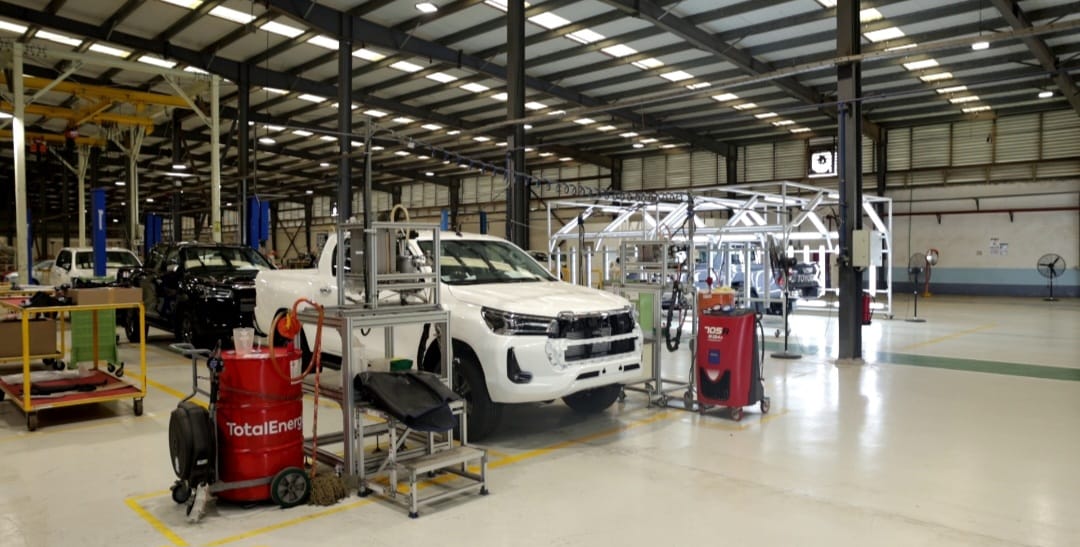
Professor Ebo Turkson, an economist at the University of Ghana, has declared that weak consumer demand is hindering the growth of Ghana’s automotive industry. He stated this at the Citi Business Festival Roundtable on Thursday, June 25, emphasizing that Ghanaians often do not support locally assembled vehicles.
Professor Turkson observed that this lack of consumer patriotism negatively affects Ghana's industrialization efforts. Despite government actions to promote local manufacturing, many Ghanaians remain unwilling to purchase products made in the country. This behavior stands in contrast to other nations where citizens actively support domestic industrial policies through their purchasing choices.
This issue fits into Ghana’s broader economic narrative of reducing import dependence and boosting local manufacturing. The government has implemented various policies, including the Ghana Automotive Development Policy, to attract major vehicle manufacturers to set up assembly plants. Firms like Volkswagen, Toyota, and Nissan have established facilities in Ghana. Increasing local demand for these vehicles is crucial for the policy's success and for reducing pressure on the GHS.
“Ghanaians are not that patriotic when it comes to consumption,” Professor Turkson said during the roundtable discussion. He also stressed that vehicles assembled in Ghana meet global quality standards. Original Equipment Manufacturers (OEMs) operating in Ghana produce vehicles that adhere to international benchmarks.
A thriving automotive sector would benefit many related industries. These include transport and logistics, vehicle dealerships, body repair shops, insurance companies, and banks. Professor Turkson suggested that providing affordable financing schemes could encourage workers to buy locally assembled cars. He maintains that better financing, combined with increased demand, will create numerous jobs across the automotive value chain. This will also help Ghana decrease its reliance on imports and stabilize the GHS.
Ghana’s automotive sector aims to become a regional hub, generating significant economic value. The success of this vision depends heavily on domestic consumption and support. Therefore, policymakers will need to explore financial incentives and public awareness campaigns to shift consumer behavior. This shift would unlock the full potential of local assembly plants. The government's commitment to industrialization faces a critical test in securing local market participation.
This development is important for Ghana's economy and its ambition to become a manufacturing hub. The automotive sector's growth can lead to job creation and economic diversification. The financial sector's role in providing accessible loans for vehicle purchases will be paramount. Monitoring consumer response to future incentives will show the effectiveness of these efforts.