Mahama proposes Ghana Gabon economic corridor for investment

    Former President John Dramani Mahama advocates for a commercially focused partnership to boost trade and industrial growth between Ghana and Gabon.

    2 min read4 min listen
    Mahama proposes Ghana Gabon economic corridor for investment
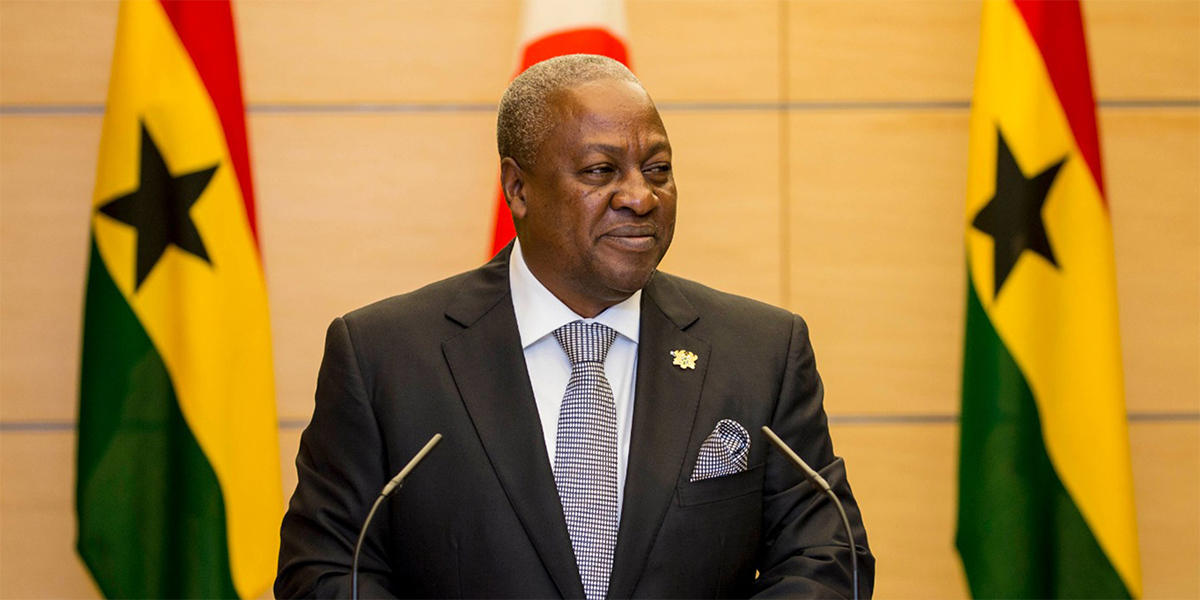
    Former President John Dramani Mahama has proposed a commercially focused Ghana–Gabon partnership aimed at expanding trade, attracting investment, and building industrial value chains. This initiative seeks to transform over six decades of bilateral relations from diplomatic engagement into measurable economic cooperation. The collaboration is designed to generate new businesses, develop infrastructure, and create jobs across both West and Central Africa. President Mahama made this proposal during bilateral talks with Gabonese President Brice Clotaire Oligui Nguema at the Jubilee House on Tuesday. He stated that the visit provided an opportunity for both countries to redefine their relationship around mutual economic interests. The proposed reset centers on stronger private-sector collaboration, increased investment flows, and enhanced industrial cooperation under the African Continental Free Trade Area (AfCFTA). Ghana, as the host country for the AfCFTA Secretariat, has a responsibility to promote deeper intra-African trade and demonstrate how bilateral relationships can evolve into productive regional partnerships. This aligns with Ghana's commitment to advancing industrialisation and economic integration across the continent. The initiative underscores a strategic move to leverage Ghana's position within the AfCFTA framework. President Mahama identified manufacturing, agribusiness, transport and logistics, infrastructure, financial services, and value addition as key priority areas for cooperation. These sectors are strategically important because they can connect Ghanaian and Gabonese businesses across production, distribution, and financing. This approach moves beyond merely exchanging raw commodities, fostering more integrated economic ties. A Ghana–Gabon economic corridor would not necessarily be a single physical route. Instead, it would function as a network of commercial, logistical, and industrial linkages. This network would connect ports, manufacturers, commodity producers, financial institutions, and investors across the two countries. Ghana could serve as a gateway to West African markets, while Gabon provides access to Central African commercial networks and natural-resource value chains. Such an arrangement could allow companies in both countries to reach larger markets, share production capacity, and reduce their dependence on suppliers and buyers outside Africa. President Mahama emphasised that trade and investment must remain central to this new relationship. He encouraged stronger partnerships between private sectors, facilitated investment flows, and advocated for an enabling environment for businesses to collaborate. This emphasis on the private sector reflects a broader understanding that diplomatic agreements alone rarely generate sustained economic value. For the partnership to deliver tangible results, businesses must identify viable opportunities, access finance, move goods efficiently, and operate under predictable regulatory conditions. Both governments would need to address critical issues such as visa procedures, customs documentation, taxation, standards, investment protection, transport connectivity, and the recognition of business licenses and professional qualifications. The lack of direct and efficient transport links between many African economies remains a significant barrier to intra-continental trade. Goods often move more easily from African ports to Europe or Asia than between neighbouring regional blocs. A commercially meaningful Ghana–Gabon partnership would therefore need to examine shipping routes, air cargo, warehousing, and port cooperation. The ports of Tema and Owendo could become important nodes in a broader trade network connecting Ghanaian and Gabonese businesses. Improved logistics would support trade in processed foods, pharmaceuticals, construction materials, consumer goods, machinery, and other manufactured products. Both countries possess agricultural and natural-resource advantages but face similar challenges in processing, storage, productivity, and market access. Joint ventures could focus on agro-processing, cold-chain infrastructure, packaging, and the production of inputs required by farmers and food manufacturers. This would shift both nations away from exporting raw agricultural commodities towards producing finished goods.

    Comments

    More from StatsGH