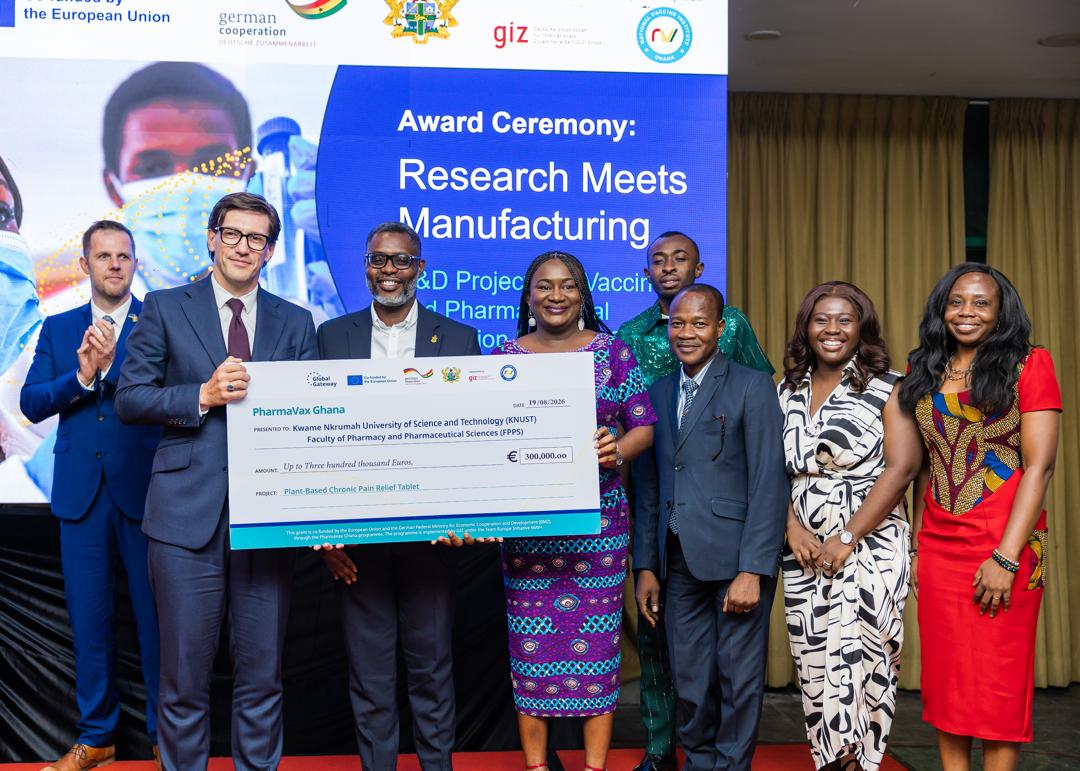
A consortium led by the Kwame Nkrumah University of Science and Technology (KNUST) has secured a €300,000 grant to develop a scalable, locally manufactured herbal pain relief medicine. This significant funding aims to transform laboratory research into commercial pharmaceutical production, addressing critical healthcare needs in Ghana.
The grant was awarded under the PharmaVax Ghana Programme, a key initiative designed to strengthen pharmaceutical research and local manufacturing. This project will optimize an existing herbal remedy into a sustained-release tablet, making it more convenient for patients. It also tackles raw material supply issues by using advanced plant tissue culture techniques.
This development aligns with Ghana's broader economic strategy to foster local industrial growth and reduce reliance on imported medicines. The PharmaVax Ghana Programme, funded by the German Federal Ministry for Economic Cooperation and Development (BMZ) and the European Union (EU), supports domestic innovation. Such initiatives are crucial for Ghana's health security and economic diversification, creating jobs and stimulating local industry.
Professor Edmund Ekuadzi, a member of the KNUST research team, highlighted the project's long-standing foundation. He stated, "This project builds on research we initiated with KNUST Research Fund (KReF) support of approximately GHS 20,000 in 2017." This new funding allows the team to refine the formulation and ensure sustainable cultivation of the medicinal plant through biotechnology.
The project's implications are far-reaching, promising improved access to quality healthcare and significant economic benefits. Commercializing such innovations can stimulate local industry and create employment opportunities for young people. Decision-makers will closely watch the project's progress as it sets a precedent for future public-private partnerships in the pharmaceutical sector.
The KNUST-led consortium is one of eight successful teams selected from 43 competitive applications. These teams collectively received approximately €2 million to accelerate the development of locally manufactured health products. This competitive selection underscores the project's potential and the rigorous evaluation it underwent.
The two-year project involves key partners including Aspee Pharmaceuticals and the Biotechnology and Nuclear Agriculture Research Institute (BNARI) of the Ghana Atomic Energy Commission (GAEC). Aspee Pharmaceuticals will play a crucial role, leading the scale-up and commercial manufacturing of the herbal medicine. Their expertise will ensure the research outcomes translate into industrial-scale products that meet national regulatory and quality standards.
Professor Priscilla Kolibea Mante, a team member, explained that the herbal remedy had shown promise in managing chronic pain. However, its wider use was limited by the medicinal plant's availability and its current dosage form. Converting the extract into a sustained-release tablet will reduce the number of doses patients need, improving treatment adherence and convenience.
Addressing raw material shortages is a critical component of the project. Researchers will use plant tissue culture techniques to propagate the medicinal plant under controlled laboratory conditions. This method ensures a consistent and sustainable supply of raw materials, a common challenge in herbal medicine development.
Researchers will develop healthy planting materials from seeds, shoot tips, and leaves. They will then compare the chemical profiles of laboratory-grown and wild plants. This rigorous process ensures the authenticity, purity, and quality of the final herbal product, upholding high pharmaceutical standards.
Professor Mariam El Boakye-Gyasi emphasized the importance of linking scientific research with industry. She noted that while research generates discoveries, partnerships with pharmaceutical manufacturers transform those discoveries into medicines that benefit patients. This collaboration model is vital for Ghana's pharmaceutical sector to thrive and innovate.
The PharmaVax Ghana Programme promotes strategic collaboration between academia, research institutions, and industry. Beyond advancing scientific knowledge, the initiative aims to strengthen local manufacturing, improve access to quality medicines, and enhance Ghana's health security. This project represents a significant step towards achieving these national objectives.