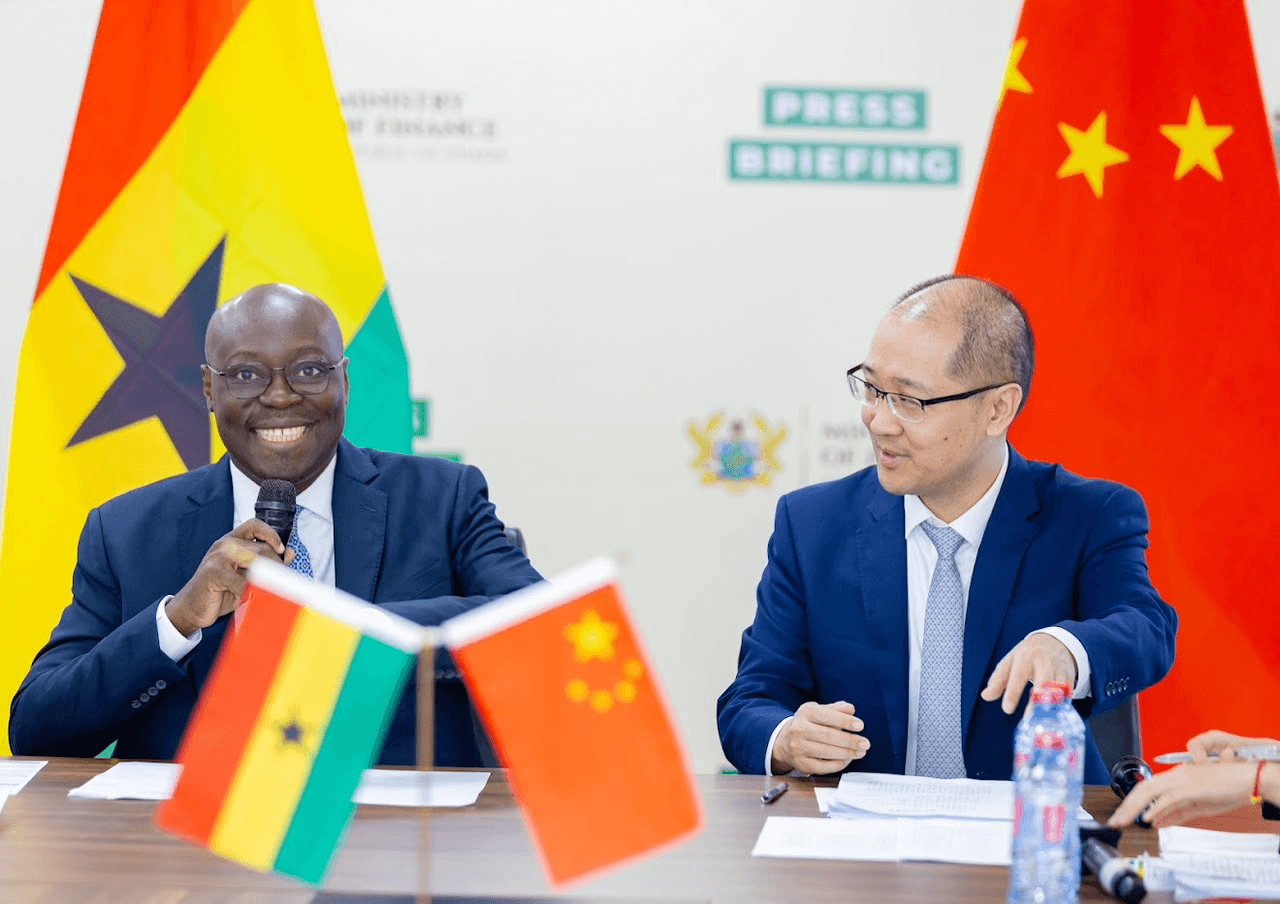
Ghana is actively reshaping its economic relationship with China, moving beyond the traditional exchange of raw materials for manufactured goods. The government is now pushing for Chinese capital to finance domestic processing, industrial production, and crucial technology transfer. This strategic shift aims to capture a larger share of value from Ghana's natural resources before they leave the country.
Finance Minister Dr. Cassiel Ato Forson stated that the scale of trade alone no longer sufficiently measures the relationship between the two nations. He highlighted Ghana's ambition to change what is sold, where it is processed, and how much of the production chain remains within the Ghanaian economy. This approach addresses a long-standing weakness in Ghana's external trade structure, where significant value is lost when commodities are exported unprocessed.
This new focus aligns with Ghana's broader economic goals of industrialization and diversification. The country has historically relied heavily on primary exports like cocoa, which leaves much of the value creation to downstream activities abroad. By processing commodities domestically, Ghana aims to create more economic activity and reduce its vulnerability to global commodity price shocks and foreign exchange fluctuations. This strategy is vital for building a more resilient economy.
Dr. Forson articulated this vision at the Fifth Session of the Ghana–China Joint Commission on Economic, Trade and Technical Cooperation. He emphasized, "China is now Ghana’s largest trading partner, but the structure must improve." This statement underscores the government's commitment to fostering a more equitable and beneficial partnership, one that prioritizes long-term economic development over short-term transactional gains.
The government seeks investments that build processing plants and manufacturing lines within Ghana. These investments should also facilitate technology transfer, procure goods and services from Ghanaian businesses, and train local workers. Such foreign direct investment (FDI) would create sustainable jobs and deepen Ghana's productive capacity, moving beyond mere capital injection to tangible economic development. This represents a significant shift in how Ghana evaluates foreign investment.
Ghana's repeated exposure to foreign exchange shortages and commodity price volatility has demonstrated the limits of an economy dependent on primary exports. When commodity prices fall, export earnings decline rapidly. A depreciating Ghana cedi (GHS) simultaneously increases the cost of imported machinery, intermediate goods, and finished products. A stronger base of manufactured and processed exports would broaden Ghana's sources of foreign exchange, thereby reducing this vulnerability.
For instance, processing cocoa domestically creates demand across various sectors beyond the factory itself. Packaging companies, transport operators, laboratories, maintenance contractors, logistics firms, designers, and exporters all become part of the production chain. This interconnectedness is where true value addition begins to matter economically. The objective is not simply to replace one export category but to generate more comprehensive economic activity around existing resources.
However, this strategy faces a significant competitiveness test. China possesses one of the world's most sophisticated manufacturing economies. Ghanaian companies aiming to export processed products into such markets must compete on price, quality, scale, and reliability. While preferential access or political goodwill can open doors, they cannot indefinitely compensate for high production costs or inefficiencies. Ghanaian manufacturers must therefore achieve high standards.
To compete successfully, Ghanaian manufacturers require reliable electricity, affordable financing, efficient ports, and predictable regulation. Adherence to internationally accepted quality standards is also paramount. These foundational elements are especially critical for smaller companies, which may lack the internal resources of larger industrial investors. Ensuring these conditions will be key to the success of Ghana's industrial transformation agenda.
The government's emerging position suggests that Chinese investment will increasingly be judged by the strength of its domestic linkages. This marks a clear shift from a purely transactional trade relationship towards a more industrial and developmental one. This strategic pivot aims to ensure that foreign capital contributes meaningfully to Ghana's long-term economic growth and structural transformation.