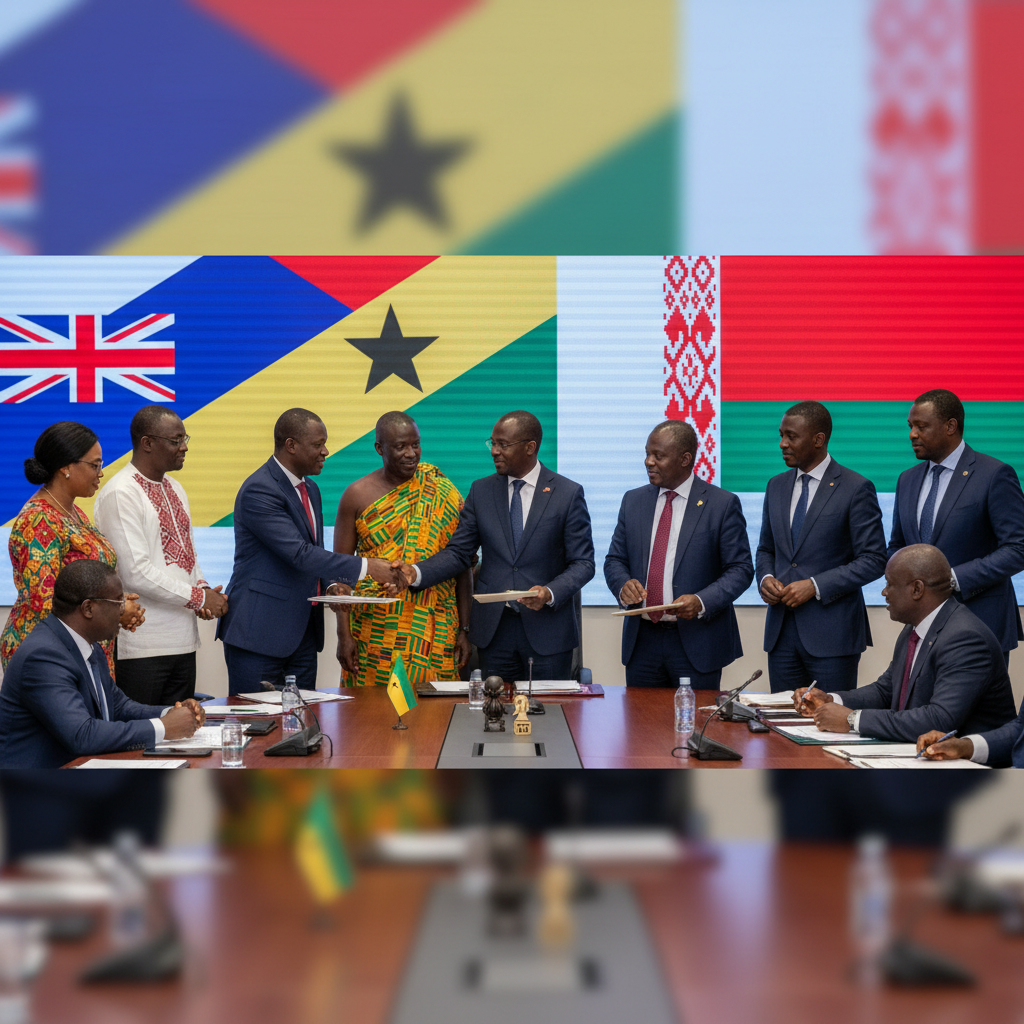
President John Dramani Mahama returned to Ghana on June 9, 2026, announcing extensive investment and trade agreements following official visits to the United Kingdom and Belarus. These bilateral agreements aim to strengthen trade relationships, boost investment, and enhance technical cooperation with both nations.
During his UK visit, President Mahama participated in the Ghana Investment Summit, attracting European investors. He cited improved economic indicators and a more favourable investment climate as key reasons for increasing international interest in Ghana. The Ghana–UK Growth and Investment Partnership seeks to shift the relationship from aid dependency towards mutually beneficial trade and investment.
This initiative aligns with Ghana's broader strategy to diversify its economic partnerships and attract foreign direct investment. Ghana has consistently aimed to reduce reliance on external aid, promoting a private sector-led growth model. Data often highlight the importance of such agreements in driving job creation and technology transfer, crucial for a developing economy.
The Presidency described these visits as part of efforts to expand Ghana’s international partnerships. These partnerships are vital for attracting strategic investment to support national development goals. Such diplomatic engagements underscore Ghana’s commitment to global economic integration.
Key components of the UK agreement include developing a commercial-scale ship repair facility in Takoradi. It also covers commercial afforestation projects in the Oti Region. The agreement will facilitate collaboration on Artificial Intelligence training under Ghana’s “AI for Good” initiative. Furthermore, it includes capacity building for clinical and biomedical engineers to strengthen healthcare delivery systems.
In Belarus, President Mahama concluded agreements establishing a Joint Commission on Trade and Economic Cooperation. These agreements will deepen collaboration between Chambers of Commerce. They will also expand agricultural cooperation, critical for Ghana’s food security and rural development.
Additionally, a visa waiver arrangement was announced with Belarus, alongside plans for Belarusian technical assistance in agriculture. This technical support aims to boost agricultural productivity in Ghana. Enhanced agricultural output contributes directly to GDP growth and poverty reduction.
President Mahama also held bilateral discussions with UK Prime Minister Sir Keir Starmer. These talks focused on political cooperation, economic ties, and security challenges in the Sahel region. He also met King Charles III and engaged Ghanaian-owned businesses in the UK.
His recognition at the London Stock Exchange acknowledged Ghana’s strong market performance. Such commendations enhance investor confidence, potentially attracting more portfolio investments. Investors monitor political stability and economic reforms closely.
The successful negotiation of these agreements signals an assertive foreign economic policy by Ghana. Future developments will likely involve monitoring the implementation phases of these projects. The impact on local industries, job markets, and technology adoption will be key indicators of success.