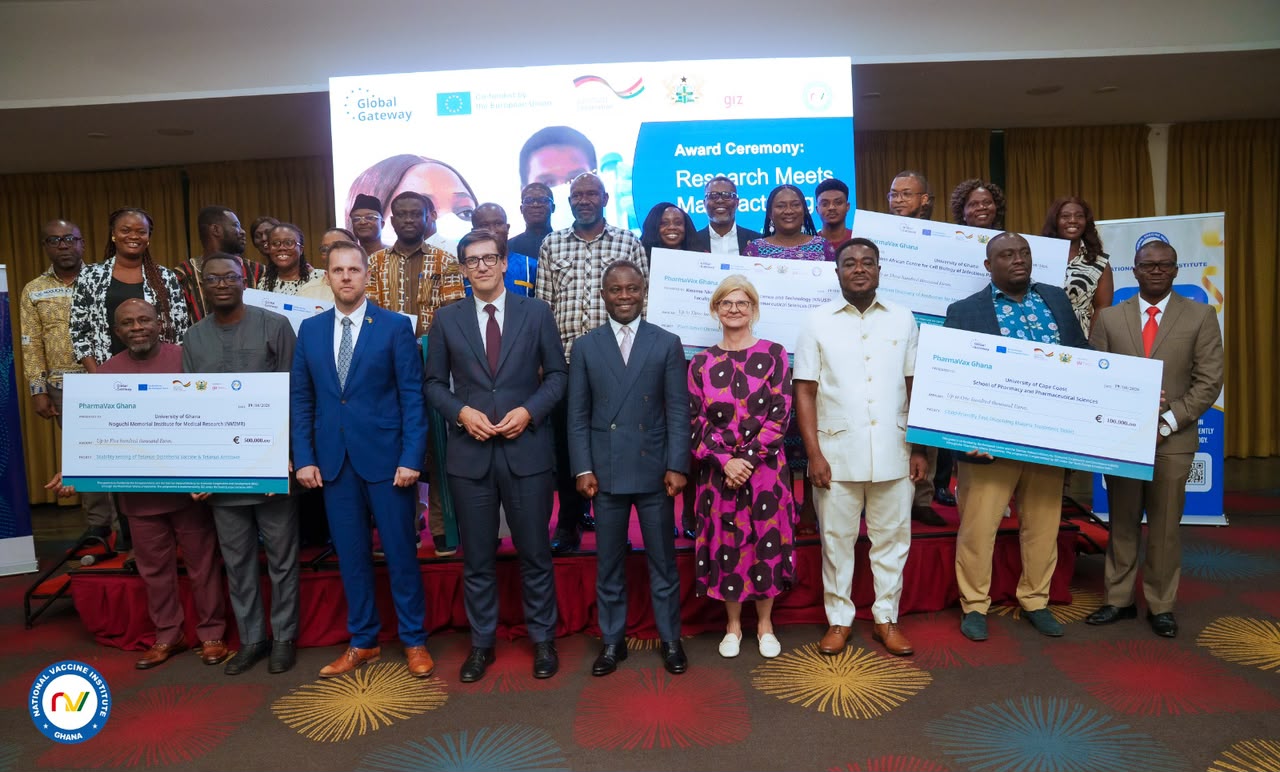
Ghana has secured €2 million in grants to bolster its vaccine and pharmaceutical innovation sector. Eight research projects received these funds under the PharmaVax Ghana programme. This initiative aims to strengthen local manufacturing capacity and advance pharmaceutical development.
The grants were awarded at a “Research Meets Manufacturing” ceremony in Accra on August 19, 2026. The National Vaccine Institute (NVI) and Deutsche Gesellschaft für Internationale Zusammenarbeit (GIZ) co-hosted the event. The German Federal Ministry for Economic Cooperation and Development (BMZ) and the European Union (EU) jointly fund the programme.
This funding aligns with Ghana's broader economic strategy to reduce reliance on imported goods and foster local industries. Developing a robust pharmaceutical sector can create jobs and improve public health outcomes. It also positions Ghana as a key player in regional health security, reducing Africa's dependence on external vaccine supplies. This initiative builds on previous efforts to industrialise key sectors of the Ghanaian economy.
Health Minister Mr. Kwabena Mintah Akandoh stated the initiative represents more than just financial grants. He described it as the beginning of a collaboration to transform scientific discoveries into life-saving medicines and vaccines. This collaboration involves researchers, manufacturers, government, and international partners working together.
The projects cover diverse areas, including child-friendly malaria medicines and herbal treatments for chronic diseases. Other focus areas include vaccine stability, production, and snake venom antiserum development. Artificial intelligence will also accelerate antibody and diagnostic development for malaria and Mpox. Ghanaian partners are contributing an additional €425,000, demonstrating strong local commitment.
The Chief Executive Officer of the NVI, Dr. Sodzi Sodzi-Tettey, highlighted Ghana's existing scientific expertise. He noted the country possesses capable research institutions and a growing pharmaceutical industry. Dr. Sodzi-Tettey believes stronger collaboration between researchers and manufacturers will create a foundation for locally developed and manufactured health solutions. These solutions can then benefit the wider West African region.
Projects were selected through a competitive call for proposals. An independent nine-member committee of Ghanaian experts evaluated 43 submissions. The committee assessed technical merit, public benefits, local manufacturer participation, and research sustainability. Beyond financial grants, beneficiaries will receive technical assistance, networking opportunities, and knowledge exchange. This support aims to strengthen research capacity and aid commercialisation of locally developed health products.
Specific awards include €300,000 to Kwame Nkrumah University of Science and Technology. This funding, in partnership with Aspee Pharmaceuticals Ltd and Ghana Atomic Energy Commission, will optimise a herbal pain medicine. The University of Cape Coast and Kash Chemist Ltd. received €100,000 to develop a fast-dissolving oral malaria tablet for children. Noguchi Memorial Institute for Medical Research, University of Ghana, and Atlantic Lifesciences Ltd. secured €500,000 for tetanus-diphtheria vaccine stability data.
The Council for Scientific and Industrial Research-Water Research Institute, with Kantanka Herbal Pharmaceuticals and Research Centre Ltd, received €125,000. This supports research into herbal treatments for alcohol-related liver disease. The Centre for Plant Medicine Research received €340,000 for two projects, including evaluating a herbal product for prostate health. The West African Centre for Cell Biology of Infectious Pathogens at the University of Ghana received €300,000. This project uses AI to develop monoclonal antibodies and diagnostics for Mpox and malaria. Central University, in partnership with Ernest Chemists Ltd, received €250,000 to develop a standardised herbal treatment for hypertension.
The PharmaVax Ghana programme, implemented by GIZ, is part of the Team Europe Initiative on Manufacturing and Access to Vaccines, Medicines and Health Technologies in Africa (MAV+). This broader initiative supports research and development, skills development, regulatory strengthening, and investment promotion. The programme is expected to contribute significantly to a more sustainable pharmaceutical ecosystem in Ghana. It will also strengthen health security across the continent.