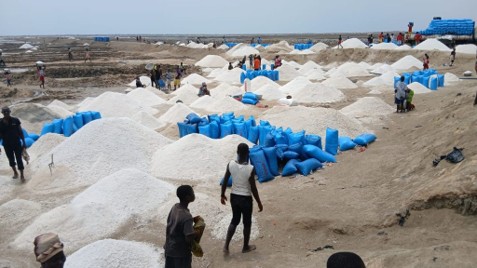
Ghana's salt industry is in severe decline, with local production falling significantly short of national demand. The country requires approximately 750,000 metric tons of salt annually for domestic and industrial use. However, local output averages only 250,000 to 300,000 metric tons each year.
This substantial deficit is largely due to stringent government policies, including high benchmark taxes, and unpredictable weather patterns. Local producers, including major player Electrochem, face operational challenges because of tax burdens similar to those imposed on gold mining companies. These financial pressures are gradually undermining the industry's viability.
The struggling salt sector highlights a broader issue within Ghana's economic landscape concerning support for local industries. Despite the critical role of salt in daily life and various industrial applications, past and present governments have done little to bridge the production gap. This continued reliance on imports to meet demand places additional strain on Ghana's trade balance and foreign exchange reserves. The situation also contradicts national efforts to promote local manufacturing and reduce import dependency.
Local salt producers have voiced their concerns, lamenting the uncomfortable situations where their businesses are collapsing. They highlighted hefty tax margins, which they argue are disproportionate to their operations' high risks and susceptibility to unstable weather conditions. One major producer, Electrochem, which accounts for about half of Ghana's local salt production at the Songor Lagoon, has faced significant operational hurdles. These include delays in meeting expected production targets due to its inability to meet high tax demands.
The current crisis has severe implications for employment and local livelihoods. The salt industry directly and indirectly employs over 10,000 young people across the country. Due to the unstable operations affecting major producers like Electrochem, approximately 5,000 youth have been laid off. This displacement stems from the company's difficulties in meeting the Minerals Commission's high fees, which led to the suspension of its operating license. The government must now consider supporting and investing in the salt mining industry with relief taxes and partnerships. Such measures would help cushion local producers and enable them to expand operations, mitigating the current challenges.
Decision-makers must urgently review the tax structure for salt production to prevent further collapse of the industry. A more favourable tax regime, coupled with strategic investments, could help local producers expand their capacity. This would reduce Ghana's reliance on imported salt and safeguard thousands of jobs. The sector minister faces a critical appeal to implement strategic measures to rescue these businesses. Without intervention, a wholly Ghanaian project, representing over a $100 million investment, risks failure. This would further widen Ghana's consumption deficit and exacerbate unemployment in affected communities.