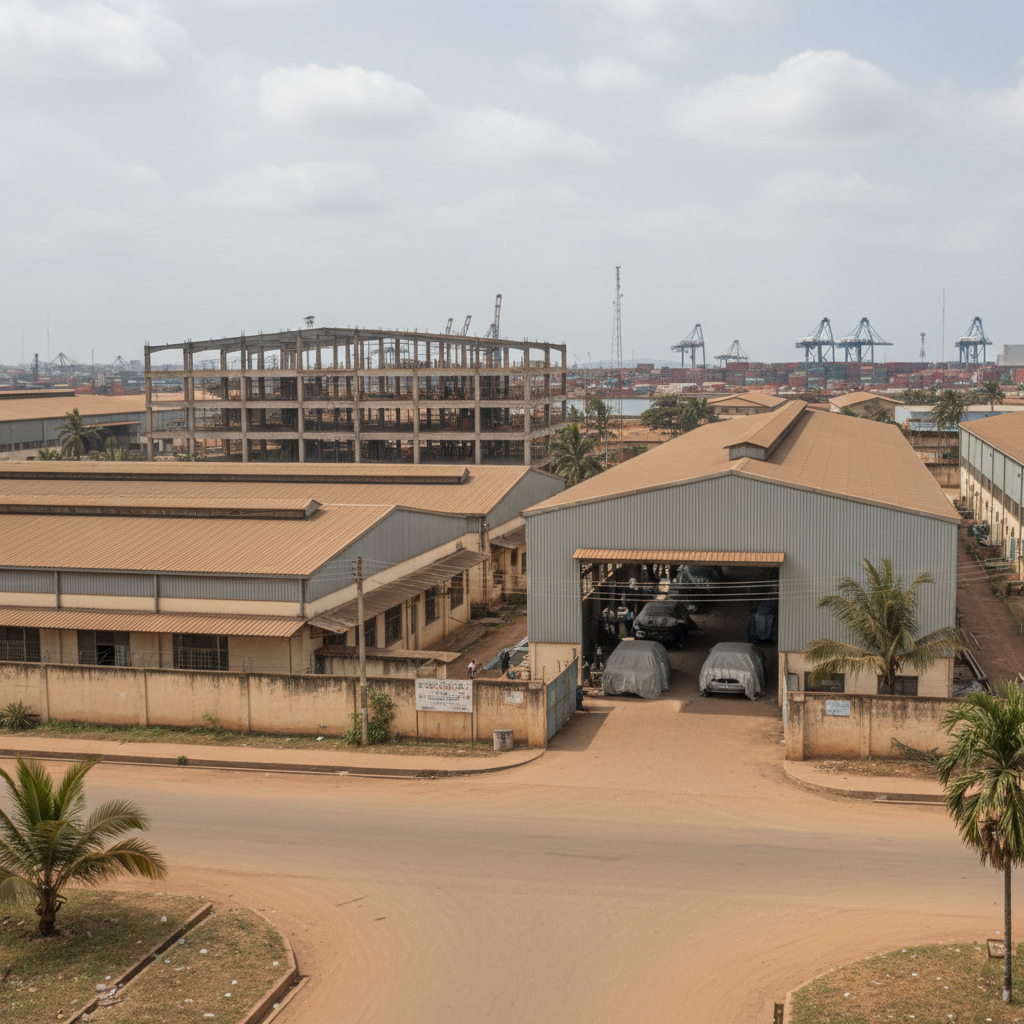
Ghana’s Ministry of Trade is reviewing the removal of Value Added Tax (VAT) exemptions for locally assembled vehicles. This reconsideration addresses concerns from vehicle assemblers about slowing production and future investment uncertainty within the country.
Industry players report that the introduction of a 20 percent VAT has made locally assembled cars less competitive. This situation directly affects expansion plans and job creation in Ghana’s automotive sector. The government’s move to reconsider the policy signals a potential shift in its approach to supporting local manufacturing.
This policy review comes amidst broader efforts to industrialize Ghana’s economy through initiatives like the Ghana Automotive Development Policy. The original VAT exemption was a key incentive under this 2018 policy. It aimed to attract major vehicle manufacturers and boost local assembly operations. The current situation highlights the ongoing challenge of balancing revenue generation with industrial development goals.
Kwasi Ofori-Antwi, Head of Strategic Manufacturing at the Ministry of Trade, Agribusiness and Industry, confirmed the government’s re-evaluation. He spoke at the Citi Business Festival 2026 Roundtable on Thursday. Mr. Ofori-Antwi explained that the Ministry of Finance previously removed the VAT because its benefits were not passed to consumers. He said, "There was an assessment on the industry by the Ministry of Finance and the Ministry felt that the VAT which was to be enjoyed by consumers was not trickling down to industry, so that was put on hold." He indicated that industry stakeholders have since engaged the Finance Ministry. He added, "Government didn't want industry to hold on to that perception, so government will be reviewing that and we are very hopeful that it will be restored."
The potential restoration of the VAT exemption could significantly impact consumer prices for locally assembled vehicles. It might also reassure investors in Ghana’s nascent automotive industry. Decision-makers will closely watch the outcome of this review, as it could signal the government's commitment to supporting local manufacturing. A positive decision could stimulate growth and protect jobs within the automotive sector. Conversely, maintaining the VAT could hinder the industry's competitiveness against imported vehicles. This would impact pricing and consumer choice.
The government's decision will influence market dynamics for new vehicle sales in Ghana. It will directly affect car buyers who might see prices fluctuate based on the tax regime. It will also influence manufacturers' willingness to deepen their investments in local production facilities. The overall aim of the Ghana Automotive Development Policy is to make Ghana a hub for vehicle manufacturing. Therefore, this tax policy plays a crucial role in achieving that national economic goal. Any changes will be observed by regional and international automotive companies considering operations in West Africa. This could determine the long-term viability of local assembly plants and their contribution to Ghana's GHS 1.3 trillion economy.