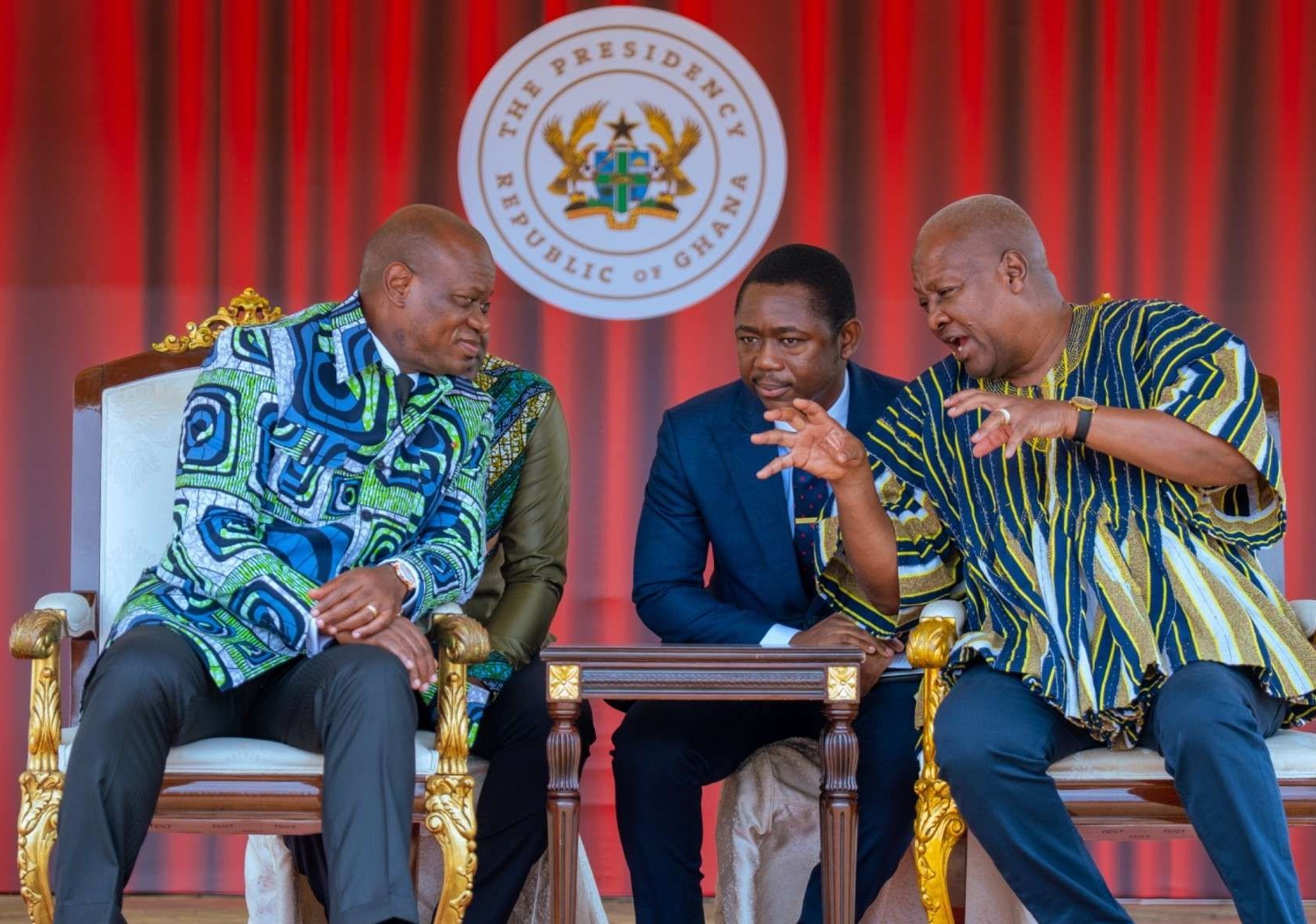
Ghana and Gabon have formally entered a new phase of strategic cooperation, marked by the signing of two memoranda of understanding (MoUs) in Accra. This significant development occurred on July 28, 2026, during a three-day state visit by Gabonese President Brice Clotaire Oligui Nguema, who was invited by Ghanaian President John Dramani Mahama.
The signed agreements include an MoU on Political Consultations, which will facilitate regular high-level discussions between the two nations. A second MoU focuses on Cooperation in Diplomat’s Training, establishing a partnership between Ghana’s Foreign Service Institute and Gabon’s Institute of Diplomatic Studies. These agreements aim to enhance diplomatic capabilities and foster closer political alignment.
This renewed commitment fits into Ghana’s broader strategy to strengthen regional alliances and boost intra-African trade, particularly through the African Continental Free Trade Area (AfCFTA). The collaboration seeks to translate political goodwill into tangible economic partnerships, aligning with the African Union’s Agenda 2063 for sustainable development. Increased bilateral trade and investment are crucial for Ghana's economic growth, which has seen varied performance in recent years.
Mr. Samuel Okudzeto Ablakwa, Ghana’s Minister of Foreign Affairs, and Mrs. Marie-Edith Tassyla-Ye-Doumbeneny, Gabon’s Minister of Foreign Affairs, signed the MoUs. Mr. Ablakwa stated that the visit was conducted in the spirit of the longstanding friendship and cordial relations between Ghana and Gabon. The two leaders reviewed the current state of bilateral relations and expressed satisfaction with the warm ties.
The implications of these agreements are far-reaching, potentially unlocking new avenues for trade, investment, and shared economic growth. Both nations will now focus on implementing the understandings reached and sustaining engagement between their relevant institutions. This move could lead to increased foreign direct investment and job creation in sectors like mining, energy, agriculture, and tourism, which are vital for Ghana's economic diversification.
President Mahama and President Nguema held extensive bilateral talks at Jubilee House in Accra. They reaffirmed their shared commitment to deepening cooperation and promoting sustainable economic development for their people. The leaders acknowledged the considerable potential to expand cooperation and agreed to intensify engagement to convert political relations into concrete economic partnerships.
They underscored the importance of enhancing bilateral trade and investment, encouraging institutions and private sectors to explore opportunities. This includes expanding commercial exchanges, industrial cooperation, and value addition. Both presidents reaffirmed their commitment to leveraging AfCFTA opportunities to facilitate intra-African trade and economic integration. They also committed to the objectives of the African Union’s Agenda 2063 and the United Nations 2030 Sustainable Development Goals (SDGs).
The two Heads of State exchanged views on regional, continental, and international developments. They reaffirmed their commitment to the principles of the African Union Constitutive Act and the United Nations Charter. They pledged to continue working together to promote peace, security, constitutional governance, democracy, the rule of law, and sustainable development across Africa. The leaders also emphasized the need for African communities to collectively address xenophobic attacks and all forms of discrimination.
President Mahama commended Gabon’s efforts towards national development and economic transformation. President Nguema, in turn, praised Ghana’s commitment to democratic governance and regional peace. President Nguema participated in a tree planting ceremony at Jubilee House and visited the Kwame Nkrumah Memorial Park, honoring Ghana’s first President. The leaders expressed satisfaction with the visit's outcomes and reaffirmed their determination to deepen bilateral relations further.