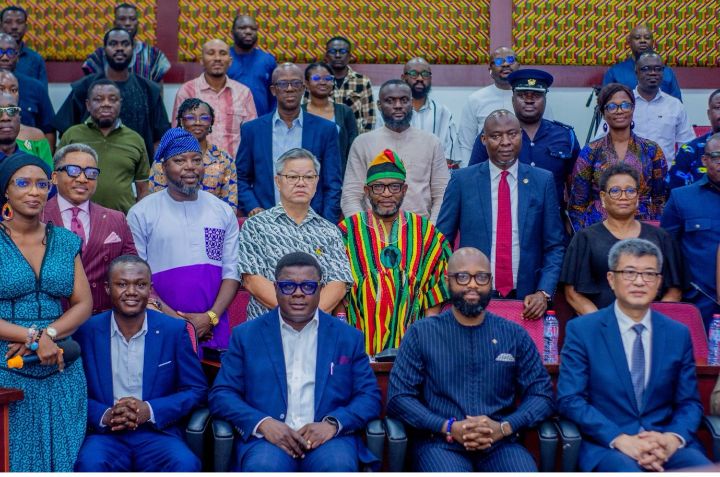
Ghanaian stakeholders have proposed establishing a dedicated Ghana-China Zero-Tariff Fund. This fund aims to help Ghanaian exporters overcome financing constraints and fully utilise China's zero-tariff market access. The proposal emerged from a high-level roundtable discussion held in Accra.
The Ghana-China Zero-Tariff Policy Roundtable, convened by CEIBS Africa and the Africa-China Centre for Policy and Advisory, identified access to finance as a major obstacle. This challenge particularly affects small and medium-sized enterprises (SMEs) seeking to increase production and meet Chinese market demand. Participants stressed the need for tailored financial products beyond conventional lending models.
This initiative fits into Ghana's broader economic strategy to diversify exports and strengthen trade partnerships. Ghana aims to boost its productive capacity and earn more foreign exchange through non-traditional exports. The country has been working to improve its trade balance and reduce reliance on commodity exports. This fund could significantly contribute to these national economic goals.
The stakeholders argued that financing should cover the entire export value chain. This includes supporting farmers, strengthening supply chains, and investing in processing facilities. They cited the cashew sector as an example, where businesses need funds to aggregate produce and increase production. This comprehensive approach ensures that all parts of the export process receive necessary financial backing.
Development finance institutions like Ghana EXIM Bank and Development Bank Ghana could play a more effective role. Participants suggested deploying these institutions to support export-oriented businesses. This would ensure that existing financial structures are leveraged efficiently for export growth. Their involvement is crucial for the fund's success.
The proposed fund's implications are significant for Ghana's export sector and economic growth. It could unlock new opportunities for businesses struggling with capital. Increased exports to China would boost local production, create jobs, and enhance Ghana's foreign exchange earnings. Decision-makers will now consider how to implement this fund effectively.
Participants identified several innovative financing tools. These include contract farming finance, warehouse financing, fintech-enabled financing, and equipment leasing. These tools address funding gaps across different stages of the value chain. Contract farming, for instance, supports out-growers while securing reliable supplies for exporters.
The discussions highlighted a close link between export financing and Ghana's productive capacity. Businesses could struggle to meet growing demand from China without adequate financing. This also applies to sufficient supplies and investment in processing facilities. Therefore, the fund must be part of a broader export-financing ecosystem.
The roundtable also explored the potential of Ghanaian and Chinese joint ventures. These partnerships could provide crucial financing, equipment, and technology for local production and processing. Such collaborations would enhance Ghana's industrial capabilities and competitiveness in the global market. They offer a pathway for technology transfer and skill development.
While zero tariffs create market access, exporters still require adequate financing and productive capacity. They need to produce, process, and deliver goods competitively. The proposed fund must address these fundamental needs. It should not operate simply as another lending facility but as a strategic enabler for export growth.
Stakeholders also identified other critical constraints beyond financing. These include standards and certification, production scale, regulatory requirements, logistics, and market linkages. Addressing these challenges alongside financing is essential. This holistic approach will ensure sustained export growth under China's zero-tariff policy.
Ghanaian businesses need both adequate financing and productive capacity to fully benefit from opportunities in the Chinese market. The proposed Zero-Tariff Fund represents a strategic step. It aims to empower local enterprises to tap into one of the world's largest consumer markets. This initiative could significantly transform Ghana's export landscape.