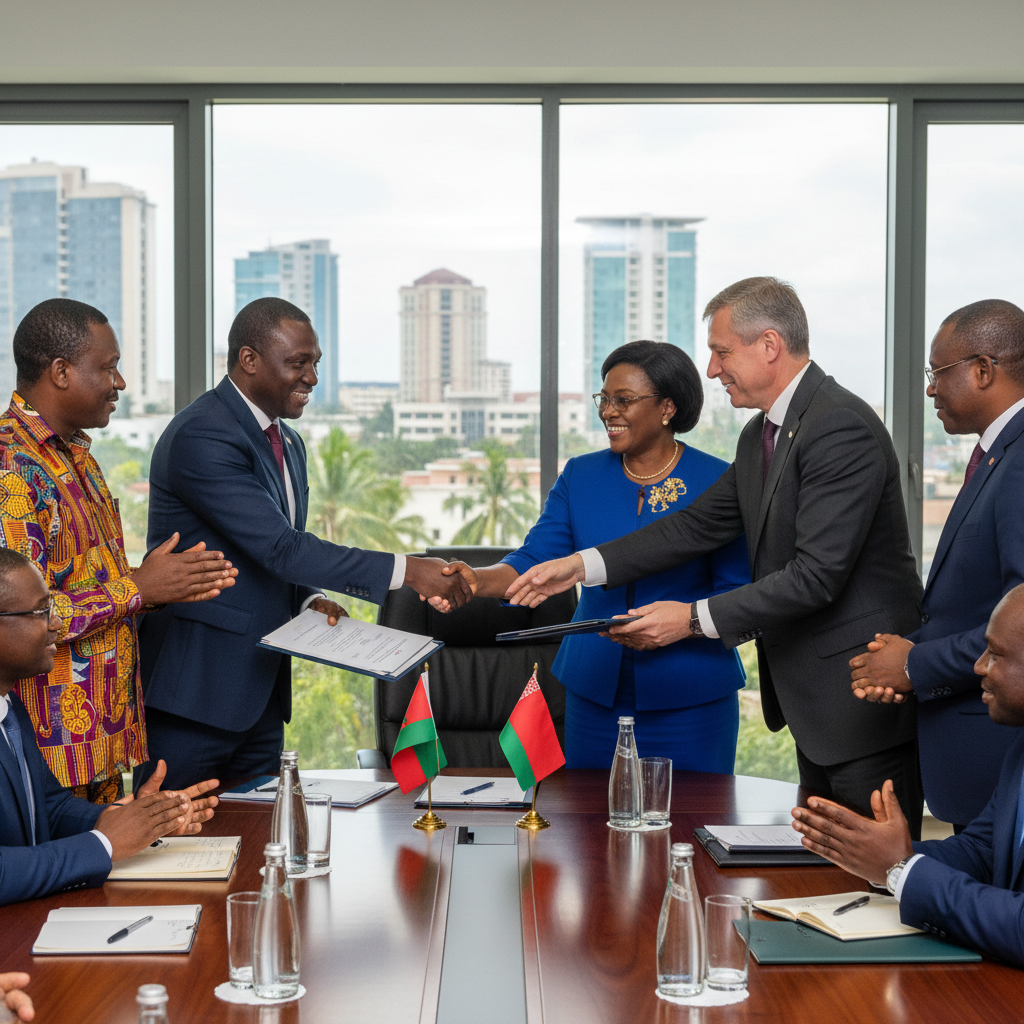
Ghana, Belarus Establish Joint Commission for Trade and Economic Cooperation

    President Mahama's visit to Belarus culminates in three Memoranda of Understanding to boost bilateral relations, focusing on trade, agriculture, and private sector engagement.

    1 min read2 min listen
    Ghana, Belarus Establish Joint Commission for Trade and Economic Cooperation
    Ghana and Belarus have established a Joint Commission on Trade and Economic Cooperation. This development follows President John Dramani Mahama’s state visit to Belarus and talks with President Alexander Lukashenko. The two countries signed three Memoranda of Understanding (MoU) during the visit. The agreements target trade, economic cooperation, and agricultural development. They also cover collaboration between the chambers of commerce in both nations. The new Joint Commission will guide future relations between Ghana and Belarus. This partnership aligns with Ghana's broader strategy to diversify its economic partnerships and attract foreign investment. Ghana seeks to modernize its key sectors, including agriculture. Previous initiatives have aimed at improving agricultural output and efficiency. The government has consistently emphasized the need for mechanization and technology transfer in farming. This latest agreement with Belarus could bring new expertise and equipment into the sector. President Mahama stated, “This visit is a landmark moment in our bilateral relations.” He highlighted the importance of the new framework. This framework aims to strengthen institutional and private sector engagement between both countries. Strengthening such ties can unlock new market opportunities for Ghanaian exports. It also facilitates knowledge transfer and investment inflows. Moving forward, the Joint Commission will oversee the implementation of the signed agreements. Businesses and investors in both Ghana and Belarus will closely watch its activities. The success of this commission will depend on practical steps to foster trade and investment. Key areas include agricultural mechanization, as Ghana aims to improve food security and export potential. Decision-makers in Accra will prioritize strategies to ensure these agreements translate into tangible economic benefits for Ghanaians. This includes monitoring the flow of goods, services, and capital under the new framework.

    Comments

    More from StatsGH