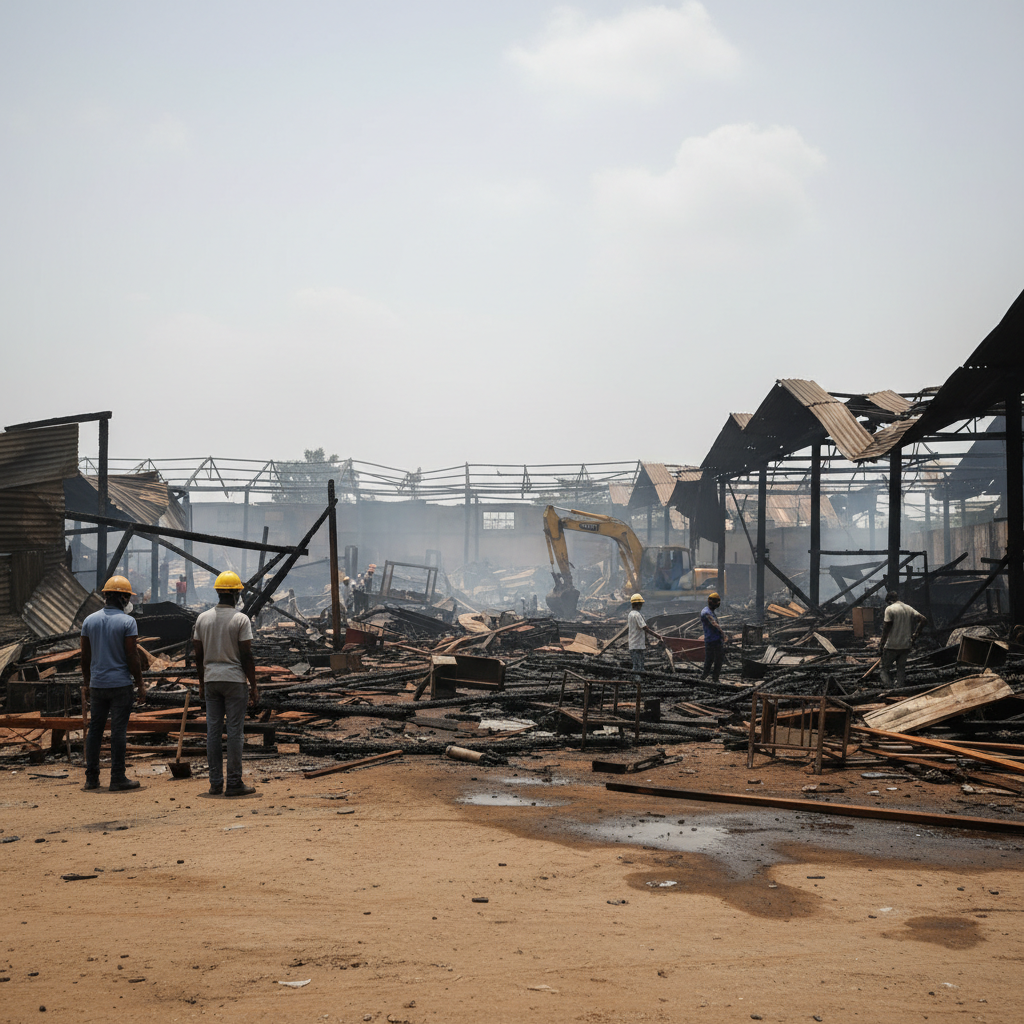
Firefighters from the Adenta Fire Station successfully contained a major fire that erupted at the Pantang Trasaco Furniture factory in Accra during the early hours of Saturday, August 8, 2026. The Ghana National Fire Service (GNFS) personnel acted swiftly to bring the blaze under control, preventing its spread to other parts of the facility and adjacent properties. This rapid response minimized potential economic losses for the factory.
The fire reportedly engulfed a warehouse and a section of the furniture production facility. While some finished woodwork and raw furniture materials were destroyed, the factory’s offices, key machinery, and other critical equipment were successfully salvaged. This containment effort was crucial in preserving the factory's operational capacity and mitigating a more severe financial impact. No casualties were reported from the incident.
This event underscores the persistent challenges faced by industrial establishments in Ghana regarding fire safety and risk management. Such incidents can lead to significant disruptions in supply chains, job losses, and substantial financial setbacks for businesses. The manufacturing sector, a key driver of Ghana's economic diversification, relies heavily on robust safety protocols to ensure continuous operation and protect investments. Previous incidents, such as the containment of a mechanic shop fire in Ho and a domestic fire in Teshie, highlight the GNFS's ongoing efforts to manage fire outbreaks across the country.
The cause of the fire at the Pantang Trasaco Furniture factory has not yet been established and remains under investigation by the GNFS. This investigation will be critical in identifying any lapses in safety procedures or potential external factors that contributed to the incident. Understanding the root cause can inform future preventative measures for similar industrial facilities.
The successful containment of this fire means the factory can likely resume full operations sooner, limiting long-term economic repercussions. However, the incident will prompt other manufacturers to review their fire safety protocols and insurance coverage. Decision-makers in the industrial sector and regulatory bodies will closely monitor the investigation's findings to implement enhanced safety standards and prevent future occurrences. The incident also highlights the vital role of the GNFS in protecting Ghana's industrial assets and ensuring economic stability.
The economic impact of such fires, even when contained, can be substantial. Businesses face costs related to damaged inventory, potential production delays, and the need for repairs. For a furniture factory, the destruction of raw materials and finished goods directly affects revenue streams and market supply. The ability of the GNFS to salvage critical machinery is a significant positive outcome, as replacing such equipment can be extremely costly and time-consuming, further delaying recovery.
Ghana's industrial growth depends on a secure operating environment. Regular fire safety audits and adherence to international best practices are essential for factories to protect their assets and workforce. The GNFS has been actively promoting fire safety education and launching digital compliance systems, indicating a proactive approach to mitigating risks. This incident serves as a reminder that continuous vigilance and investment in safety infrastructure are paramount for the nation's economic resilience.