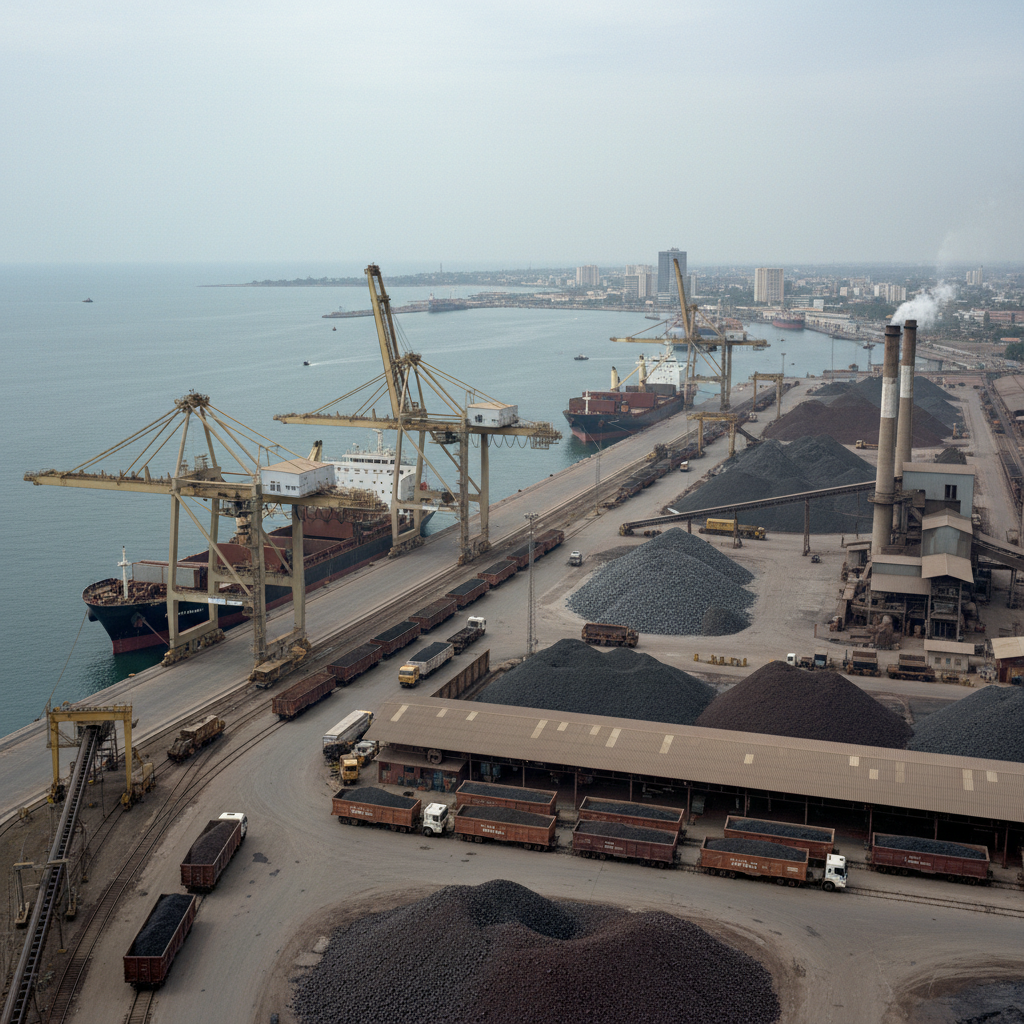
More than half of the world's economies still depended heavily on primary commodities between 2022 and 2024. Many vulnerable economies, particularly in Africa, are highly concentrated within this group.
This heavy reliance on exporting raw commodities exposes countries to unpredictable price swings, external economic shocks, and significant fiscal pressure. While natural wealth can generate export earnings, it often fails to trigger sufficient industrial transformation within the producing countries.
This situation fits into Ghana's broader economic narrative of seeking to diversify its economy and add value to its natural resources. Ghana has significant mineral wealth, including gold, bauxite, and manganese. The country consistently aims to reduce its dependence on primary commodity exports and build local processing capabilities. This goal aligns with long-standing national development plans to boost local manufacturing and create more skilled jobs.
Pedro Manuel Moreno, Acting Secretary-General of UN Trade and Development (UNCTAD), emphasizes this critical point. He stated, “The central issue is not simply what countries extract, but how much value and capability they retain.” This highlights that true economic development comes from building local industries around these resources, not just selling them raw.
The next steps involve African governments and businesses strategically investing in processing facilities, infrastructure, and skills development. Ghana, for example, could implement policies that encourage local beneficiation of its bauxite into aluminum products. Decision-makers must ensure that foreign investment in critical mineral sectors goes beyond extraction. It must actively contribute to building local processing capacity and transferring technology. This approach will allow Ghana and other African nations to capture a larger share of the value chain. This will move them from being mere suppliers to key players in global industrial production.
Investment patterns are already shifting significantly on a global scale. Strategic sectors, including critical minerals, accounted for 44% of greenfield project values in 2025. This is a substantial increase from just 16% in 2020. This trend shows a global drive towards securing resources for artificial intelligence infrastructure, semiconductors, and green energy technologies. These sectors will shape where future productive capacity is built and who benefits most from the next generation of trade.
Critical minerals like cobalt, graphite, and lithium are central to the energy and digital transitions. For example, lithium demand alone is projected to grow by over 350% between 2024 and 2040. However, this rising demand does not automatically guarantee development for the producing nations. The key lies in where the value is created and retained. The Democratic Republic of Congo accounted for 74% of global cobalt mine production in 2025. Yet, refining and processing often occur elsewhere, meaning much of the value is added after these minerals leave their origin countries.
UNCTAD has identified practical pathways for value addition. In Madagascar, a major producer of nickel, cobalt, graphite, and ilmenite, UNCTAD found opportunities to link mineral wealth to other sectors. These include food processing, textiles, chemicals, and supplier industries. This could create many formal jobs. Similar assessments in Zambia and Namibia identified hundreds of products for local development. These studies highlight where value addition can be mapped, costed, and connected to real businesses and markets. The aim is for Africa to shape the next industrial era, not just supply its raw materials.