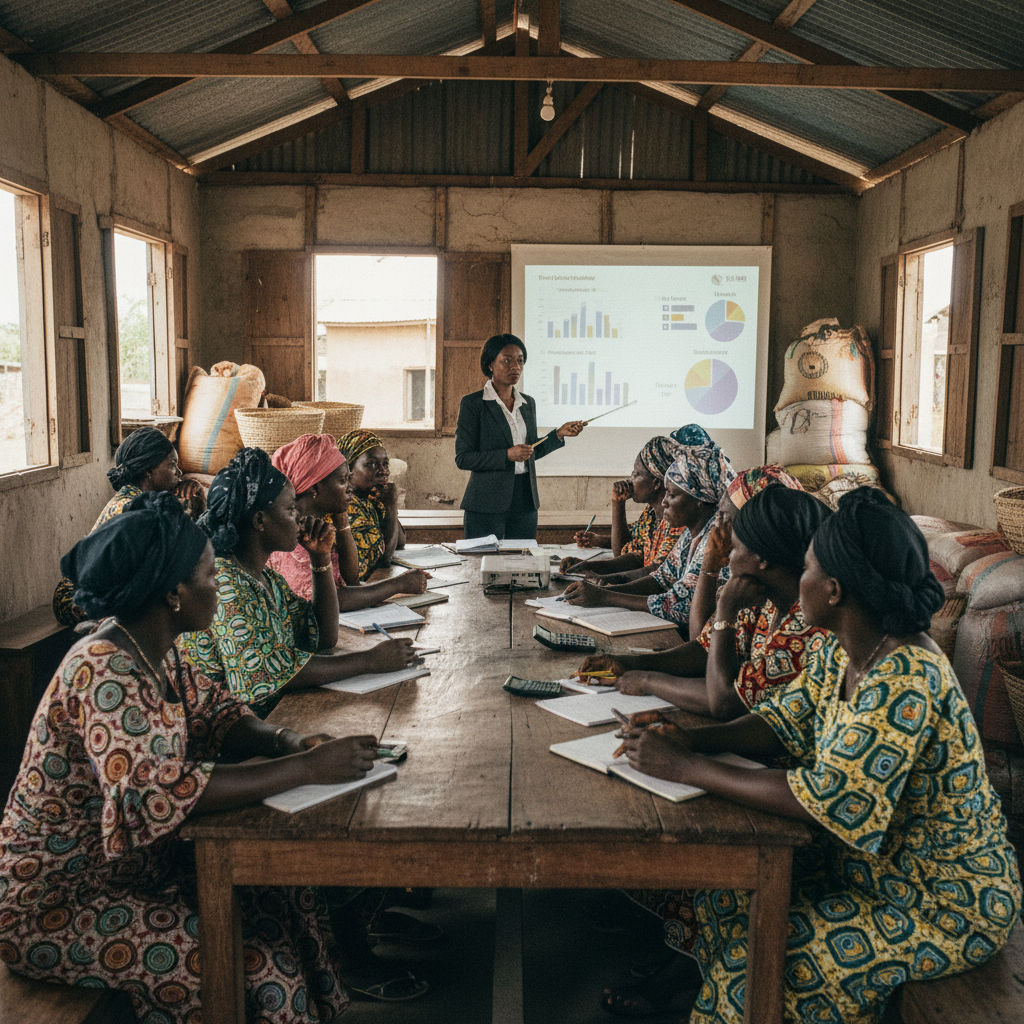
More than 300 women traders at the Ghana-Togo border in Aflao have received training on tax compliance and safe trade practices. The Trans-Border Business Network (TBBN) organized this one-day workshop. It focused on educating traders about legal requirements and approved procedures for cross-border trade.
This initiative aims to prevent financial losses for traders, including seizure of goods and penalties up to 300% of the duty. Many traders unknowingly use unapproved routes, increasing their risks. The training also supports government efforts to raise essential revenue for national development.
The initiative fits into Ghana’s broader strategy to formalize its economy and improve revenue collection. Informal cross-border trade is common, but it often operates outside regulatory frameworks. This leads to lost tax revenue and exposes traders to risks. By educating traders, the government seeks to bring more economic activity into the formal system. This improves data accuracy for national planning and strengthens economic governance.
Ms. Mabel Yayra Ayiyor, Co-Founder of TBBN, highlighted the importance of this engagement. She emphasized that borders should not block business. Ms. Ayiyor explained that traders who fail to comply with Customs procedures face severe penalties. These penalties can force traders to abandon their goods or turn to illegal routes. She stated that Customs officials used the workshop to explain the importance of paying duties on imported goods. This directly supports the government’s revenue mobilization.
The training aims to reduce instances of smuggling and unlawful trade practices. These practices undermine national security and economic stability. By encouraging compliance, the workshop helps secure the border and ensures fair competition. Officials from the Customs Division of the Ghana Revenue Authority (GRA) and the Food and Drugs Authority (FDA) facilitated the program. They educated traders on regulatory compliance and the dangers of unregulated products. They also advised against using children in contraband transport.
The workshop’s success could encourage more informal traders to join registered associations. This strengthens their bargaining power and ensures better adherence to rules. Increased compliance means more predictable trade flows and greater revenue for the state. Future collaborations with state agencies like Customs and Immigration will sustain these educational efforts. This will progressively improve compliance among cross-border traders. This will benefit both the traders and the nation's economic health.
Some participating women traders called for a review of high import taxes. They argue that current tax levels make compliance difficult. Addressing these concerns could further encourage adherence to regulations. This suggests a need for ongoing dialogue between traders and policymakers. Better tax policies could improve trade volumes and revenue yields. This approach fosters a more inclusive economic environment. These discussions are crucial for sustainable economic growth.