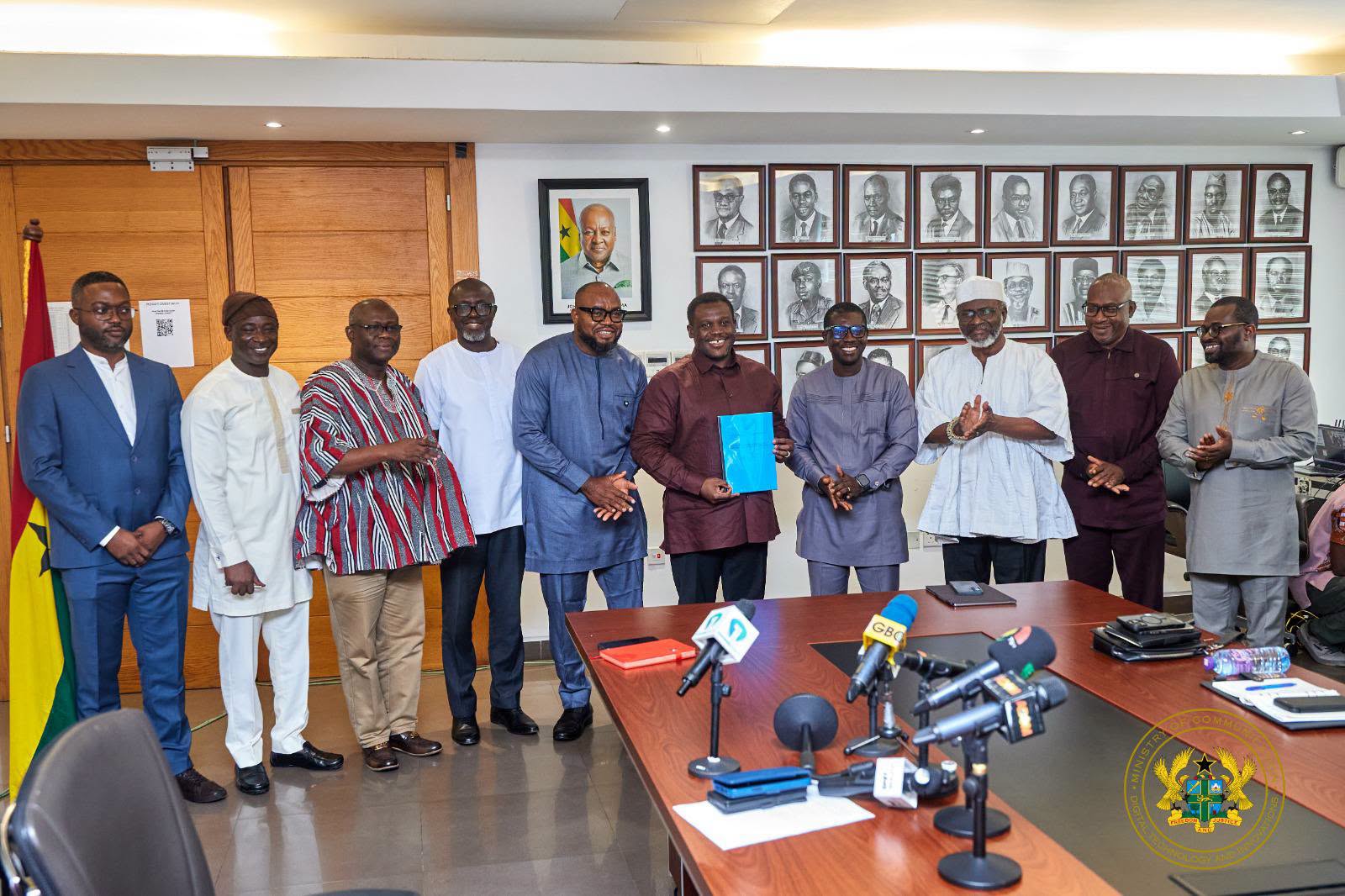
Ghana's Minister for Communication, Digital Technology and Innovations, Samuel Nartey George, received the final report of the Digital Terrestrial Television (DTT) Committee on Thursday, July 9, 2026. This submission marks a crucial step in the government's efforts to ensure the long-term sustainability, governance, and effectiveness of Ghana's digital broadcasting platform. The report signals the start of new reforms to make digital broadcasting more resilient, affordable, and transparent for broadcasters and viewers across the country.
The DTT review became necessary due to concerns about the platform's operational viability and affordability since Ghana transitioned to digital television years ago. Challenges included infrastructure management, governance structures, and the costs for broadcasters. The Ministry established the DTT Committee after extensive discussions with various stakeholders. The Committee's mandate was to conduct an independent review and provide evidence-based recommendations for future policy decisions.
This review fits into Ghana's broader economic strategy of building robust and sustainable digital infrastructure. A reliable DTT platform is essential for media pluralism, public information dissemination, and the creative economy. Ghana's journey towards digital transformation requires policies supporting media growth and access to information for all its citizens. Previous data has highlighted the need for cost reduction for broadcasters and improved network reliability, particularly in rural areas.
Minister George described the report's receipt as an "important milestone" for the DTT platform's sustainability and governance. He commended the Committee for its diligence and transparent engagement with stakeholders. The Minister assured that the Ministry will carefully study the findings and hold further consultations. This will happen before any implementation decisions are made, ensuring all policies protect the public interest and support broadcasters.
While the full contents are not public, the report addresses essential issues affecting the DTT platform. These include infrastructure management, cost structures for broadcasters' carriage fees, and governance models. It also covers technology upgrades to improve signal quality and coverage nationwide, alongside consumer access to affordable set-top boxes. Industry players have consistently advocated for reforms to ease the financial burden on broadcasters and enhance network reliability.
The DTT review forms part of a wider government agenda to build resilient and sustainable communications infrastructure in Ghana. The Ministry aims for policies that support media growth, expand information access, and create space for innovation in broadcasting. A strong DTT platform is vital for Ghana's media landscape and its overall digital economy. The government seeks to build a system that serves the public interest and supports the broadcasting sector's continuous growth.
The Ministry will now form a technical team to thoroughly review the recommendations. This will be followed by workshops with various stakeholders for validation. After these steps, final policy decisions and an implementation plan will be announced. Broadcasters and civil society groups have welcomed the report, viewing its submission as a positive step. Focus now shifts to how quickly these crucial reforms can be rolled out.