MTN Ghana is significantly increasing its investment in fibre infrastructure and artificial intelligence (AI) to manage a surge in data consumption. Customers on the company's network now consume an average of 19.30GB of data each month, reflecting strong demand for connectivity. This strategic shift moves the telecommunications giant further away from its traditional reliance on voice services.
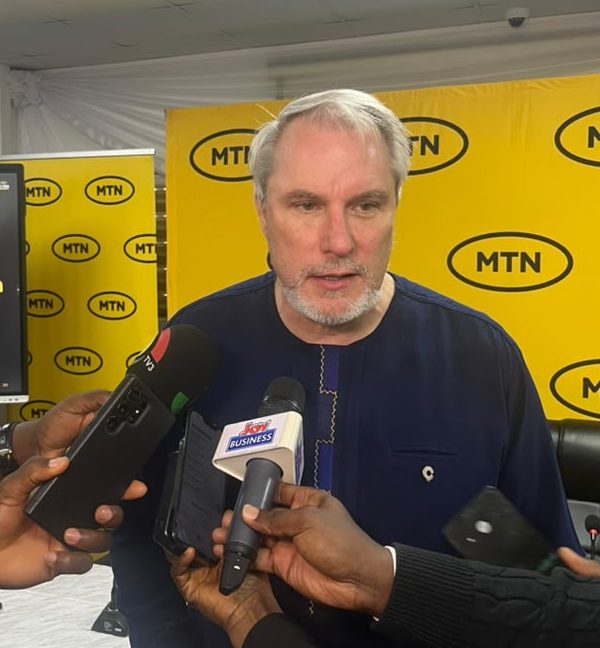
Stephen Blewett, Chief Executive Officer of MTN Ghana, stated that this high data usage is driven by both business activities and entertainment. The company's response involves deeper fibre deployment, stronger mobile coverage, and greater use of AI to optimise network performance. This investment aims to provide the best possible experience for users, who increasingly rely on data for various digital interactions.
This strategy signals a major transformation in MTN Ghana's business model, aligning with broader economic trends in Ghana. Data is no longer merely an additional product; it is the fundamental infrastructure for communication, business transactions, and a growing array of digital services. Fibre is crucial for this transition, supporting heavier data consumption and delivering more reliable fixed broadband, which is vital for Ghana's expanding digital economy.
Mr. Blewett emphasised the importance of fibre for a rich, high-data usage experience. He noted that the company has reduced fibre prices to expand access beyond large companies and high-income households. This move supports the growing demand for cloud services, streaming, online commerce, digital education, and remote work across the country. The economic significance for businesses extends beyond faster internet, as connectivity integrates with payments, banking, and inventory management.
MTN is also leveraging artificial intelligence to manage increasing traffic on its mobile network. AI will help analyse network traffic, anticipate congestion, identify faults, and determine where capacity expansion is needed. This technology is becoming critical as rising data usage places greater pressure on existing infrastructure, requiring operators to extract more efficiency from capital-intensive networks.
The investment push comes as voice services become less central to MTN Ghana's revenue mix. Voice revenue declined 1.40% year-on-year to GHS 1.90 billion in the first half of 2026. This decline reflects a continued migration of communication towards internet-based applications like WhatsApp, indicating a shift in consumer behaviour rather than reduced engagement.
Despite the dip in voice revenue, MTN Ghana's subscriber base increased 8.50% to 32.80 million, demonstrating strong customer retention. This growth suggests consumers remain deeply connected to the network but are changing how they communicate and consume services. Digital services are significantly benefiting from this shift, with revenue increasing 98.00% to GHS 377 million, supported by gaming, video, and other digital content products.
Mobile Money represents another major growth pillar for the company. Revenue from this segment increased 23.30% to GHS 3.50 billion, with active users reaching 18.30 million. Transaction volumes rose 23.30%, and transaction values increased 44.40%, underscoring the growing role of digital payments in Ghana's economy. This expansion of the fintech ecosystem, combined with a successful structural separation, positions MTN to capture future opportunities arising from increasing financial inclusion and the digitisation of payments across the market.