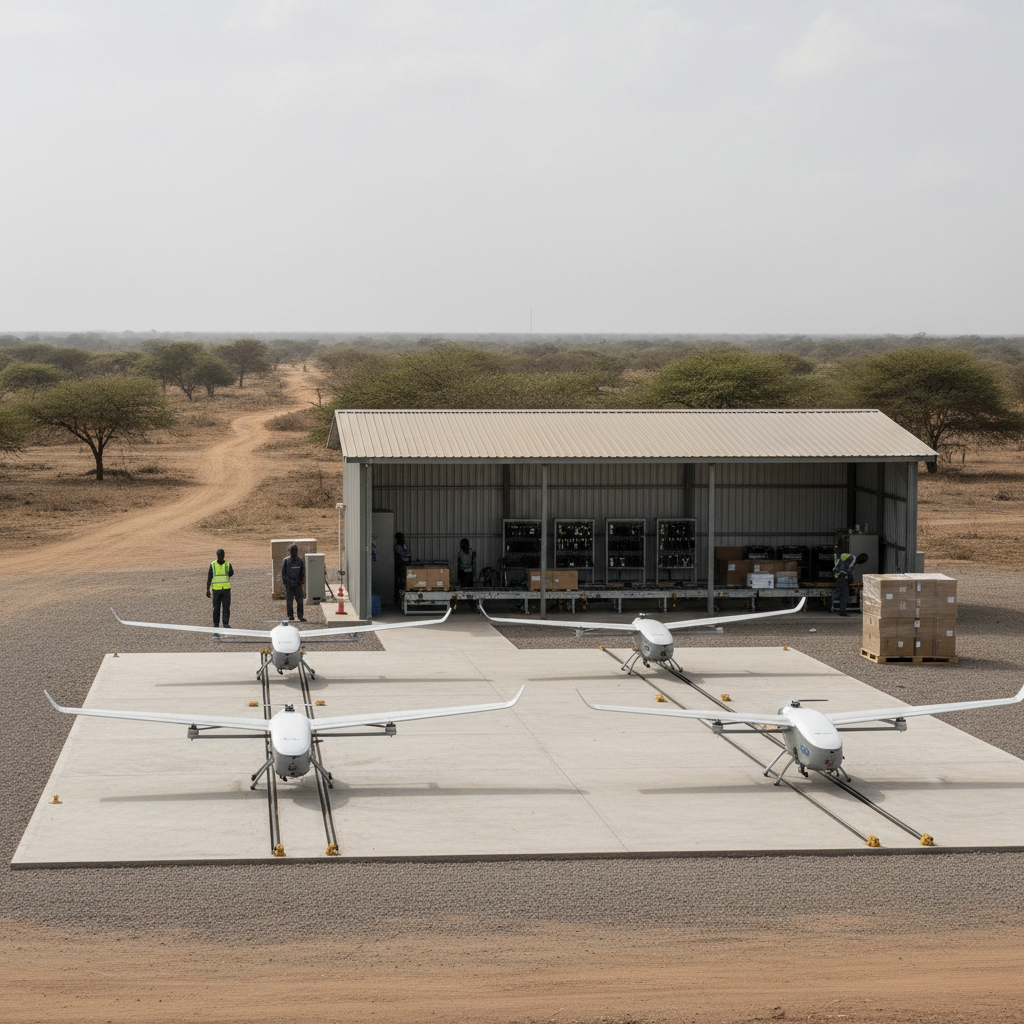
Ghana’s Zipline medical drone delivery service has seen a significant decline in operations since 2025. Three of its six distribution centers have stopped operating. This reduction is due to the government’s refusal to continue funding these hubs.
This suspension has cut off approximately half the number of vulnerable communities. These communities previously benefited from urgent supplies of vaccines, blood, and other essential medical items. The country launched its Zipline service in 2019 with one pilot center in Omenako, Eastern Region. By 2022, Ghana had expanded to six centers. These centers covered over 3,000 health facilities and delivered nearly 1,000 medical essentials daily.
This setback marks a shift from Ghana’s prior leadership in medical drone delivery networks. In 2019, Ghana was at the forefront, showcasing a successful model for last-mile health delivery. The initial expansion to six centers demonstrated a commitment to improving healthcare access, particularly in remote areas. This decline raises concerns about the sustainability of such innovative public-private partnerships in Ghana. It also highlights potential shifts in government expenditure priorities.
Ghana has lost its status as the country with the world’s largest medical drone delivery network. The decline follows ambitious expansions in other African nations. In contrast, neighbouring Nigeria, which learned from Ghana’s initial success, is rapidly expanding its own Zipline operations. Nigeria launched its first Zipline delivery center in Kaduna in 2022. It later added three more centers in Cross River and Bayelsa states. These current centers cover about 1,300 health facilities and 13 million people.
The Nigerian government and Zipline have announced plans to build 12 more distribution centers immediately. This expansion aims to reach 20,000 health facilities. It will serve nearly 100 million Nigerians with faster access to medical supplies by 2028. This move will make Nigeria the world’s largest medical drone delivery network by a significant margin. This divergence in trajectory shows differing national strategies for health technology adoption and investment.
This reduction in service will likely impact public health outcomes in affected areas. It will increase pressure on traditional supply chains for critical medical items. Decision-makers must evaluate the long-term costs of reduced access to emergency medical supplies. The government’s future funding decisions for the remaining active hubs will be closely watched. This situation may also influence investor confidence in public-private health technology initiatives in Ghana.