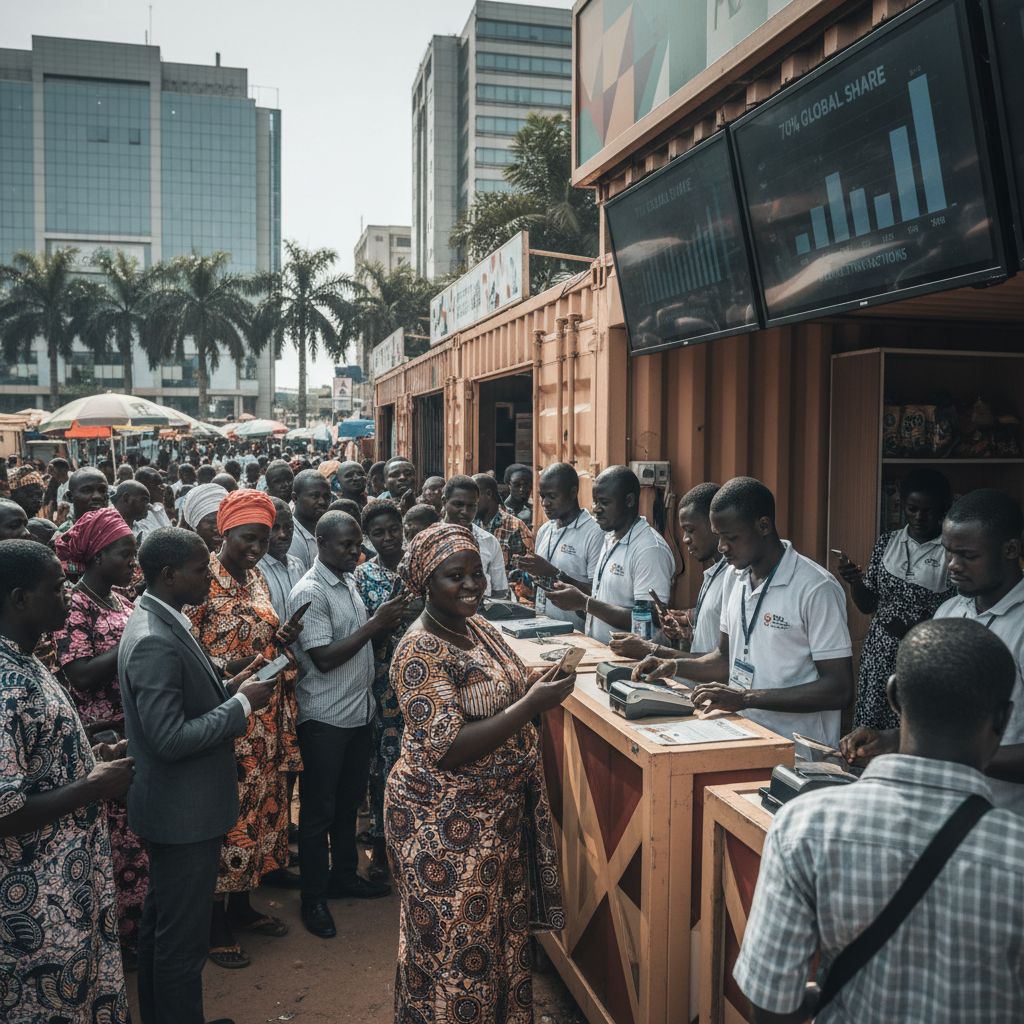
Sub-Saharan Africa handles seven out of every ten mobile transactions worldwide. This makes the region a global leader in mobile financial services. This rapid spread of financial technology (fintech) has greatly boosted economic development and innovation in the region.
This African fintech boom started with the M-Pesa system in Kenya in 2007. M-Pesa allowed people to transfer money using their mobile phones. Today, this service helps users pay bills, manage savings, get loans, and even invest in government bonds. Agents act like ATMs for cash deposits and withdrawals, with 50 times more agents than traditional ATMs. This mobile money revolution has helped Kenya reduce poverty and increase real incomes.
This development is crucial for Ghana's economic narrative. Ghana, like many Sub-Saharan African nations, has a high mobile phone penetration rate. Many citizens also have limited access to traditional banking services. The M-Pesa model shows how digital solutions can bridge this financial inclusion gap. This can drive economic growth and improve livelihoods across the continent. Such innovations are vital for countries aiming to build a resilient and inclusive digital economy.
The Kenyan Minister of Information credits M-Pesa with helping fight corruption. The Central Bank of Kenya played a key role in M-Pesa's success. The bank chose not to stop the telecom operator from entering the financial sector. Instead, it worked with Safaricom, the operator, to assess risks and protect users. The Central Bank ensured that user funds were safe even if Safaricom faced financial issues. This was done by separating the banking business from Safaricom's operations. Trust accounts supported by the Commercial Bank of Africa protected customer savings.
This approach highlights the importance of adaptive regulation for innovation. Decision-makers in Ghana can learn from this model. They can create policies that support fintech growth while safeguarding consumer interests. Such policies can attract investment and drive further digital transformation. Watch for more partnerships between telecom companies and financial regulators in Ghana. These agreements will seek to expand financial services to unbanked populations.
M-Pesa allows users to pay for utilities, health insurance, and school fees. It also helps with buying bus or plane tickets. Furthermore, it supports micro-loans and investment in government bonds. The system relies on agents for cash handling, making financial services accessible even in remote areas. These agents outnumber traditional ATMs by a significant margin. This widespread access has transformed how people conduct financial transactions in Kenya.
The growth of mobile money has inspired other non-telecom industries. For example, the Twiga digital platform connects farmers and sellers in Kenya. This platform has reduced crop losses for farmers from 30% to 4%. A similar pharmaceutical marketplace verifies medicine authenticity, fighting counterfeit products. These examples show the broader ripple effect of fintech innovation.
M-Pesa's success was not universal; it struggled in markets with high bank participation or strict financial regulations. Expansion into Albania and India, for instance, did not achieve similar results. This indicates that local market conditions and regulatory environments heavily influence fintech adoption. Ghana's unique market characteristics will also shape the success of similar initiatives.
The initial idea for M-Pesa came from a discussion at the UN World Summit in 2002. Nick Hughes, a Vodafone executive, realized low-income markets lacked financial innovation. A British official suggested using funds from a government trust fund to overcome corporate hurdles. Kenya had minimal financial infrastructure then, with only three ATMs and 2.7 bank branches. Less than 18% of the population had electricity access, but one in five owned a mobile phone. This low banking penetration and high mobile ownership made Kenya an ideal testbed. Vodafone received a UK government grant to launch the system. They discovered people primarily used microloans to send money to family in rural areas. There was no safer or easier way to transfer funds to these unbanked regions.