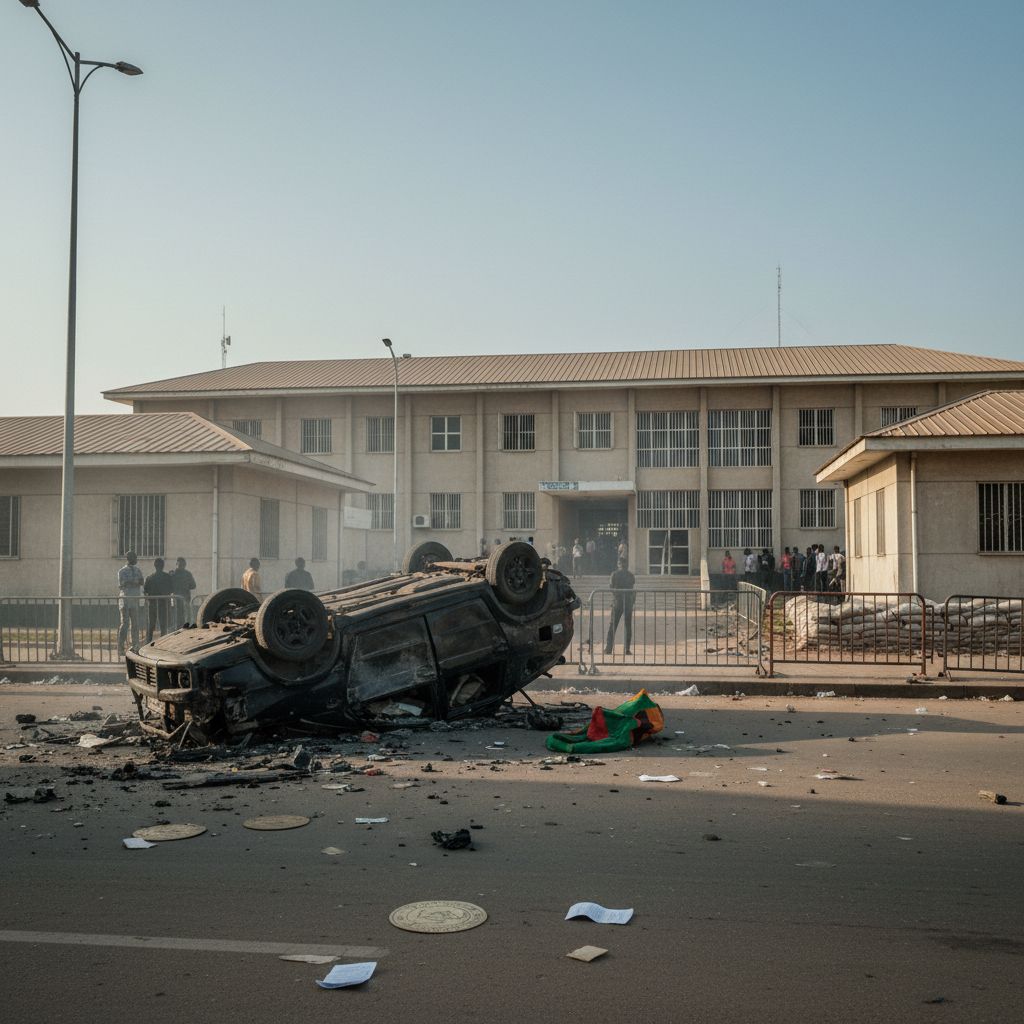
A former Zambian minister, Mutotwe Kafwaya, died during a security raid on a property linked to opposition leader Brian Mundubile. This incident occurred a day after Zambia’s presidential election, according to authorities. Police confirmed Kafwaya was fatally wounded by law enforcement officers in the capital, Lusaka, on Friday.
Officials described the event as an exchange of fire during a security operation. The raid resulted in eleven arrests. Authorities accused Mundubile’s party, the NRPUP, of involvement in “insurgency” and “militia activity.” They also claimed the party was storing “high-grade” weapons. This raid followed an election where incumbent President Hakainde Hichilema secured a second five-year term.
This development adds to the political uncertainty in Zambia following the recent presidential election. President Hichilema won with a 60% share of the vote. Opposition leader Mundubile, who trailed with 38%, plans to challenge these results in court. He alleges that the vote tallying process was tampered with. Such post-election disputes can often lead to heightened political tensions and instability, impacting investor confidence and economic outlook.
A police spokesman confirmed Kafwaya’s death late on Wednesday. This confirmation came amid growing public demands for information regarding his whereabouts. Opposition leader Mundubile stated he had no information about Kafwaya after the shooting. He claimed the raid took place at his own house. The police account suggests a direct confrontation during the operation.
The killing of a former minister under such circumstances sends a strong signal about the political climate. It could deter foreign investment and impact Zambia’s credit ratings. International bodies often monitor such events for signs of democratic backsliding or human rights abuses. A stable political environment is crucial for economic growth and attracting capital. Ghana, like other African nations, watches regional political stability closely.
The allegations of “insurgency” and “militia activity” against an opposition party are serious. They suggest a deep rift within the political landscape. Such accusations can lead to further crackdowns on dissent. This could potentially escalate the conflict between the government and opposition. Investors typically shy away from countries with high political risk. This situation could therefore affect Zambia’s ability to secure loans or attract foreign direct investment.
The opposition’s plan to challenge the election results in court is a critical next step. The judiciary’s handling of this challenge will be closely watched. A fair and transparent legal process is essential for maintaining public trust. Any perception of bias could further fuel unrest. This situation underscores the fragility of democratic institutions in some emerging economies. It highlights the importance of robust electoral processes.
For Ghana, regional stability is important for trade and diplomatic relations. Instability in one African nation can have ripple effects across the continent. This incident could influence perceptions of political risk in other African markets. Businesses operating across Africa often factor in such political developments. They assess potential impacts on supply chains and market access. The situation in Zambia serves as a reminder of these interconnected risks.
The international community will likely call for a thorough investigation into Kafwaya’s death. Transparency and accountability are crucial in such high-profile cases. Failure to address these concerns adequately could lead to sanctions or diplomatic pressure. This could further isolate Zambia on the global stage. The economic consequences of such isolation can be severe, affecting ordinary citizens. This event therefore has far-reaching implications beyond Zambia’s borders.