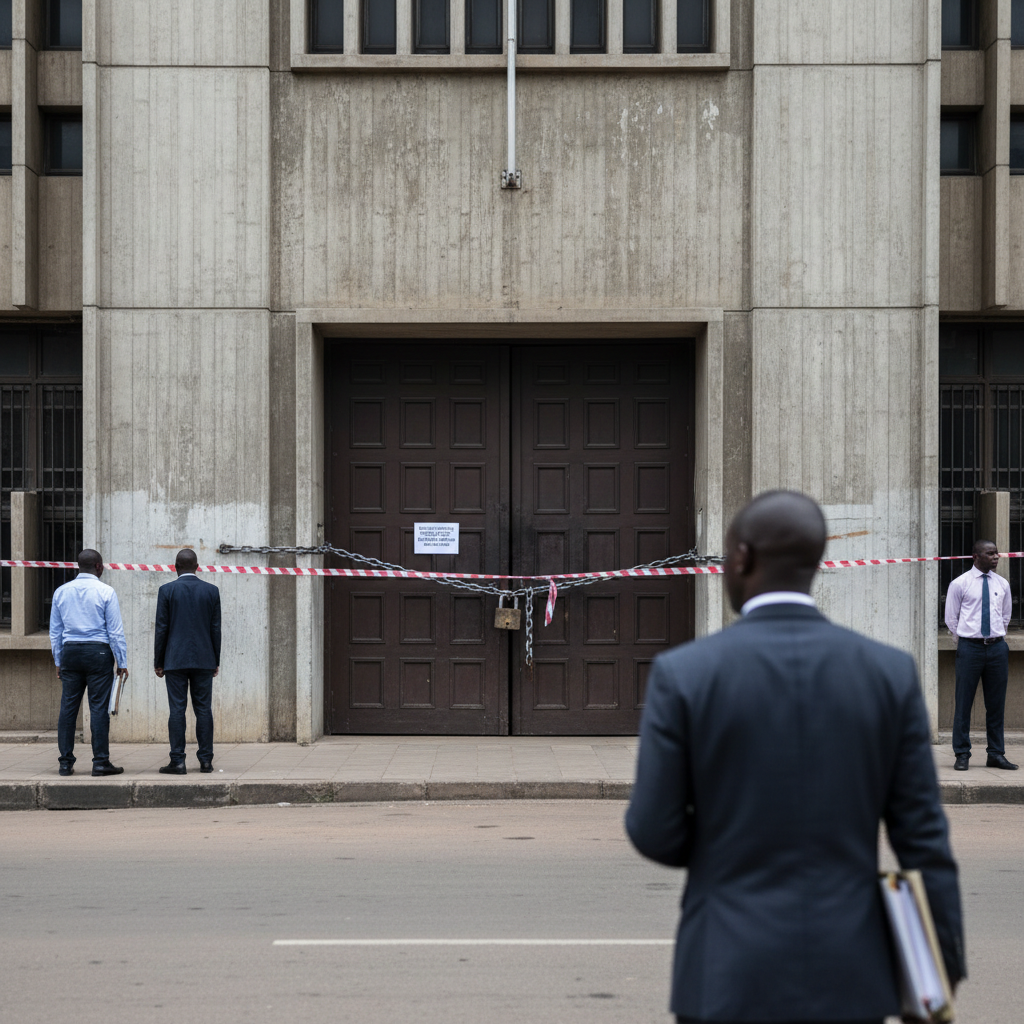
Zambian court premises in Lusaka and other cities have been sealed off by police as the deadline for filing a petition against the recent presidential election outcome approaches. This unprecedented move prevents access to judicial buildings, including the High Court and Supreme Court, just days before the Monday deadline for challenging the results.
The sealing of courts follows opposition candidate Brian Mundubile's declaration to challenge the election results, citing irregularities. Mundubile, who secured 38% of the vote, is reportedly in hiding due to alleged threats. Incumbent Hakainde Hichilema won a second term with 60% of the votes, but the post-election period has been marked by controversy, including the death of an opposition figure and arrests.
This situation in Zambia could impact regional perceptions of democratic stability and the rule of law, which are crucial for attracting foreign investment and maintaining economic partnerships. Ghana, like other African nations, relies on stable governance to foster economic growth and investor confidence. Disruptions in a key regional economy like Zambia can send ripples across the continent, influencing how international bodies and investors view the broader African market. The African Union and regional economic blocs often emphasize democratic processes for stability.
A lawyer told the BBC that three armed men approached his vehicle, identified themselves, and instructed him to leave the court area. This account highlights the intimidating atmosphere surrounding the judicial process. The Law Association of Zambia and human rights groups have called for independent investigations into the post-election incidents, including the death of former minister Mutotwe Kafwaya during a security operation.
The sealing of courts and the ongoing political tension could deter foreign direct investment into Zambia, affecting its economic outlook. Investors prioritize legal certainty and political stability. A prolonged period of uncertainty might lead to capital flight or a slowdown in new investments. This could also influence Zambia's ability to secure international loans or aid, as institutions like the International Monetary Fund often consider governance indicators. The scheduled inauguration of President Hichilema on September 1 proceeds amidst these concerns, with preparations continuing despite the judicial blockade.
The European Union observation mission noted that the election day on August 13 was largely peaceful but raised concerns about media freedom and restrictions on the opposition. They also highlighted issues with vote tallying, including a heavy military presence and weak verification processes. Such observations, combined with the current judicial blockade, could lead to international scrutiny and potential diplomatic pressure on Zambia. The transparency of the electoral process and the independence of the judiciary are fundamental pillars for any thriving democracy and economy.
The immediate implication is a potential constitutional crisis if the opposition is unable to file its petition within the stipulated timeframe. This could further escalate political tensions and lead to civil unrest. International observers and financial markets will closely watch how the Zambian government addresses these concerns and ensures adherence to democratic principles and the rule of law. The long-term economic stability of Zambia, a significant copper producer, depends heavily on resolving these political uncertainties transparently and peacefully. Any perceived erosion of judicial independence could have lasting negative effects on its economic development and international standing.