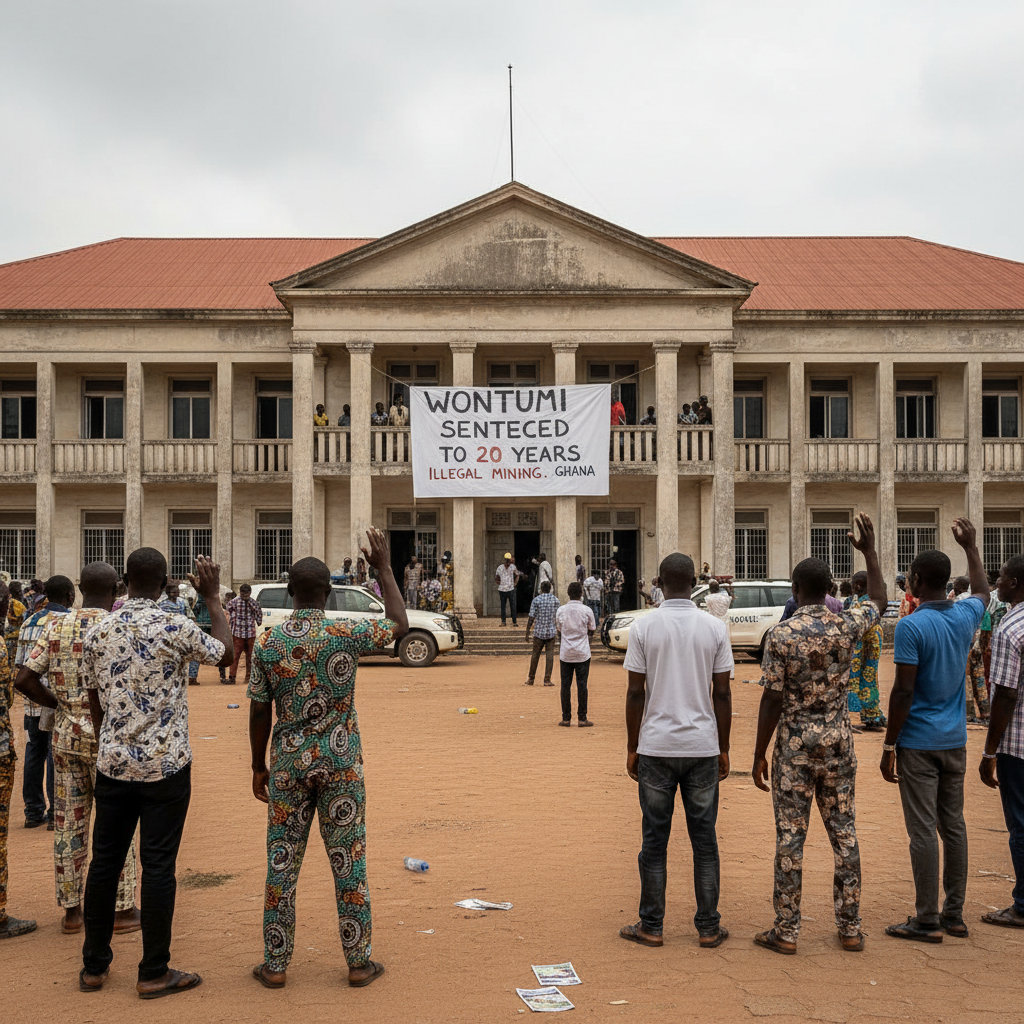
Bernard Antwi-Boasiako, widely known as Wontumi and the Ashanti Regional Chairman of the New Patriotic Party (NPP), has received a 20-year prison sentence with hard labour. The Accra High Court convicted him on July 20 for illegal mining-related offences in the Samreboi case. His former legal representative, Andy Appiah-Kubi, revealed that Wontumi had advance knowledge of the impending conviction and the specific 20-year sentence.
Mr. Appiah-Kubi, speaking on Accra-based TV3, stated that Wontumi informed him about the judgment's content before its official delivery. "Chairman Wontumi had prior information that he would be convicted. He told me the content of the judgement. He told me that he will be jailed for twenty years," Appiah-Kubi recounted. This revelation suggests an unusual level of foresight regarding the court's decision in a high-profile case involving environmental degradation.
This conviction underscores Ghana's intensified efforts to combat 'galamsey,' the local term for illegal mining, which has severely damaged the nation's water bodies and forest reserves. The government has implemented various measures, including military operations and stricter enforcement, to curb these activities. The sentencing of a prominent political figure like Wontumi signals a strong commitment to holding individuals accountable, regardless of their status, aligning with broader national environmental protection goals.
Justice Audrey Kocuvie-Tay delivered the 59-page judgment, explaining that the 20-year sentence aims to deter others and highlight the severe nature of environmental crimes. She noted, "The Court takes notice of the gravity of the offences, and the need for deterrence to avert the environmental disaster that might befall the nation the more law enforcement stays aloof and allows illegal mining activities to persist in the country." This judicial stance reflects a growing concern over the long-term economic and ecological impact of unregulated resource exploitation.
The judge further explained that the offences undermined Ghana’s mining regulatory framework and contributed significantly to environmental destruction. She stated, "The offences in this case relate to illegal exploitation of mineral resources, which are the property of the state. The conduct of the 1st and 3rd accused persons undermines the regulatory framework for the mining sector and contributes to environmental degradation associated with illegal mining." This highlights the direct link between illegal activities and the erosion of state assets and environmental health.
Despite the severity of the crimes, Justice Kocuvie-Tay considered Wontumi's status as a first-time offender during sentencing. She ruled, "On count 1, the 1st accused is sentenced to serve a term of 20 years imprisonment in hard labour, and also to a fine of 10,000 penalty units; in default serve 3 years in hard labour." Akonta Mining, the third accused, received a fine of 15,000 penalty units on counts three and six, with all custodial sentences running concurrently.
Mr. Appiah-Kubi, however, disagreed with the 20-year prison sentence, arguing that the court made a legal error by treating Chairman Wontumi and Akonta Mining as a single entity. He asserted, "The evidence on the ground does not support the judgment. Per the company law, the company is different from the owner or shareholder." This legal distinction forms a crucial part of the planned appeal.
The lawyer confirmed that the issue of corporate personality versus individual liability would be a key component of the appeal against the conviction. "This will form the basis of our appeal," he added. Wontumi, anticipating the outcome, had instructed his lawyer earlier on the day of judgment to file an appeal if convicted. This legal challenge will be closely watched by the public and legal community, as it could set precedents for future environmental crime cases involving corporate entities and their owners.
The implications of this ruling are significant for Ghana's mining sector and its regulatory environment. It sends a clear message to individuals and companies involved in illegal mining that the judiciary is prepared to impose stringent penalties. This could lead to increased compliance with mining laws and potentially reduce the prevalence of 'galamsey.' The appeal process will determine the final legal standing of Wontumi and Akonta Mining, but the initial conviction marks a critical moment in Ghana's fight against environmental degradation and resource mismanagement.