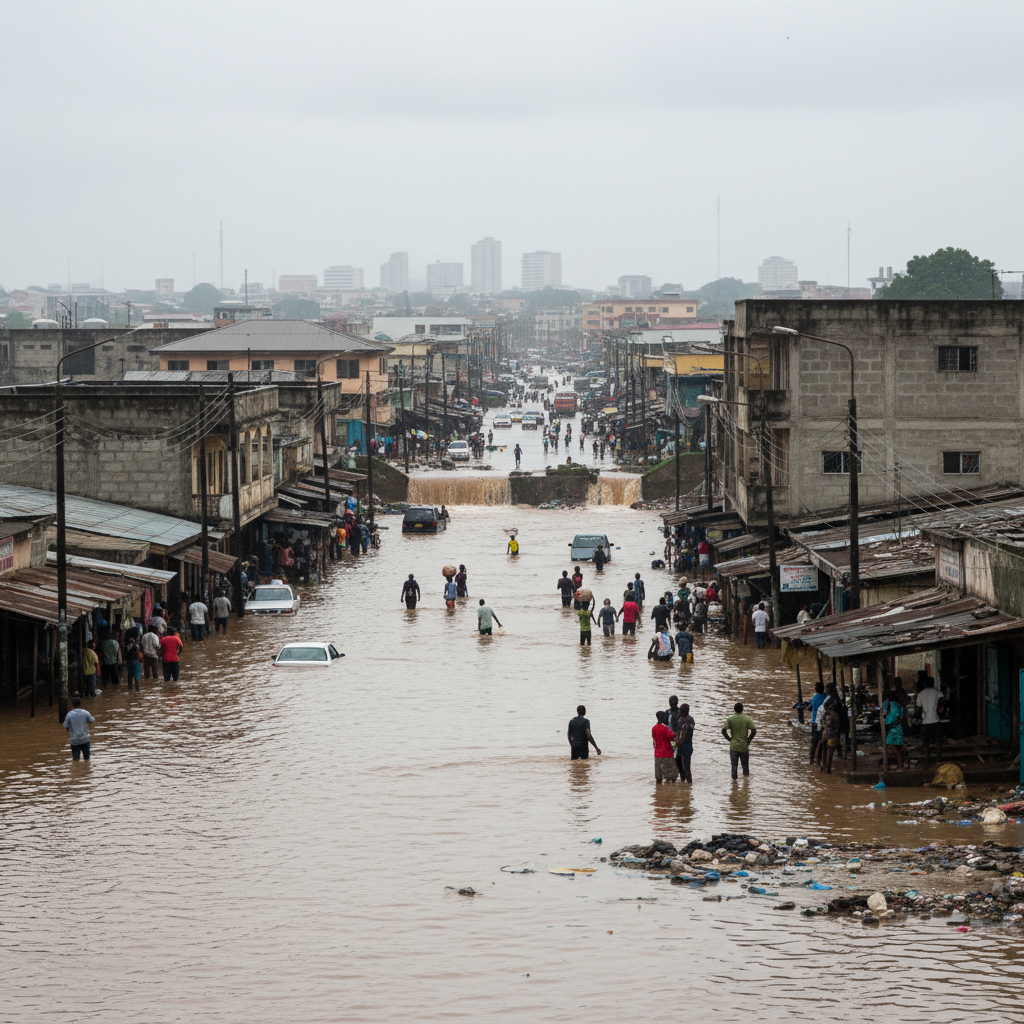
Former Greater Accra Regional Minister, Henry Quartey, has explicitly linked Accra's worsening flood situation to weak enforcement of planning and environmental regulations. He stated that previous interventions, if maintained, would have significantly mitigated the impact of recent flood events. This highlights a critical governance challenge impacting urban resilience.
Mr. Quartey explained that human activities obstruct natural watercourses, which are crucial for channeling runoff from the Akuapem Hills through areas like Abokobi, Haatso, and Achimota. These obstructed channels then discharge into the Odaw River and Korle Lagoon, leading to widespread flooding. The gradual relaxation of enforcement efforts, including the relocation of traders from Agbogbloshie, has exacerbated the problem, effectively reversing earlier progress.
This issue fits into a broader narrative of Ghana's urban development challenges where rapid growth often outpaces regulatory capacity. The Accra Metropolitan Assembly (AMA) and other local authorities frequently struggle with illegal constructions and encroachments on public lands and waterways. Poor drainage infrastructure across the capital, despite significant public spending on flood control projects over the years, remains a persistent challenge that affects commerce and daily life. Data from the National Disaster Management Organization (NADMO) often shows Accra as a hotspot for flood-related displacements and property damage during rainy seasons.
Speaking on Citi FM on Wednesday, July 1, Mr. Quartey emphasized that while some flooding is unavoidable, its effects can be minimized. He said, "Even in advanced countries, it does rain and it does flood. But because they have good engineering systems in place, within a few minutes, the rain finds its way into where it has to go." This statement underscores the critical role of robust infrastructure and consistent policy implementation.
The lack of sustained enforcement poses a significant risk to Accra's long-term economic stability and public safety. Without consistent application of building codes and environmental protection laws, the city will continue to incur substantial economic losses from flood damage. Investors and residents alike will demand greater assurance that infrastructure investments are protected and that the city can withstand climatic shocks. Decision-makers must prioritize revitalizing enforcement mechanisms and investing in resilient urban planning to avert future crises. The economic cost of inaction, from destroyed property to disrupted commerce, far outweighs the investment in preventative measures.
Mr. Quartey recalled cautioning in 2021 that areas like the Motorway, Klagon, and Boteyman faced severe flooding risks if drainage issues were not addressed. These warnings have since proven accurate. This suggests a need for proactive rather than reactive policy responses. The government's flood relief and mitigation efforts, such as the GHS 350 million recently released by the Finance Ministry, address symptoms rather than underlying causes. Sustained enforcement and long-term planning are essential to prevent future flood disasters and protect Accra's economic future. This will require strong political will and inter-agency collaboration.