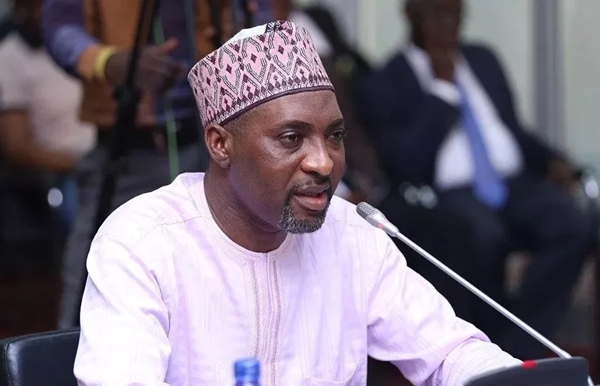
Ghana’s Interior Minister, Muntaka Mohammed-Mubarak, has revealed that the Volta Region alone contains 102 unapproved border routes. This significant number highlights Ghana's porous borders. It raises serious concerns about national security and the potential for increased criminal activities.
These illegal routes pose a considerable risk of criminals, including drug traffickers, using them to evade official checks. The large number of unapproved crossings complicates efforts for security agencies to fully protect the country’s borders. This situation could facilitate the smuggling of goods and people, potentially impacting Ghana's internal security and economic stability.
This issue fits into Ghana’s broader struggle with border management, which has long been a challenge for national security and economic control. The existence of 48 official border crossing points is overshadowed by the extensive network of unofficial entry points. This vulnerability can affect customs revenue collection and foster illicit trade. It reflects a persistent data trend of informal economic activities bypassing state oversight.
Minister Mohammed-Mubarak presented this information to Parliament’s Assurances Committee on Tuesday, July 7, 2026. He stated, “We have 48 legitimate crossing points into our country. But the illegitimate ones, because of the time, to make sure that we secure our borders. We are shocked to realise that the last time I was in the Volta Region alone, we’ve identified 102 unapproved routes.” This direct attribution underscores the gravity of the statistics.
The problem of unapproved routes is not limited to the Volta Region. Other regions bordering neighboring countries, such as Upper East, Upper West, Bono, and Western regions, also face similar challenges. If these numerous illegal routes are not properly secured, Ghana risks becoming a major transit point for international criminal groups. The Minister's warning suggests a clear economic and security implication: increased illicit flows could undermine legitimate trade and financial systems.
Security agencies have responded by establishing 63 strategic inland checkpoints to enhance border security. These checkpoints aim to improve monitoring and gather intelligence. Although some members of the public have complained about the number of these checkpoints, the Interior Minister emphasized their importance. He also urged security officers to minimize delays for travelers and to focus on intelligence-led operations.
Protecting Ghana's borders effectively requires strong public support and cooperation. Citizens are encouraged to share credible information with security agencies regarding suspicious activities. This collaborative approach is crucial to national security. It also helps to safeguard Ghana's economy from the adverse effects of unchecked cross-border illicit trade.