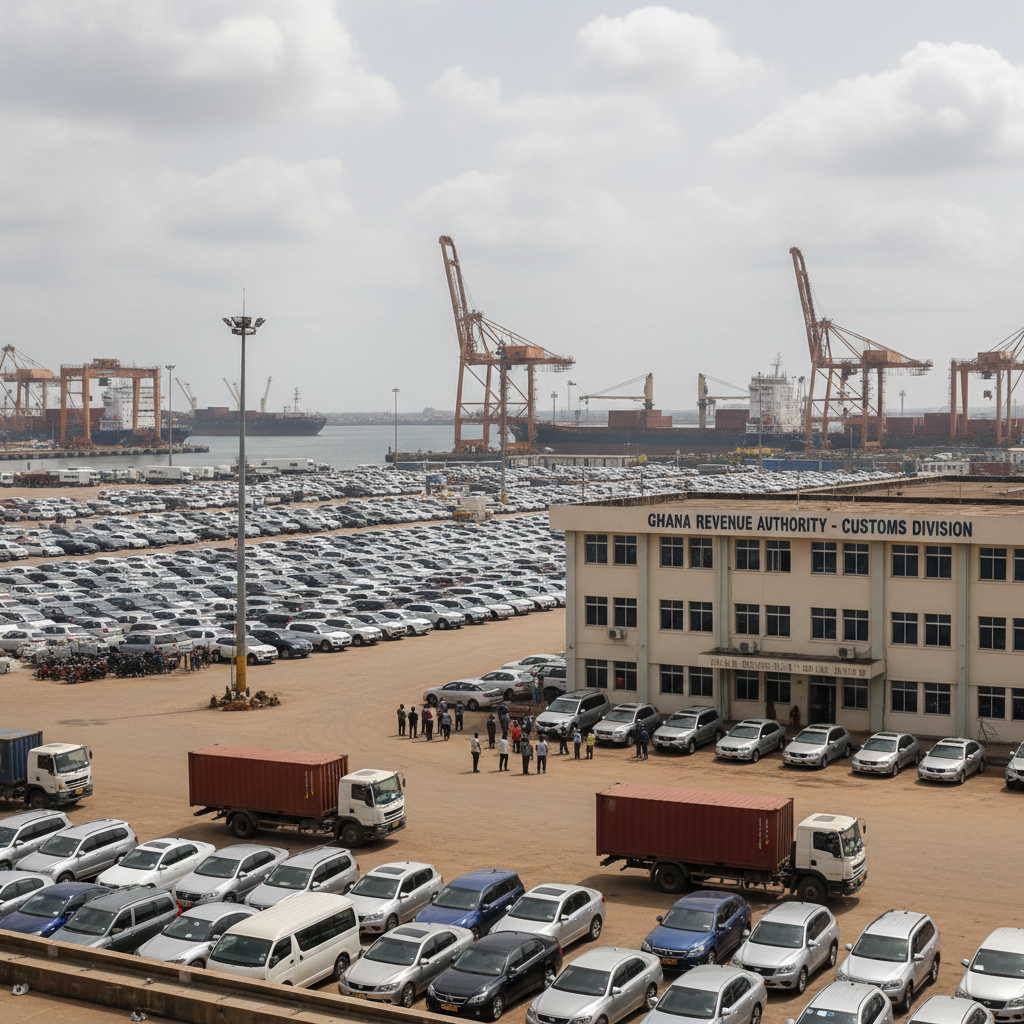
The Customs Division of the Ghana Revenue Authority (GRA) announced that identical imported vehicles can attract different duties. This difference occurs because of varying specifications and features, not just make and model alone. Importers often misunderstand this valuation process.
Vehicle valuation depends on several factors, including trim level, accessories, engine specifications, and age. These individual characteristics directly influence the final customs value. Michel Adu Manu, a Senior Revenue Officer at the Customs Technical Services Bureau’s Vehicle Valuation Unit, stated that importers often assume identical vehicles should have the same duty. However, this is not always accurate.
This clarification directly impacts vehicle importers and the government's revenue collection strategies. Ghana relies heavily on import duties, including those from vehicles, to fund public services and development projects. Understanding these valuation nuances helps reduce disputes and increases transparency in customs procedures. Past issues with customs valuations and perceived inconsistencies have led to protests from traders.
Mr. Manu explained that a 2017 Toyota Corolla, for example, could have different ‘trim levels’ or special features. These differences mean varied customs values and duties payable. He said features like leather seats instead of fabric, upgraded interior fittings, and other factory-installed accessories increase a vehicle's value. Even paint finish can affect the assessed value because it is part of the overall specifications.
David Agyakwa Mensah, another Senior Revenue Officer at the Vehicle Valuation Unit, added that Customs does not use auction prices for vehicle assessment. Accepting auction prices would create inconsistencies, as identical vehicles might sell at different prices depending on market conditions. Mr. Mensah confirmed a standardized assessment system ensures fairness. Every imported vehicle, even gifts, undergoes valuation to maintain consistency in duty assessment. The GRA encourages prospective importers to learn about Ghana’s vehicle valuation system.
This detailed explanation from the GRA aims to bring more clarity to the vehicle import process. It could lead to increased compliance and more predictable duty payments for importers. Businesses involved in vehicle importation will need to adjust their financial planning based on these specific valuation criteria. The government seeks to optimize revenue generation from import duties while ensuring a fair system. Consistent application of these rules will be crucial for maintaining trust within the import sector.
Ongoing discussions about customs valuation systems, including the use of artificial intelligence, highlight the complexity of this area. Traders recently declared a nationwide strike over concerns about an AI Customs valuation system. The GRA's detailed explanation seeks to address some of these ongoing concerns. Transparent and predictable customs procedures are vital for Ghana's trade environment and economic stability. Investors and importers will monitor how these guidelines are applied in practice.