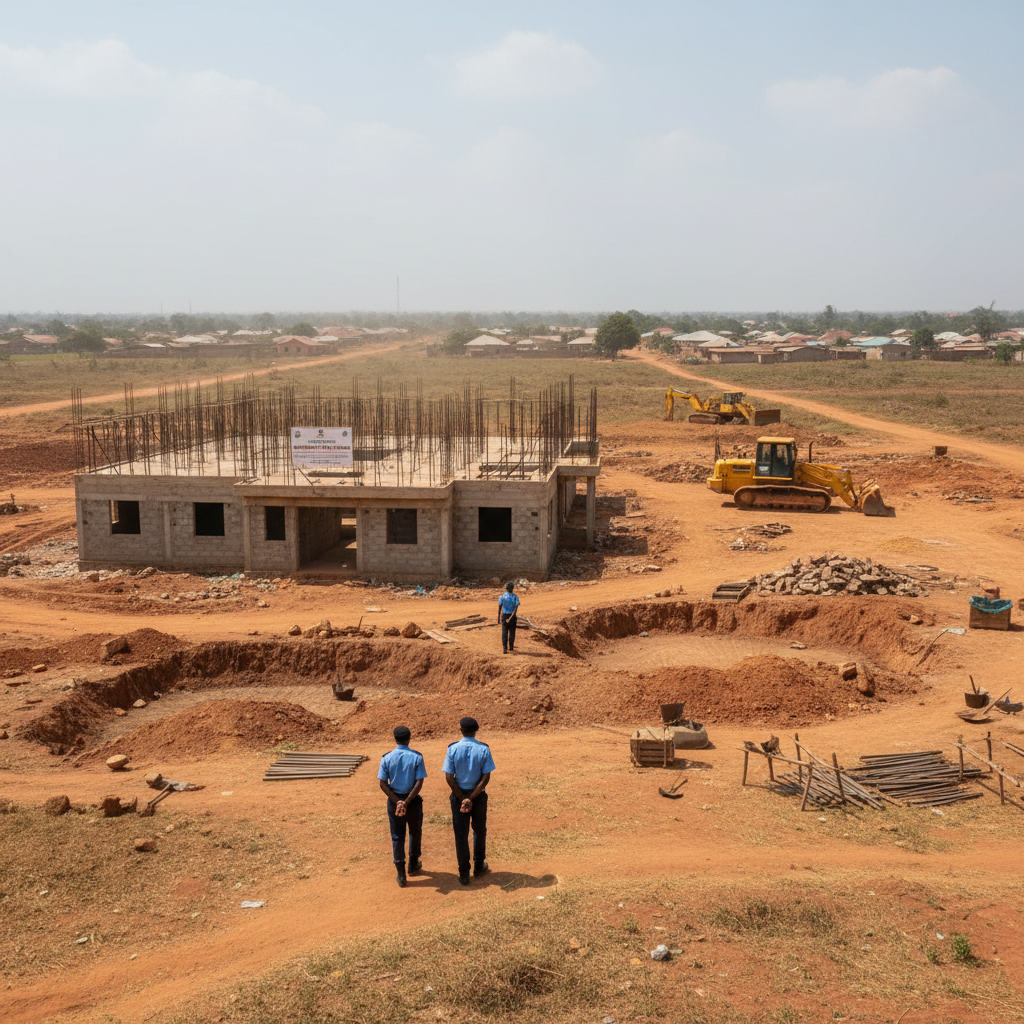
National Security operatives have arrested two individuals, including the owner of an illegal mining site, operating dangerously close to an Agenda 111 hospital project in Adansi Asokwa, Ashanti Region. This decisive action comes after the Ashanti Regional Security Council (REGSEC) initiated efforts to reclaim land severely degraded by these illicit activities, located less than 5 meters from the hospital construction.
The arrests occurred when one employee, apprehended during an operation, identified his boss, Yussif Ibrahim, leading to his subsequent detention. These operations are part of a broader push by REGSEC to restore the land, which had been extensively damaged by illegal mining, locally known as 'galamsey'. The scale of the degradation was significant, comparable to 30 standard football fields.
This incident underscores the persistent challenge Ghana faces in curbing illegal mining, which continues to threaten critical infrastructure and environmental stability. The Agenda 111 project, a flagship government initiative to build 111 district hospitals, is vital for improving healthcare access across the country. The proximity of galamsey operations to such a project raises serious concerns about its structural integrity and the safety of future patients and staff.
Deputy Regional Security Coordinator Alhaji Abdellah Umar confirmed the arrests and stated that investigations into the illegal mining gang's operations have commenced. He emphasized the necessity of these actions, noting that despite ongoing reclamation, some illegal miners continued to operate. "We know it is very close to the Agenda 111 [project], and when we came, we still saw [illegal mining] as the reclamation was going on," Alhaji Umar explained, highlighting the risk of encroachment onto the hospital premises itself.
The reclamation process has successfully restored over 80 percent of the degraded land. REGSEC is collaborating with Logeist EcoReclaim Initiative and Agricentric Ventures to fully rehabilitate the site. This partnership aims to make the land economically productive again through innovative methods, including microbial ecological research and the application of biochar to improve soil fertility.
Gideon Nyameson, CEO of Agricentric Ventures, detailed their approach, which involves using bacteria to break down chemicals in the soil and applying activated biochar to restore productivity. He also mentioned plans for a social inclusivity program to involve local communities. This strategy aims to prevent future illegal mining by providing sustainable economic alternatives and fostering community ownership of the reclaimed land.
Benjamin Karikari Dwira, Group General Manager of Logesist EcoReclaim Initiative, affirmed his organization's commitment to finding a lasting solution. The partnership with Agricentric, CSIR, and FORIG seeks to ensure the land becomes fertile once more. This comprehensive approach is crucial, as past reclamation efforts often saw miners return after initial restoration.
The government's commitment to protecting its infrastructure projects and natural resources from illegal mining remains a key focus. The arrests and ongoing reclamation efforts signal a firm stance against those who undermine national development and environmental sustainability. The successful restoration and economic utilization of this land will serve as a critical precedent for future anti-galamsey campaigns.