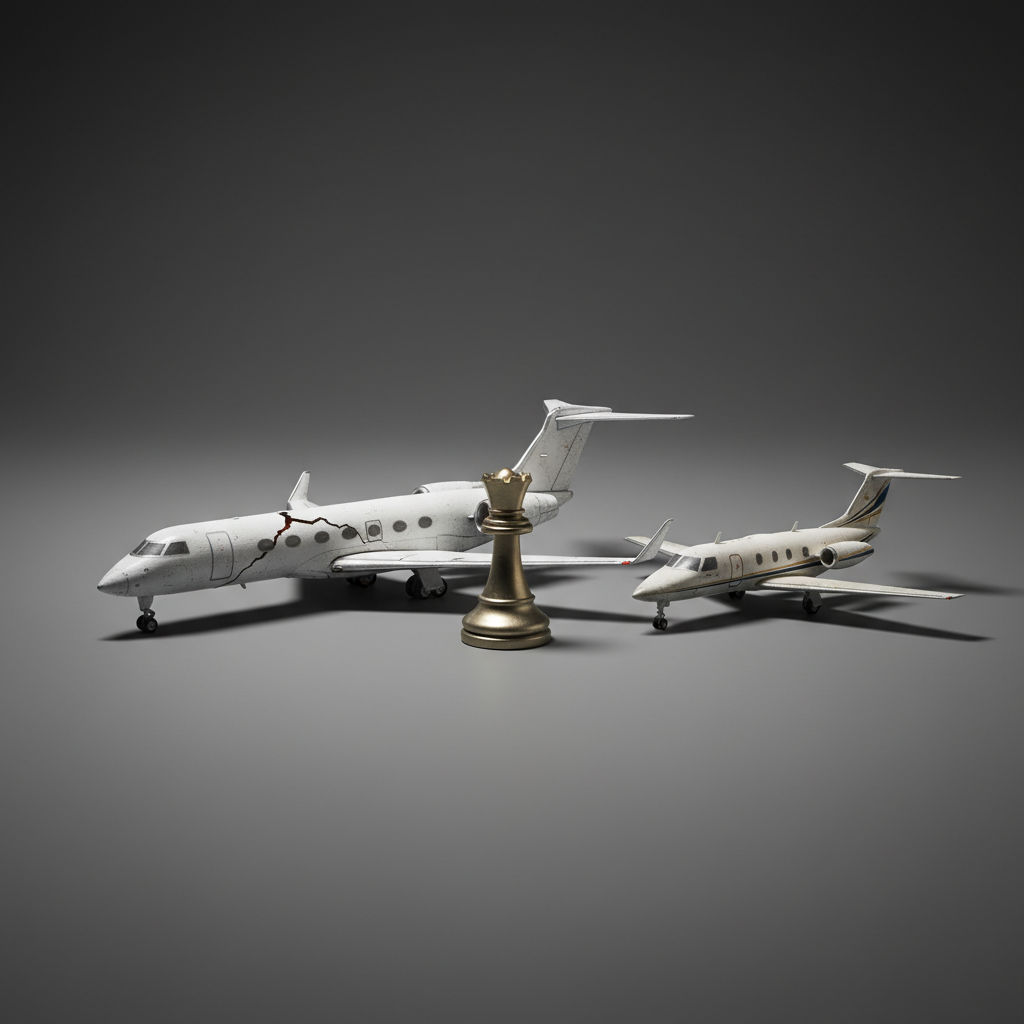
US President Donald Trump confirmed he secretly switched planes after a NATO summit in Turkey last month due to a possible threat. This clandestine manoeuvre involved moving from the presidential jet, Air Force One, to a smaller military aircraft, a C-32A, on July 8.
The decision to switch planes was based on intelligence reports indicating a credible Iranian threat to fire a missile at the plane. The New York Times also reported that US intelligence had information about a person seen with a shoulder-fired missile near the NATO summit. Trump stated that his Secret Service and military advisors directed the change for his safety.
This incident fits into a broader context of heightened tensions between the United States and Iran. The plane swap occurred a day after the US renewed military strikes on Iran, following a breakdown in negotiations between Washington and Tehran. Such security measures underscore the complex geopolitical landscape and the constant threats faced by world leaders.
Officials told the BBC's US partner CBS News that the US had detected a credible Iranian threat. Trump himself acknowledged the constant danger, stating, "I guess there was a threat out there. I didn't really ask too much about it. I get a lot of threats."
The implications of this event are significant for presidential security protocols and media transparency. Journalists and some White House staff on board the decoy Air Force One were unaware of the president's absence, raising questions about their safety and the need for informed decision-making during security incidents. The Committee to Protect Journalists emphasized that reporters should be informed of credible security threats to make informed decisions about their safety.
The elaborate ruse involved Trump boarding Air Force One in view of cameras, then being transported to the military aircraft with the help of a catering truck. Defence Secretary Pete Hegseth also boarded the C-32A separately to maintain the appearance of a normal flight. The aircraft carrying the journalists continued to use the call sign "AF1" to maintain the deception.
This event highlights the extreme measures taken to protect high-ranking officials in volatile international environments. It also brings into focus the ethical considerations surrounding the withholding of information from accompanying press and staff during such critical security operations. Future presidential travel will likely be scrutinized more closely for similar covert security arrangements.
The incident also underscores the ongoing friction between the US and Iran, a key factor in global stability and energy markets. Any escalation in this relationship could have far-reaching economic and political consequences. The need for robust intelligence gathering and swift, decisive action in response to threats remains paramount for national security.
The use of a decoy plane and the secrecy surrounding the operation demonstrate the lengths to which security agencies will go to protect the President. This level of operational security is a critical component of international diplomacy and military strategy. The incident serves as a stark reminder of the ever-present dangers in global politics.