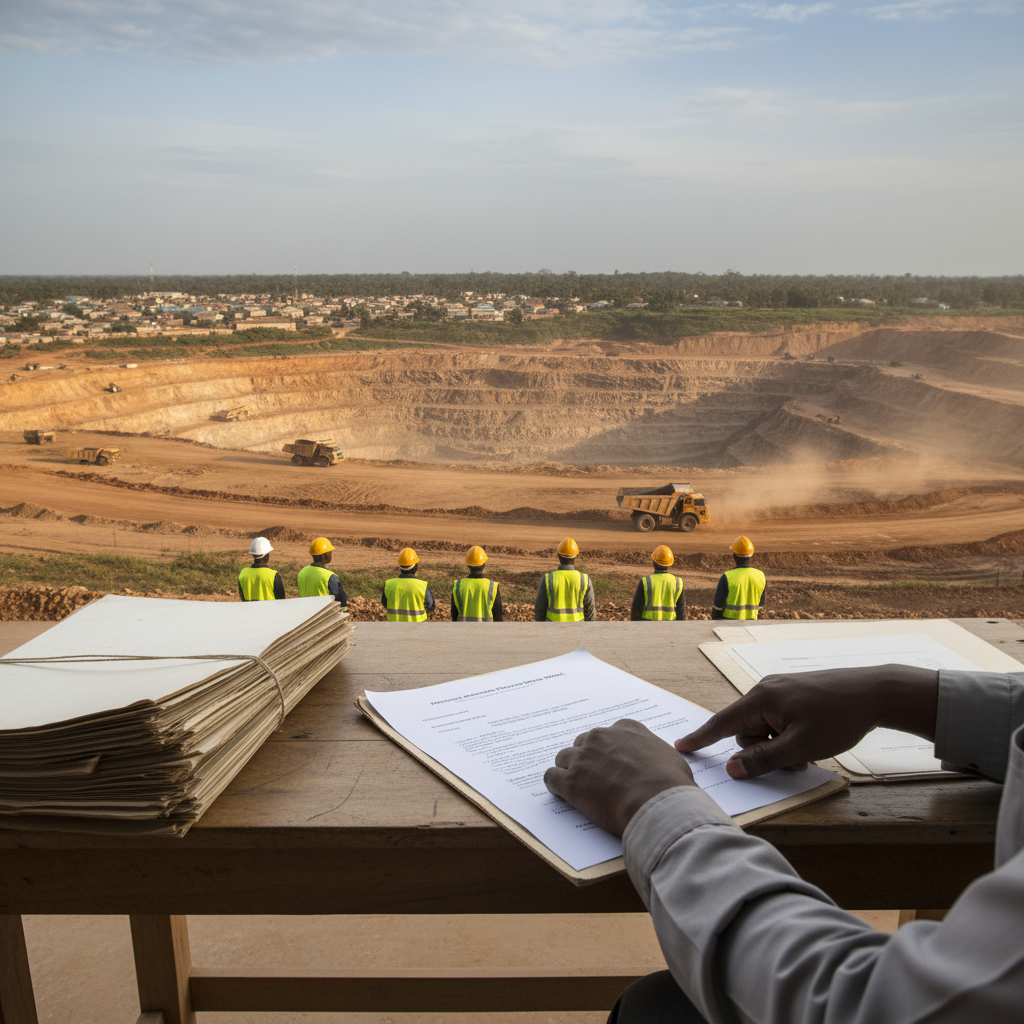
Kwabena Okyere Darko-Mensah, the Member of Parliament for Takoradi, advocates a significant restructuring of Ghana’s mining industry. He proposes a new revenue-sharing formula allocating 18% of mining proceeds directly to mining communities for development and investment. This initiative aims to address the challenges of illegal mining, known as galamsey, and ensure local communities receive more benefits from the nation's mineral resources.
The proposed framework includes giving 2% of proceeds to district administrations. Additionally, 5% is earmarked for environmental reclamation and replanting. Another 5% will cover royalties, while the remaining 70% goes into national coffers. The MP states this model can work, citing existing large-scale mining company contributions through taxes and corporate social responsibility efforts.
Ghana’s current mining governance has struggled to halt galamsey and empower local communities. This has led to environmental damage and denied communities fair economic returns. The proposal seeks to empower local communities and decentralise decision-making to address these long-standing issues. It aligns with the national goal of sustainable economic development and resource management.
Mr. Darko-Mensah highlighted that decentralising all mining licences to the district level is central to his proposal. He said, “At the heart of the proposal is the decentralisation of all mining licences to the district level with traditional authorities playing a central role through existing District Mining Committees established by laws, so that licence applications will begin and end at the district level to improve accountability and local ownership.” This suggests a shift towards greater local control over mining activities. This move aims to improve accountability and increase local ownership in the sector.
Decision-makers must consider how these changes will impact Ghana’s mining revenues and local economies. The potential for increased community investment could drive local development. Observers will watch for government response to these proposals, particularly regarding legislative changes. These changes could reshape Ghana’s position as a major gold producer. Greater financial transparency and accountability in the mining sector could also result.
The proposal also includes a mobile licensing regime for miners, particularly those involved in rock mining. Rock miners generally cause less environmental impact than alluvial miners. It also suggests assigning a qualified engineer to every licence holder. This engineer would supervise operations and enforce safety and environmental standards. Darko-Mensah also called for establishing centralised processing centres and tailing dams for alluvial miners. This would make environmentally friendly processing more accessible and affordable. This measure would combat water pollution from mining activities.
Furthermore, the MP suggests a significant restructuring of GoldBod’s shareholding. He wants government ownership reduced from 100% to 40%. Miners would own 25%, traders 20%, and traditional authorities 15%. This broader stakeholder participation aims to improve policy implementation and promote collective responsibility. A dedicated mining bank could provide legitimate financing for miners, reducing reliance on illicit funding. This would further support responsible mining practices. The MP’s proposals offer a comprehensive plan to redefine Ghana’s approach to its vital mining industry.