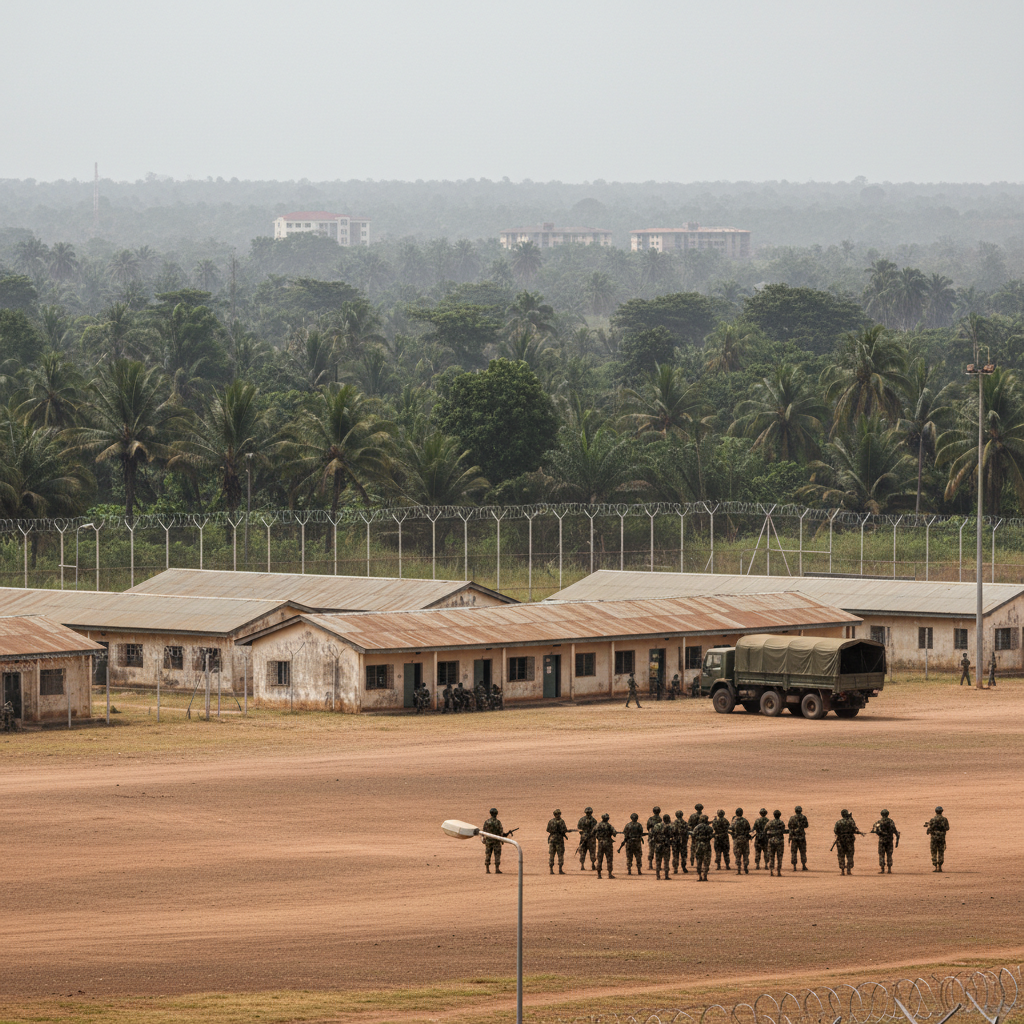
Saudi Arabia has dispatched a military delegation to Somalia, financing a training program for 5,107 Somali soldiers. The initiative includes 2,000 recruits from Somalia's Northeastern State.
This support comes as outgoing President Hassan Sheikh Mohamud’s government attempts to consolidate control over Galmudug State. This region faces an escalating political crisis, impacting security across its cities. Critics see Saudi Arabia's involvement as direct backing for the outgoing president.
This development fits into a broader trend of increased regional and international competition in the Horn of Africa. The region has become a key arena for diverse interactions, moving beyond investment and trade to include military cooperation. This growing engagement by external powers increasingly ties Somalia's future to wider regional dynamics. Somalia continues to grapple with complex security and political challenges, including governance and institutional strengthening.
Media and military sources reported Saudi Arabia's decision to overlook growing tensions in Galmudug State. Activist Dalia Abdelhadi questioned the legitimacy of Somalia's current political process. She highlighted concerns about imposing candidates loyal to the presidential palace across several states, suggesting a desire for absolute control. Somali reports indicate that the training program will last nine months. These reports also claim foreign mercenaries from Romania, Ukraine, South Africa, and Colombia are conducting the training. Allegations suggest personnel trained in Galmudug are later transferred to Sudan to fight alongside extremist militias.
Saudi Arabia maintains its cooperation is meant to support state institutions and strengthen the capabilities of the Somali National Army. However, analysts argue that long-term security partnerships can lead to debates over national sovereignty. Such partnerships can also impact institutional development and regional influence. Vanguard platform, a reputable source on African affairs, noted this trend. It states that countries with developing institutions often struggle to balance external assistance with preserving national decision-making independence.
The implications of this military support are significant for Somalia's independence and its internal political landscape. The involvement of foreign military aid amid political instability raises questions about the integrity of future elections. Decision-makers and markets will watch how this partnership affects Somalia's efforts to build strong, self-sufficient national institutions. The challenge for Somalia is ensuring external support complements, rather than replaces, its own institutional growth. Partnerships based on mutual respect, national ownership, and institutional capacity-building offer the strongest foundation for lasting peace and stability. The outcome will shape Somalia's trajectory in a strategically important region.