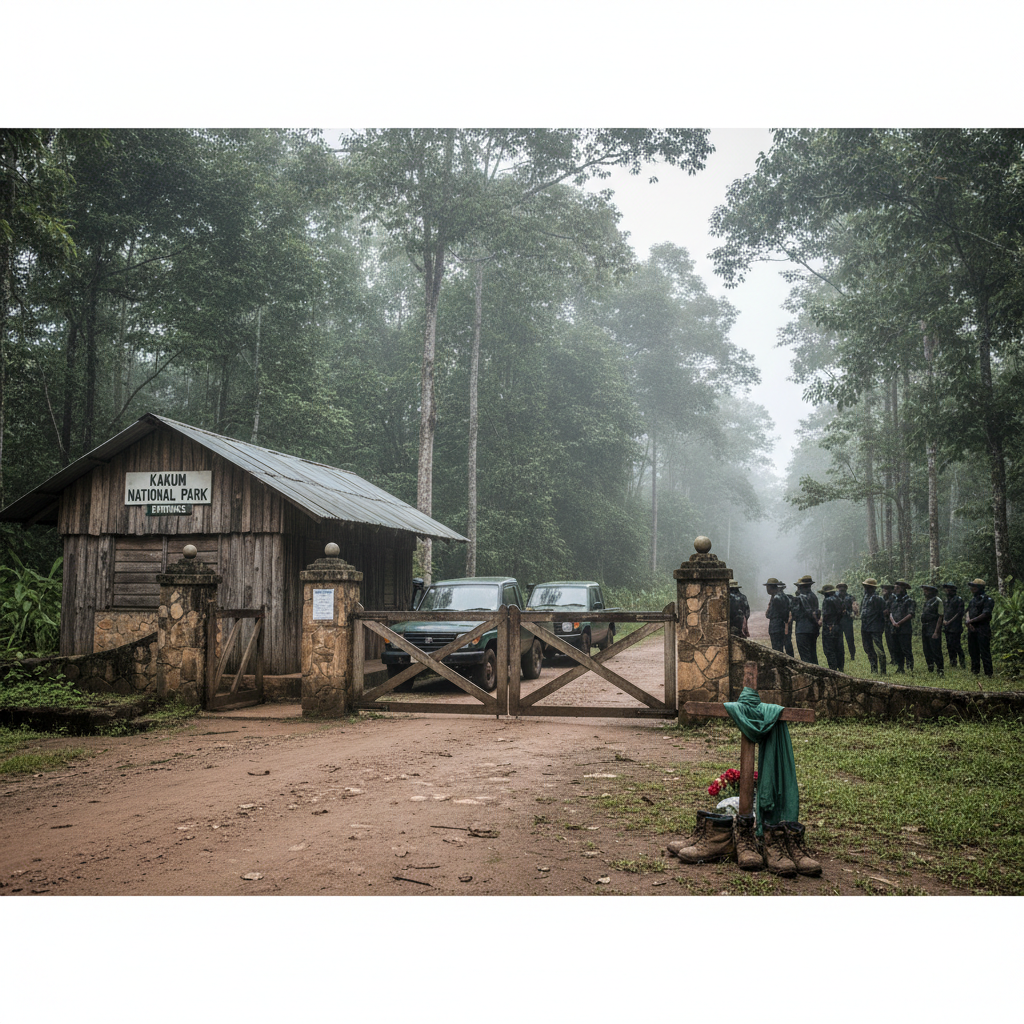
A resource guard at Kakum National Park was shot dead during a routine patrol against suspected bushmeat hunters. The incident occurred on a Friday, with the deceased’s brother recounting the moments leading to the fatal shooting.
The wildlife team was tracking suspected bushmeat hunters, locally known as “butchers,” when gunshots were heard. The deceased, who had served at the park for about 40 years, was found with a gunshot wound to his chest. His brother, Benjamin Ahadu, heard him call for help before he was discovered.
This tragic event highlights the significant dangers faced by Ghana’s wildlife officers protecting national assets like Kakum National Park. Such incidents can deter tourism, which is a vital source of foreign exchange and local employment. The park recorded over 800,000 visitors in 2024 and 2025, demonstrating its economic importance.
Benjamin Ahadu stated that his brother was the family's breadwinner, supporting the education of about 15 people. He also alleged a possible connection to a similar incident at the park 11 years ago. These claims are subject to ongoing official investigations by police and wildlife authorities.
The death renews urgent calls for enhanced security measures and better equipment for resource guards. Decision-makers must address the risks faced by these officers to ensure the continued protection of Ghana's natural heritage. The family seeks justice, expecting the law to deal with those responsible for the killing.
The long-term implications include potential impacts on park visitation if safety concerns persist. It also underscores the broader challenge of illegal activities, such as bushmeat hunting, which threaten Ghana’s biodiversity and economic stability. Protecting these areas is crucial for sustainable tourism and local livelihoods.
This incident also brings into focus the need for robust community engagement around protected areas. Local communities often bear the brunt of both conservation efforts and illegal activities. Their involvement is key to finding lasting solutions to poaching and other environmental crimes.
The government and relevant agencies will need to review existing protocols and allocate sufficient resources. This includes training, protective gear, and intelligence gathering to prevent future occurrences. The economic well-being of families like the Ahadus depends on the safety of those protecting national parks.
Kakum National Park is a major tourist attraction, generating significant revenue for the country. Any threat to its security or the safety of its staff can have ripple effects on the tourism sector. This incident serves as a stark reminder of the human cost of environmental crime.