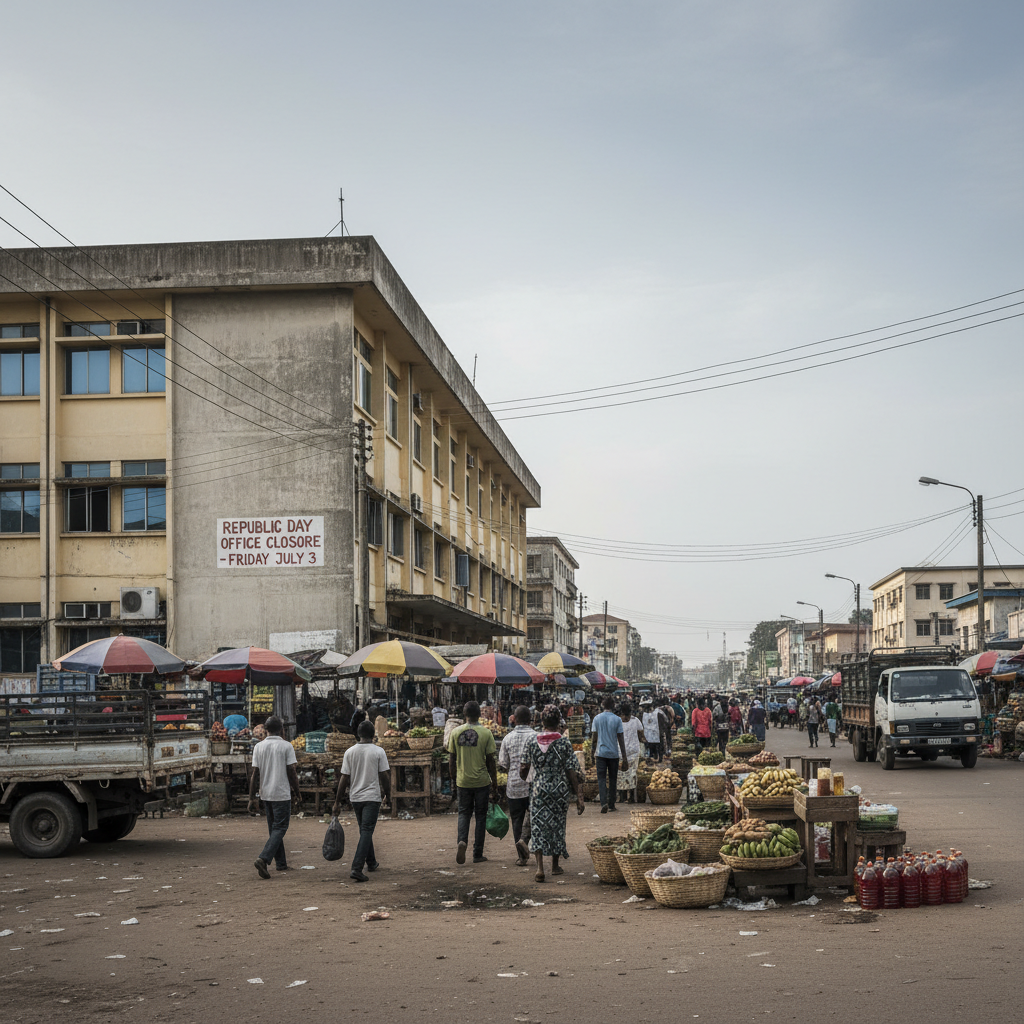
Ghana’s government has declared Friday, July 3, 2026, a statutory public holiday to observe Republic Day. This designates Friday as the day for nationwide observance despite Republic Day officially falling on Wednesday, July 1, 2026. The Ministry for the Interior announced this decision to the general public.
This shift means workers will receive a long weekend, extending from Friday through Sunday. President Nana Addo Dankwa Akufo-Addo made this designation through an Executive Instrument (E.I.). The move aligns with Section 2 of the Public Holidays and Commemorative Days Act, 2001 (Act 601), as amended.
The realignment of public holidays is a common practice in Ghana and other countries aimed at creating long weekends. While popular with the public, these extended breaks can have a mixed impact on the economy. Business operations typically slow down or cease, affecting productivity across various sectors.
The Public Holidays and Commemorative Days Act provides the legal framework for such presidential declarations. These decisions often consider the social benefits of extended leisure time against potential economic slowdowns. Previous analyses by economic think tanks suggest that each public holiday can reduce daily Gross Domestic Product (GDP) by a fraction due to reduced work hours and business closures.
The Ministry for the Interior’s statement advises the public to observe Friday, July 3, 2026, as the designated public holiday. This means that government offices, schools, and many private businesses will remain closed. Essential services are usually exempt from such closures to ensure continuity.
Looking ahead, businesses will need to adjust their operational calendars and supply chains to account for the three-day break. Industries such as hospitality and tourism might see an increase in activity, while manufacturing and financial services could experience a dip. Policymakers will monitor economic indicators like retail spending and industrial output in the weeks following the holiday.
The overall impact on Ghana’s GHS 1.2 trillion economy will depend on consumer spending patterns during the extended weekend. Many families may use this time for travel or recreation, boosting local tourism and retail sectors. However, the cumulative effect of multiple public holidays throughout the year can also add up, influencing overall economic growth projections.
This decision by the government highlights the ongoing balance between promoting national festive observance and maintaining economic momentum. Stakeholders, including the Association of Ghana Industries (AGI) and various labor unions, often follow these declarations closely. They assess the implications for their members and the wider economic landscape.
The shift to Friday July 3 provides an opportunity for Ghanaians to enjoy a longer break. However, it also requires careful planning from businesses to mitigate any negative impact on production schedules and service delivery. The financial markets will also factor in the holiday, with reduced trading volumes expected on Friday.