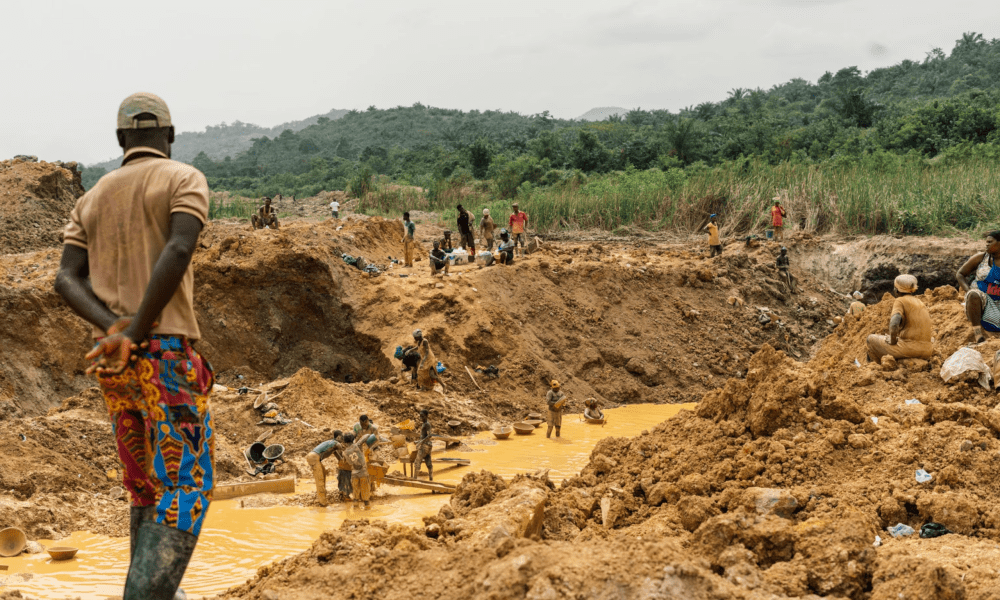
Broadcast journalist Omanhene Kwabena Asante states that political interference is worsening illegal mining, known as galamsey, in Ghana's Eastern Region. He specifically highlights the situation in Akim Oda. This assessment questions the government's effectiveness in addressing the problem despite its public commitments.
Asante, speaking on Asempa FM's M'ahiasem, emphasized the severe environmental destruction caused by galamsey. He noted that the practice has intensified in the Eastern Region. This worsening situation raises serious concerns about the long-term viability of local communities and the nation's natural resources.
This ongoing challenge fits into Ghana's broader struggle with illegal mining, a persistent issue affecting water bodies, forests, and agricultural lands. Despite various government initiatives, including Operation Vanguard and the Community Mining Scheme, galamsey continues to pose significant environmental and economic threats. The politicization of the fight has been a recurring criticism, hindering effective enforcement and sustainable solutions. Ghana's economy relies heavily on its natural resources, making the unchecked destruction a critical national concern.
Omanhene Kwabena Asante directly attributed the difficulty in combating galamsey to its politicization. He stated, "They have politicised the fight, making the fight difficult." He further warned that prioritizing political considerations over environmental protection could severely undermine efforts to safeguard Ghana's natural heritage. This political interference often manifests as protection for illegal miners or a lack of decisive action against them.
The continued politicization of galamsey implies a sustained threat to Ghana's environmental health and future economic stability. Decision-makers must address the underlying political factors to implement effective policies. Without a serious, non-political approach, the country risks irreversible damage to its ecosystems and natural resource base. Future generations will bear the consequences of today's environmental degradation, impacting water security, food production, and public health. Investors and international partners also watch Ghana's commitment to sustainable resource management.
The Eastern Region, a key agricultural and resource-rich area, faces significant ecological degradation from galamsey. This destruction includes pollution of major rivers like the Birim and Pra, vital for drinking water and irrigation. The economic impact extends to reduced agricultural output and increased healthcare costs due to contaminated water sources. The government's 2021 ban on small-scale mining on water bodies and forest reserves aimed to curb this menace. However, its effectiveness remains under scrutiny given the journalist's recent observations.
The call for a less politically driven approach underscores the need for stronger institutional frameworks and impartial enforcement. This requires collaboration among state agencies, traditional leaders, and local communities. Transparent accountability mechanisms are crucial to ensure that perpetrators, regardless of political affiliation, face justice. Protecting Ghana's natural capital is not merely an environmental issue; it is a fundamental economic and social imperative. The long-term prosperity of the nation depends on decisive action against illegal mining.