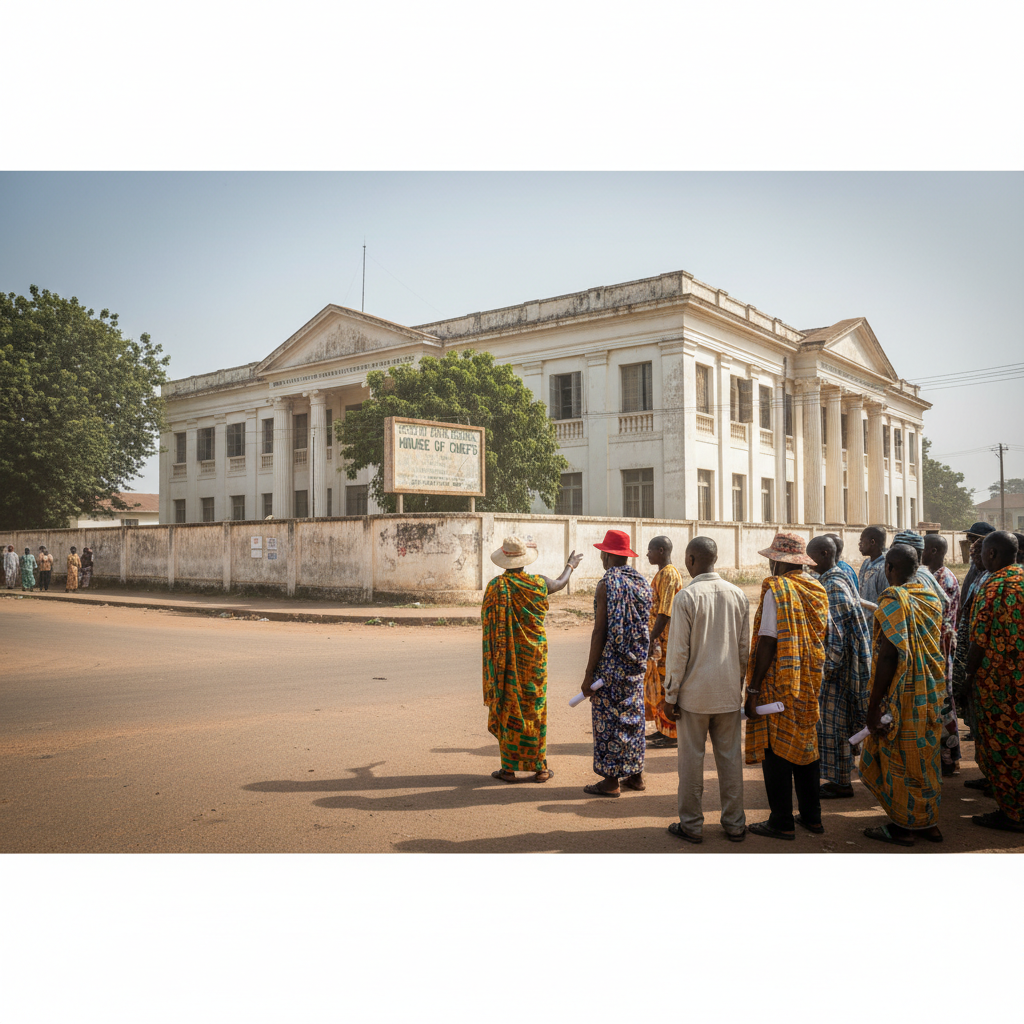
The Nungua Mantse, Oboade Notse King Professor Odaifio Welentsi III, has explicitly denied authorising the sale of any land within the Sakumo Ramsar Site. He stated his commitment to working with the Forestry Commission to protect the ecologically significant wetland. This declaration was made during a consultative meeting with the Forestry Commission at the Nungua Mantse Palace last Thursday.
King Welentsi III dismissed all claims that he had signed documents or given approval for the sale of land in the protected area. He urged the Forestry Commission to be unyielding in its efforts to guard natural reserves, particularly Ramsar Sites, due to their immense ecological value. The Mantse cautioned the public against engaging in transactions for plots of land within the Ramsar Site.
This issue highlights the persistent challenge of land encroachment on protected areas across Ghana, impacting environmental conservation efforts. Protected wetlands like the Sakumo Ramsar Site are crucial for biodiversity, water regulation, and as natural buffers against climate change impacts. Historical data shows significant pressure on these sites from illegal construction and development, often driven by unclear land ownership and fraudulent sales.
“I have never authorised the sale of any land within the Sakumo Ramsar Site,” King Welentsi III declared. He stressed that actions destroying the wetland's ecological integrity would not be tolerated. He reaffirmed his dedication to the conservation of the Sakumo Ramsar Site, emphasizing its importance for current and future generations. The Paramount Chief is also the President of the Greater Accra Regional House of Chiefs, giving his statement significant weight.
This firm stance from the Nungua Mantse means that efforts to halt encroachment on the Sakumo Ramsar Site will likely intensify. The Forestry Commission will probably leverage this support to enforce regulations more strictly. Developers and prospective land buyers should exercise extreme caution regarding land deals in the area. This push for stronger protection could lead to more demolitions of illegal structures, potentially affecting numerous properties built on the site.
The consultative meeting aimed to strengthen collaboration between the Forestry Commission and traditional authorities. Dr. Hugh Brown, Chief Executive of the Forestry Commission, led the engagement. He emphasised the critical role traditional leaders play as custodians of land in Ghana. The Sakumo Ramsar Site became a globally protected wetland when Ghana signed the Ramsar Convention on Wetlands in 1988. It has been managed by the Wildlife Division of the Forestry Commission since 1999.
The Nungua Mantse’s unwavering commitment to safeguarding the site provides a clearer path for conservationists. Future efforts will focus on ensuring the integrity of the core zone and buffer zone, which are vital for water retention and ecological support. Increased public awareness campaigns are also expected to deter illegal activities. This strong declaration offers a crucial precedent for protecting other vulnerable natural reserves in Ghana.