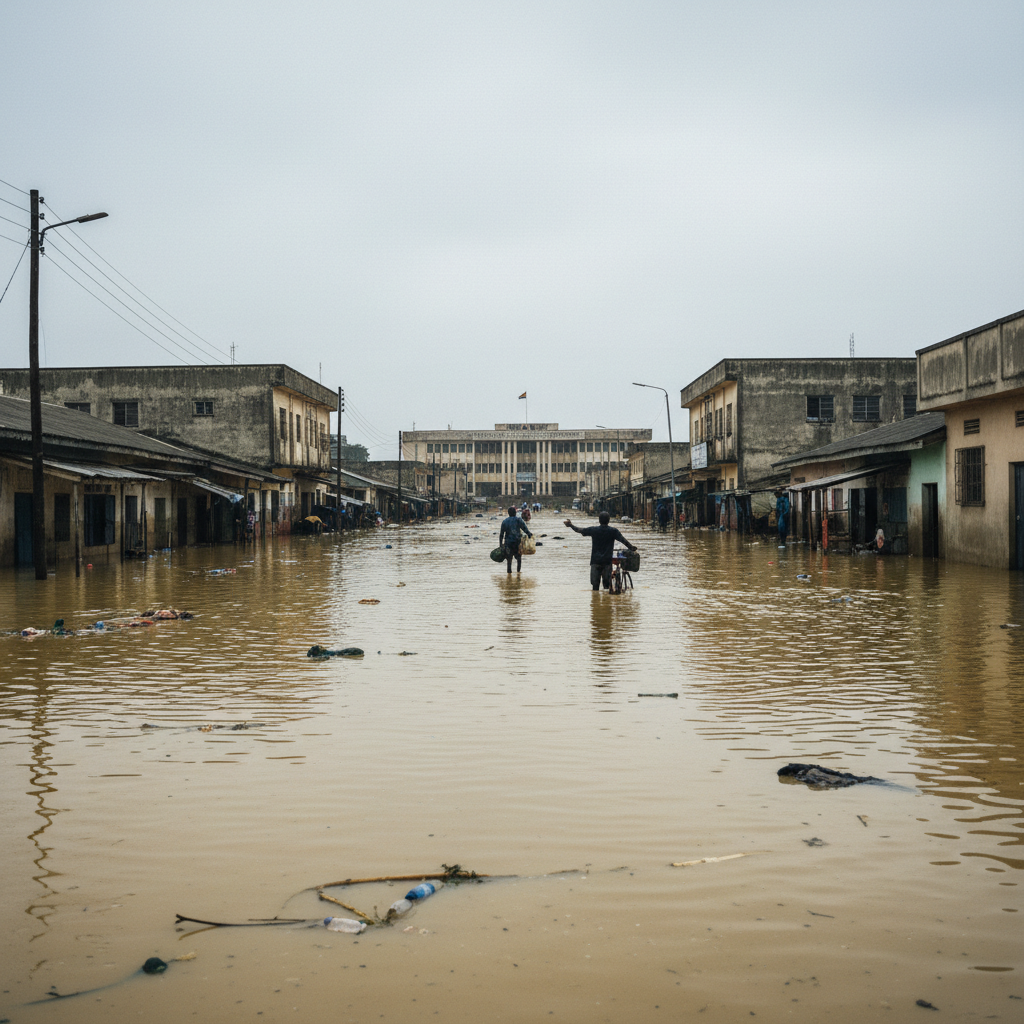
Ghana's New Patriotic Party (NPP) has criticised the government's handling of anti-flood interventions following severe downpours that submerged parts of Accra. The opposition party stated the repeated flooding indicates a failure by the National Democratic Congress (NDC) administration to implement lasting solutions. It highlights a critical issue in national disaster management.
The NPP issued a press release on June 29, 2026, expressing sympathy for thousands of Ghanaians affected by the recent floods. The party accused the NDC government of delaying effective action. They argued that the government is not taking flood control needs seriously enough. This situation creates a recurring crisis for citizens.
This recurring flooding highlights a significant challenge in Ghana's urban development and infrastructure planning. Accra has historically faced severe flooding during the rainy season, causing substantial economic disruption. The capital's economic productivity suffers when main roads and businesses are submerged. This situation affects thousands of commuters and hinders commercial activities. The lack of effective flood control also strains public services and emergency response mechanisms.
The NPP's statement painted a grim picture of the situation. It described the repeated flooding as a 'June 3rd moment' every time. This refers to the deadly flood and gas explosion that occurred on June 3, 2015. Citizens regularly wade through dangerous floodwaters, and many lose their livelihoods. The flooding on June 29, 2026, impacted key areas like the N1 Highway, Apenkwa, Achimota, Kaneshie, Weija, Spintex, and Darkuman Junction. The NPP noted these are the 'same communities, the same roads, the same families. Flooded again.'
The NPP directly blamed the government's structure under President Mahama. They alleged this structure creates problems for effective disaster management. Flood management responsibilities are split between the Ministry of Local Government and the Ministry of Works, Housing and Water Resources. The NPP described this as a 'turf war' rather than a collaborative effort. They claimed ministers are more focused on visibility than on solving the flood problem. This division allegedly leads to a 'dereliction of duty by design' because mandates are unclear.
Adding to these institutional issues, the NPP raised concerns about the coordination of disaster response. They pointed to the assignment of a Deputy Chief of Staff, Stan Dogbe, to lead these efforts. The party argued a presidential staffer lacks the formal authority or statutory power to compel ministries to act. This arrangement breaks the functional chain of command, according to the NPP. They stated, 'It does not work. It has not worked. Accra is paying the price.'
The NPP also alleged that the Ministry of Finance has slowed down funding for flood mitigation programs. They claimed this was an artificial attempt to improve national accounts. This alleged slowdown directly impacts the ability to implement structural interventions. The party also criticized President Mahama's comments during a town hall meeting in London. The President reportedly suggested citizen indiscipline contributed to the flooding. The NPP rejected this idea. They called for the administration to take immediate responsibility. They demand practical, high-level structural measures to protect life and property in Accra.
The current flood situation highlights the urgent need for a clear, unified approach to disaster management. Government and urban planners must coordinate better to prevent future crises. Swift action on structural improvements and proper funding allocation could mitigate economic losses. This would also protect vulnerable communities from recurring devastation. The debate between the NPP and NDC signals a critical area for public scrutiny and policy reform moving forward.