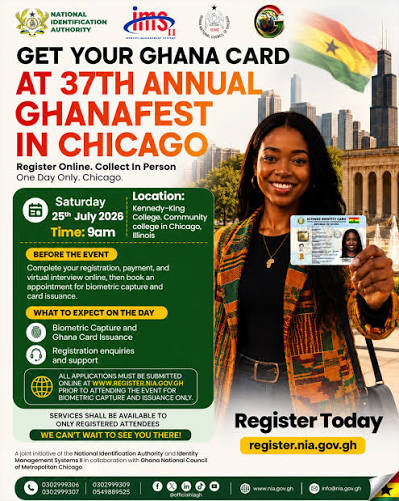
The National Identification Authority (NIA) successfully issued 122 Ghana Cards to Ghanaians living abroad during GhanaFest 2026. This significant achievement occurred over just three days, making it one of the most successful diaspora registration exercises to date.
This rapid issuance of national identification cards addresses a critical need for Ghanaians residing outside the country. Many have waited years to obtain this essential document. The initiative demonstrates a concerted effort to provide vital services to the diaspora community.
The success at GhanaFest 2026 stands in stark contrast to previous NIA efforts. For example, a similar exercise conducted in Spain reportedly issued only 40 Ghana Cards over an entire week. This comparison underscores the efficiency and effectiveness of the recent GhanaFest outreach.
The Ghana Card is crucial for various transactions within Ghana, including banking, property registration, and accessing public services. Its availability to Ghanaians abroad facilitates their engagement with the national economy and governance. This move aligns with broader government strategies to integrate the diaspora more closely with national development.
The National Identification Authority has been working to expand its reach and improve the accessibility of the Ghana Card. This particular exercise highlights the potential of leveraging cultural events like GhanaFest as effective service delivery platforms. Such events attract a large concentration of the diaspora, making them ideal for administrative outreach.
The successful issuance of 122 cards in three days at GhanaFest 2026 sets a new benchmark for diaspora registration. It suggests a more streamlined process or increased demand and awareness among the Ghanaian community abroad. This efficiency is vital for the government's broader agenda of universal identification.
The Ghana Card program itself is a cornerstone of Ghana's digital transformation agenda. It aims to create a unified national identification system for all citizens. Extending this service effectively to the diaspora is a key component of achieving this goal.
Future diaspora engagement strategies will likely build on the lessons learned from this successful GhanaFest initiative. The focus will remain on making national identification accessible to all eligible Ghanaians, regardless of their location. This will further strengthen ties between Ghana and its citizens abroad.
The ongoing efforts by the NIA to register Ghanaians globally are crucial for national planning and security. A comprehensive national database supports better policy formulation and service delivery. This recent success contributes significantly to that overarching objective.
The government and the NIA will continue to explore innovative ways to reach more Ghanaians in the diaspora. This includes potentially partnering with more cultural festivals and Ghanaian associations worldwide. The goal is to ensure every Ghanaian has access to their national identity card.