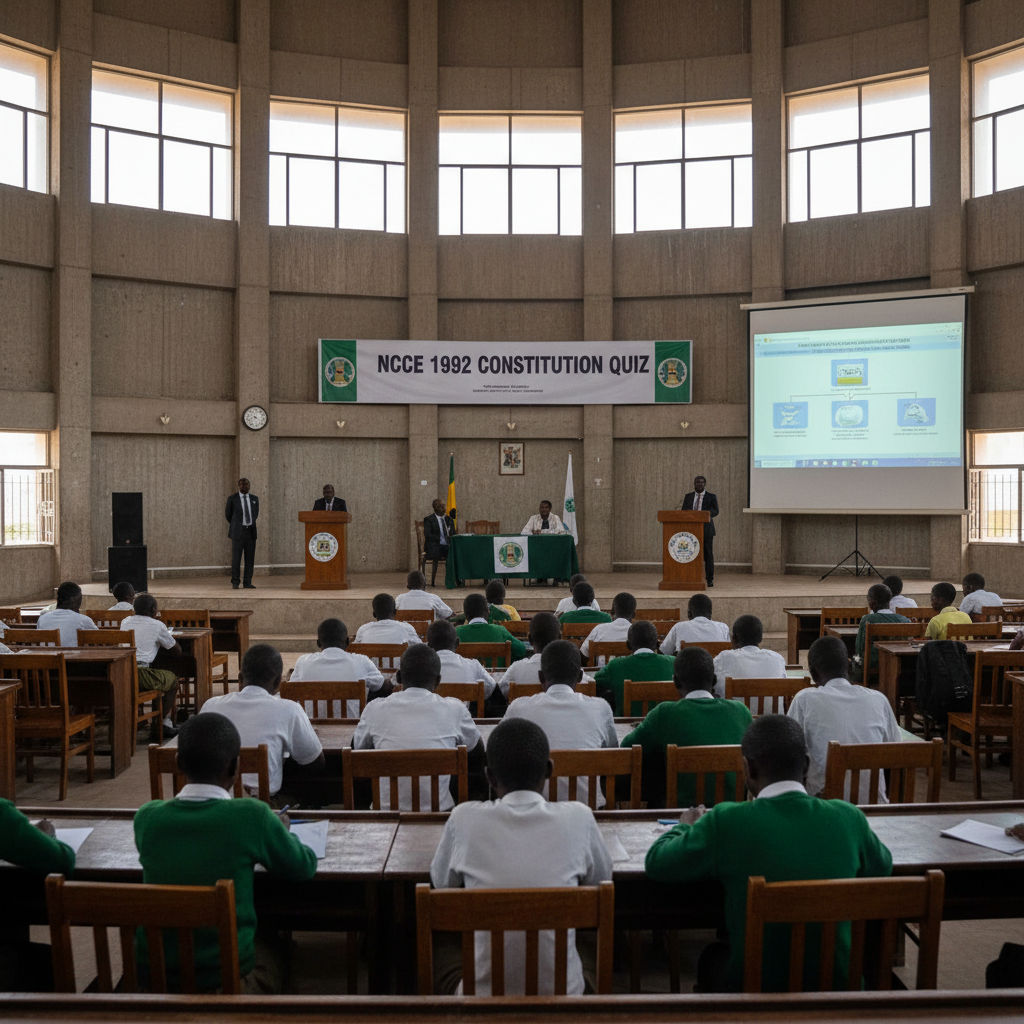
The National Commission for Civic Education (NCCE) recently organized a Constitution Quiz Competition for selected basic schools in the Korle Klottey Municipality. Liberty Avenue Two Basic School secured first place in the competition. This event served as a key activity for the NCCE's annual Constitution Week and Citizenship Week celebrations.
The competition aimed to boost constitutional awareness, civic responsibility, and democratic values among schoolchildren. Students were tested on Chapter 19 of the 1992 Constitution of Ghana. Topics also included the NCCE's role, drug abuse prevention, teenage pregnancy, and sanitation. Five schools participated in the quiz, with All Saints Basic School placing second.
This initiative aligns with Ghana's broader push for good governance and civic engagement. The NCCE regularly conducts programs to educate citizens about their rights and duties under the 1992 Constitution. These efforts are crucial for strengthening democratic institutions and fostering an informed citizenry. Promoting constitutional literacy from a young age helps build a foundation for responsible future leadership.
Mr. Jonathan E. Nii Adjiri Sackey, who is the Korle Klottey Municipal Director of the NCCE, stated the quiz is an annual event. He explained the celebrations remind Ghanaians that the country operates under the 1992 Constitution. Every citizen has a responsibility to uphold and defend this foundational document. Mr. Sackey also noted that Citizenship Week specifically targets basic school pupils. This focus helps nurture responsible and law-abiding citizens at an early developmental stage.
The NCCE's continuous engagement with young people has long-term implications for Ghana's democratic health. By instilling constitutional principles early, the commission helps ensure future generations understand governance. Observers will watch how these civic education efforts translate into greater public participation and adherence to the rule of law. Such initiatives are vital for maintaining stability and progress in Ghana's evolving political landscape. The focus on digital responsibility highlights a crucial area for future civic education.
The competition is part of a wider commitment by the NCCE to promote civic awareness. These programs contribute to Ghana's goal of fostering a knowledgeable and responsible populace. The government continues to support institutions like the NCCE to deepen democratic principles. The focus on both offline and online conduct reflects a forward-thinking approach to civic training. This approach is essential in today's increasingly digital world. The success of such competitions indicates positive engagement from schools and students.
The NCCE has conducted civic education activities throughout June, starting in late May. The quiz competition served as the climax of these programs. Mr. Sackey urged children to use digital platforms responsibly, focusing on the theme: "Digital Age: The Need to Uphold Discipline." He advised pupils to be mindful of information, images, and messages shared online. He emphasized that respect for others must be upheld in both online and offline interactions. Mr. Sackey encouraged pupils to use the internet for learning and research, not for harmful activities.