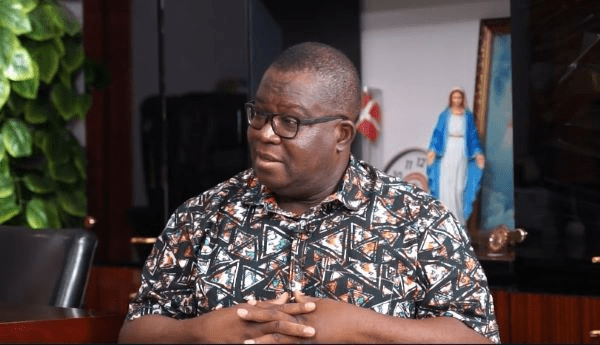
The President of the National Association of Graduate Teachers (NAGRAT), Eric Angel Carbonu, has called for a fundamental shift in Ghana's political culture. He urged political parties to prioritize policies and ideas over money and personality-driven campaigns. This statement follows a recent Supreme Court ruling on political party delegate systems, highlighting deep-seated issues within the nation's democratic framework.
Mr. Carbonu, speaking via a Facebook post, expressed significant concern that Ghana's democracy has become dominated by patronage. This system often overshadows informed political debate. He observed that many people support individuals without understanding their policies, indicating a superficial engagement with political processes. This trend reduces the quality of political discourse and decision-making.
This call for change fits into a broader national conversation about governance and accountability in Ghana. The country has grappled with issues of corruption and the influence of money in politics for many years. Such practices can distort electoral outcomes and undermine public trust in democratic institutions. The emphasis on financial incentives over merit impacts the selection of competent leaders.
Mr. Carbonu stated, “People may not even know the policies of a candidate, but they will jump up and support the individual.” He further criticised the practice of some party delegates openly demanding money before casting their votes. This transforms internal party elections into financial contests rather than competitions based on competence and vision. This behaviour erodes the integrity of the political selection process.
The implications of such money politics are far-reaching for Ghana's economic and social development. When leaders are chosen based on financial inducements rather than their ability to formulate and implement sound policies, national progress can stagnate. Future political cycles will likely see continued debate on electoral reforms and campaign financing. Decision-makers and civil society groups will need to address these concerns to foster a more robust and equitable political system.
Mr. Carbonu stressed the urgency of elevating the standard of political engagement. He declared, “Countrymen and women, we cannot continue like this. We need to raise the bar from the state of mediocrity to the level of maturity where programmes, policies and ideals lead the political conversation.” He advocates for a move away from what he termed “partisan political party jokes and funfairs.” Instead, he champions issue-based campaigns that genuinely advance national development. This shift is crucial for Ghana to achieve its long-term economic and social goals.
The current political climate, marked by upcoming elections and economic challenges, makes this call particularly pertinent. A focus on substantive policy discussions could lead to more effective governance and better public service delivery. This would ultimately benefit the Ghanaian populace. Observers will watch closely to see if political parties heed this call for reform and embrace a more principled approach to politics.