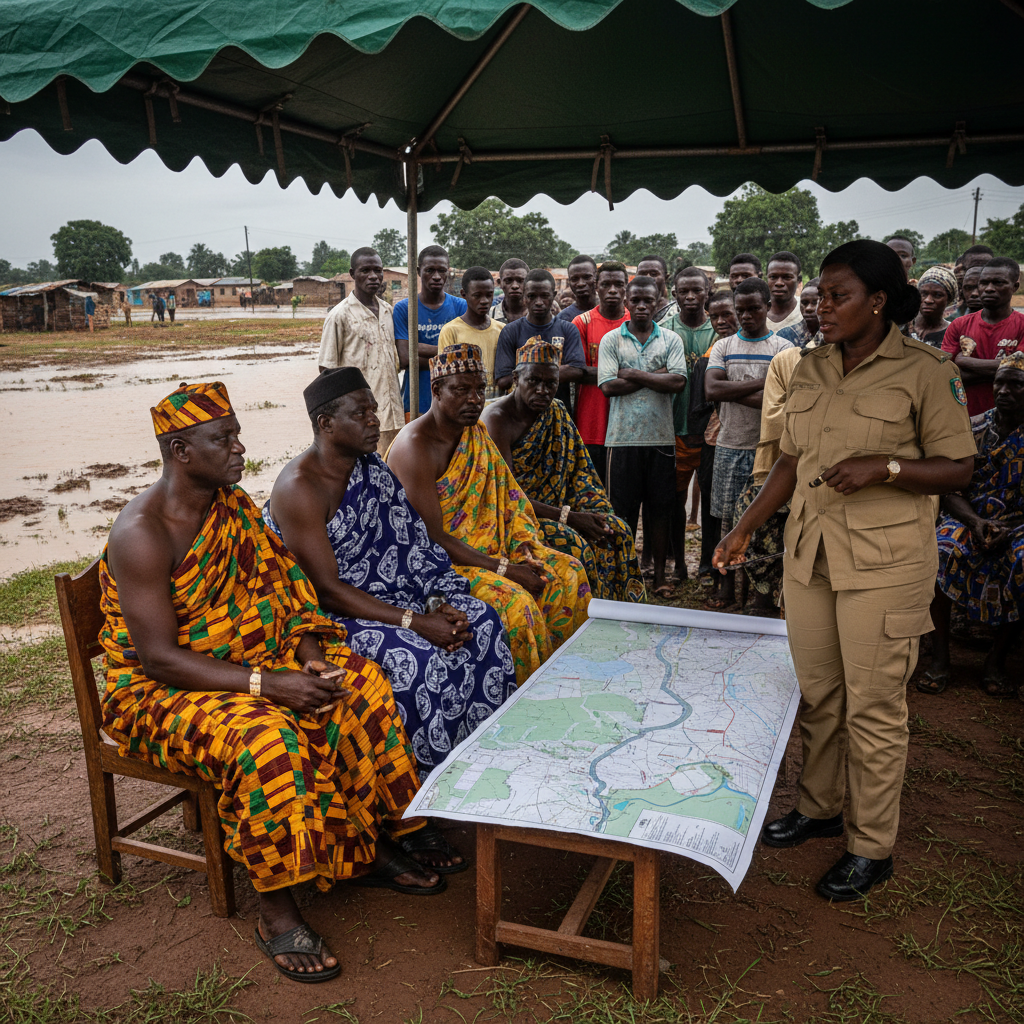
The National Disaster Management Organisation (NADMO) has warned traditional leaders in the Twifo-Atti-Morkwa District about selling waterlogged areas. This practice creates severe flood risks that endanger lives and property.
James Pra, the NADMO Director for Twifo-Atti-Morkwa District, stated that developing these lands without considering flood risks leads to significant disasters during heavy rains. Improper land use in these sensitive areas can displace residents and destroy infrastructure. The warning comes as part of broader efforts to mitigate flooding.
Ghana faces recurring floods, especially in urban and coastal areas, causing substantial economic damage and loss of life. In 2022, floods affected over 50,000 people and displaced thousands, with an estimated economic impact of GHS 725 million. Unauthorised construction on waterways and floodplains compounds the issue, straining public resources for disaster response.
Mr. Pra emphasised, during a media briefing at a clean-up event in Twifo Praso, that land sales without regard for environmental hazards are a serious concern. The District Environmental Health Officer, Richard Senyo, also advised proper waste management to prevent diseases like cholera, which spike during the rainy season. These health risks disproportionately affect vulnerable populations.
The continued development of flood-prone lands poses significant financial burdens on the government for relief efforts and rebuilding damaged infrastructure. Businesses and livelihoods in affected areas suffer long-term impacts, reducing economic productivity. The integrity of public services, such as healthcare and transport, is also compromised.
The District Chief Executive, Isaac Yawson, reinforced the commitment to monthly clean-up exercises to combat filth in the district. Public participation in maintaining clean environments is crucial. Future efforts will likely focus on stricter enforcement of building regulations and increased public awareness campaigns. Authorities must protect communities from preventable disasters.
The issue underscores the critical need for a comprehensive national land-use plan that accounts for environmental vulnerabilities. Implementing such a plan requires robust collaboration between traditional authorities, local government, and planning agencies. This will ensure sustainable development and bolster community resilience against climate-related challenges.
Investors and developers must also consider environmental impact assessments more thoroughly for projects in flood-prone zones. Ignoring these warnings could escalate future emergency response costs and public health crises. Protecting critical natural buffers like wetlands is essential for Ghana's long-term environmental and economic stability.