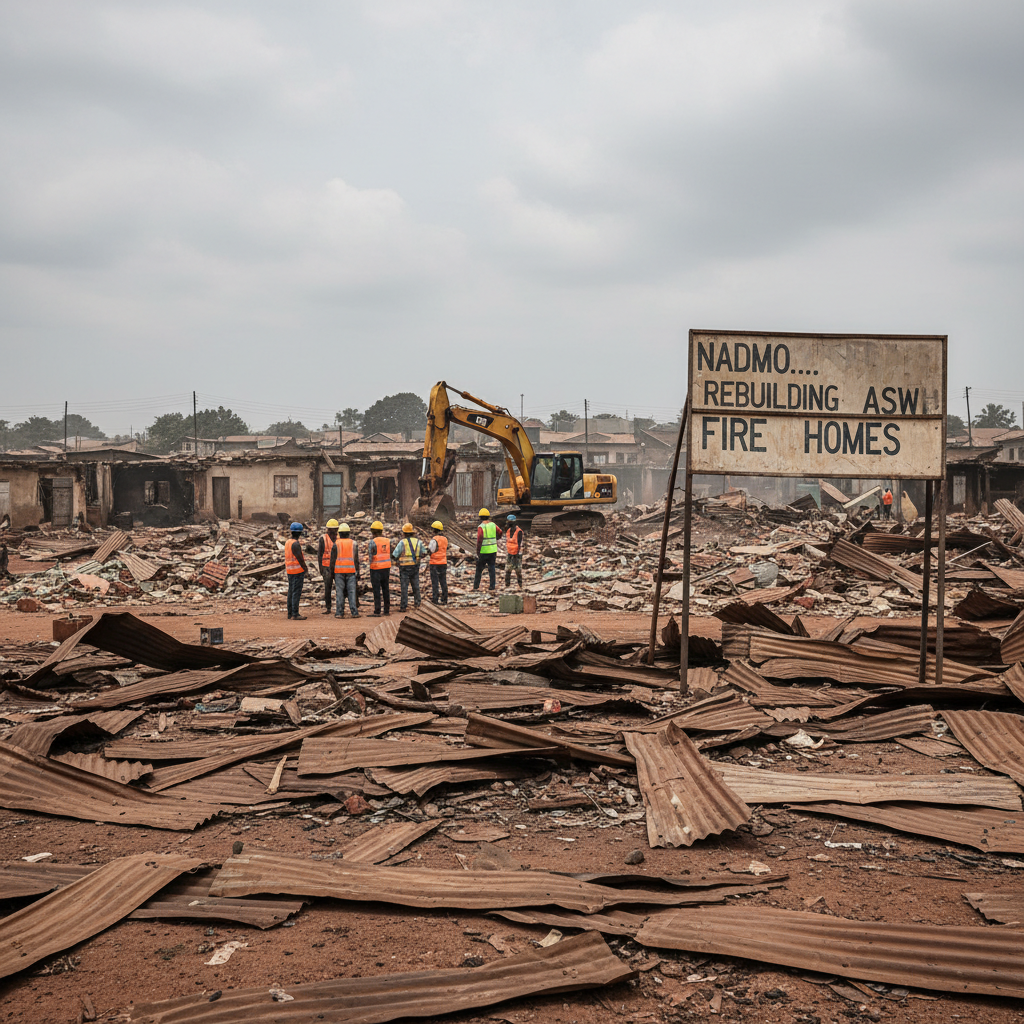
The National Disaster Management Organisation (NADMO) has ordered residents of Asawase in Kumasi to stop rebuilding homes destroyed by a recent fire. This directive impacts hundreds of displaced individuals who lost an estimated 300 wooden structures. The fire, which occurred on Thursday, August 27, 2026, left many families without shelter.
Affected residents began clearing debris and salvaging materials to reconstruct their homes within hours of the blaze. These families, largely economic migrants from northern Ghana, depend on these makeshift structures for shelter. NADMO's intervention aims to prevent unauthorised reconstruction and ensure proper safety assessments.
This incident highlights the broader challenges of urban planning and informal settlements in Ghana's rapidly growing cities. Many low-income families reside in such areas due to affordable housing shortages. The lack of formal land tenure and building permits often complicates disaster recovery efforts. Such situations frequently strain municipal resources and expose residents to recurrent risks.
Faruk Gariba, the Director of Operations for NADMO in Asokore Mampong, described the rebuilding efforts as “unauthorised and premature.” He stated that the Municipal Chief Executive had not yet visited the site to assess the situation. Mr Gariba emphasised the necessity for official approval before any reconstruction could commence. He warned that rebuilding without proper authorisation would violate assembly regulations.
The immediate implication is prolonged displacement for the affected residents, who now face an uncertain future. They cannot rebuild their homes until NADMO completes its assessment and provides clearance. This delay could exacerbate humanitarian concerns, including access to temporary shelter, food, and sanitation. Decision-makers must now balance the urgent needs of the displaced with regulatory compliance and urban safety standards. The incident also brings into focus the need for more resilient housing solutions in informal settlements.
The fire's cause remains under investigation, though preliminary reports suggest it may have started from a heater. The Ghana National Fire Service (GNFS) responded to the incident, preventing further spread despite access difficulties. The congested nature of the structures often impedes emergency services. This situation underscores the inherent dangers of unplanned settlements. Authorities must now consider long-term solutions for these vulnerable communities. This includes reviewing building codes and urban development policies. The economic impact on these families is significant, as they lose both their homes and livelihoods. The incident also places a spotlight on the role of NADMO in disaster preparedness and response. Their actions are crucial in managing the aftermath of such devastating events. The community awaits further directives from the Municipal Chief Executive. This will determine the next steps for the hundreds of affected individuals. The need for coordinated relief efforts is paramount. This includes providing immediate aid and planning for sustainable resettlement. The situation demands a comprehensive approach from local and national authorities. This will ensure the safety and well-being of all residents.