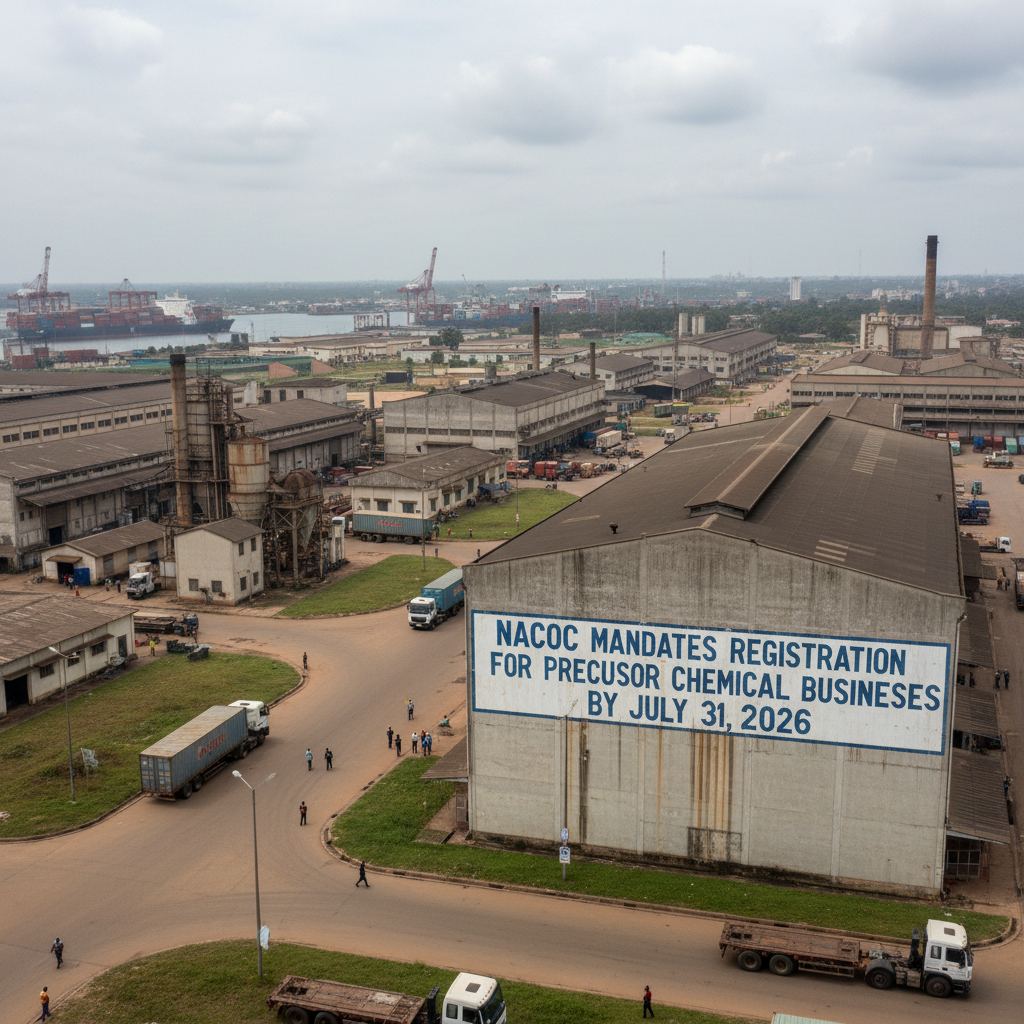
Ghana’s Narcotics Control Commission (NACOC) has ordered businesses handling specific chemicals and equipment to register by July 31, 2026. This directive applies to all individuals, businesses, institutions, and organizations involved in precursor chemicals, psychotropic substances, and controlled equipment. This includes their importation, manufacture, distribution, sale, storage, transportation, and use.
This mandatory registration aims to strengthen regulatory oversight nationwide. It specifically targets materials and equipment that could be diverted into the illegal manufacture of narcotic drugs. The move is crucial for enhancing national security and safeguarding public safety across Ghana.
The registration requirement is supported by the Narcotics Control Commission Act, 2020 (Act 1019). This law mandates operators in this sector to obtain proper licenses and authorization before starting or continuing their activities. NACOC stated on July 7, 2026, that this initiative will ensure all operators in the supply chain are identified, registered, and regulated according to the law. This action aligns with Ghana’s domestic legislation and international obligations to control drug-related activities.
NACOC explained this exercise promotes the lawful use of regulated substances and equipment. It also prevents their diversion into illegal drug production. This strengthens Ghana's compliance with global anti-drug efforts.
The categories of entities affected are broad. They include those engaged in importation, exportation, manufacturing, production, wholesale and retail distribution, sale, storage, transportation, and brokerage. Laboratories and industries using these substances also require registration. Even educational institutions that use such chemicals or equipment must comply with the new rules. NACOC also reminded currently registered operators to ensure their licenses remain valid and are renewed on time.
NACOC warned that individuals and organizations operating without the required registration, license, or authorization will violate Act 1019. Such violations could lead to administrative, civil, or criminal sanctions. This emphasizes the serious nature of the new regulatory framework. The Commission has identified specific equipment falling under its regulatory scope. These include encapsulating machines, tableting machines, rotary evaporators, and high-capacity laboratory glassware. Other items like pill-counting machines, mixers, and various heating apparatus are also included. NACOC urges affected entities to contact the Commission immediately to begin registration or regularize their status before the July 31, 2026 deadline.
This regulatory push forms part of a broader strategy by NACOC to combat drug-related issues in Ghana. Recent related initiatives include reaching out to substance users in the Ashanti Region and rolling out new drug detection scanners at Accra International Airport. NACOC has also intensified anti-drug operations, conducted search and public education campaigns, and partnered with various bodies to combat substance abuse. These efforts collectively aim to disrupt drug networks and promote a drug-free society in Ghana, protecting its citizens and economy from the destabilizing effects of illicit drug trade.