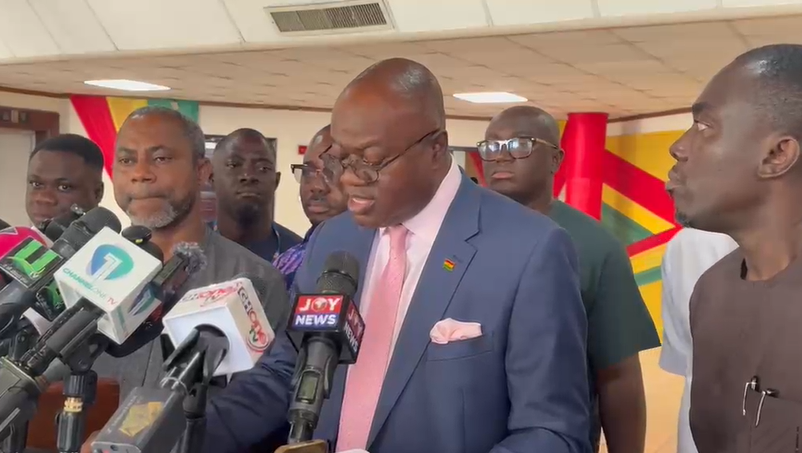
Ghana's Minority Caucus in Parliament has rejected the approval of six mining leases. This includes two leases involving Damang Mining, a company linked to Engineers and Planners. The caucus described the parliamentary approval process as a “defective rubber stamp” exercise.
The Minority's rejection stems from concerns that the approvals undermine constitutional safeguards governing the exploitation of Ghana’s mineral resources. They argue that Parliament has a crucial role in scrutinising mining agreements. This scrutiny ensures the nation's mineral wealth benefits all citizens, not just specific entities.
This development fits into a broader narrative of resource governance and accountability in Ghana. The country relies heavily on its mineral resources, particularly gold, for economic growth. Ensuring transparent and legally sound agreements is vital for sustainable development and public trust. Past instances of perceived irregularities in resource allocation have often led to public outcry and political debate.
Kwaku Ampratwum-Sarpong, the Ranking Member of the Lands and Natural Resources Committee and Member of Parliament for Mampong, addressed the media. He stated, “The resources beneath our soil do not belong to today’s government. They do not belong to any minister. They do not belong to any political party. And they do not belong to any mining company. They belong to the Republic of Ghana.” He emphasised that Parliament must safeguard this trust through proper scrutiny.
The Minority's stance implies potential legal challenges or increased political pressure on future mining agreements. Decision-makers and mining companies will likely face heightened scrutiny regarding their compliance with Ghanaian laws. This could lead to more rigorous due diligence processes for new and existing projects. The market may also react to increased regulatory uncertainty in the mining sector.
Mr. Ampratwum-Sarpong criticised what he called a growing practice of treating Parliament as a “conveyor belt” for approving mining leases. He noted this occurs regardless of the quality of documentation or unresolved constitutional concerns. He stressed that Ghana’s mineral resources must not be managed in a way that compromises the state’s and its citizens’ interests.
The comments followed Parliament’s ratification of six mining leases on Wednesday, July 30, 2026. These leases involved companies such as Golden Star Wassa Ltd, Maripoma Mining Services Ltd, Persians Mining Ltd, and Damang Gold Ltd. The Minority also issued a stern warning to all mining companies operating in Ghana. They must comply strictly with the Constitution, the Minerals and Mining Act, and all other regulatory requirements.
“We wish to send a clear message to every mining company operating in Ghana: respect the Constitution and the laws of Ghana. The law of Ghana is not negotiable,” Mr. Ampratwum-Sarpong asserted. He accused some mining companies of disregarding constitutional and statutory obligations. This includes instances where mining activities allegedly began before parliamentary ratification. He also cited cases where legal and regulatory gaps had not been addressed.
The Mampong MP confirmed that the Minority is documenting all such breaches. They intend to pursue accountability at the appropriate time. He described Ghana’s mineral wealth as a “sacred trust” belonging to the people. He insisted that all stakeholders must protect the country’s natural resources for future generations. This ongoing dispute underscores the importance of robust governance in Ghana's vital mining sector.