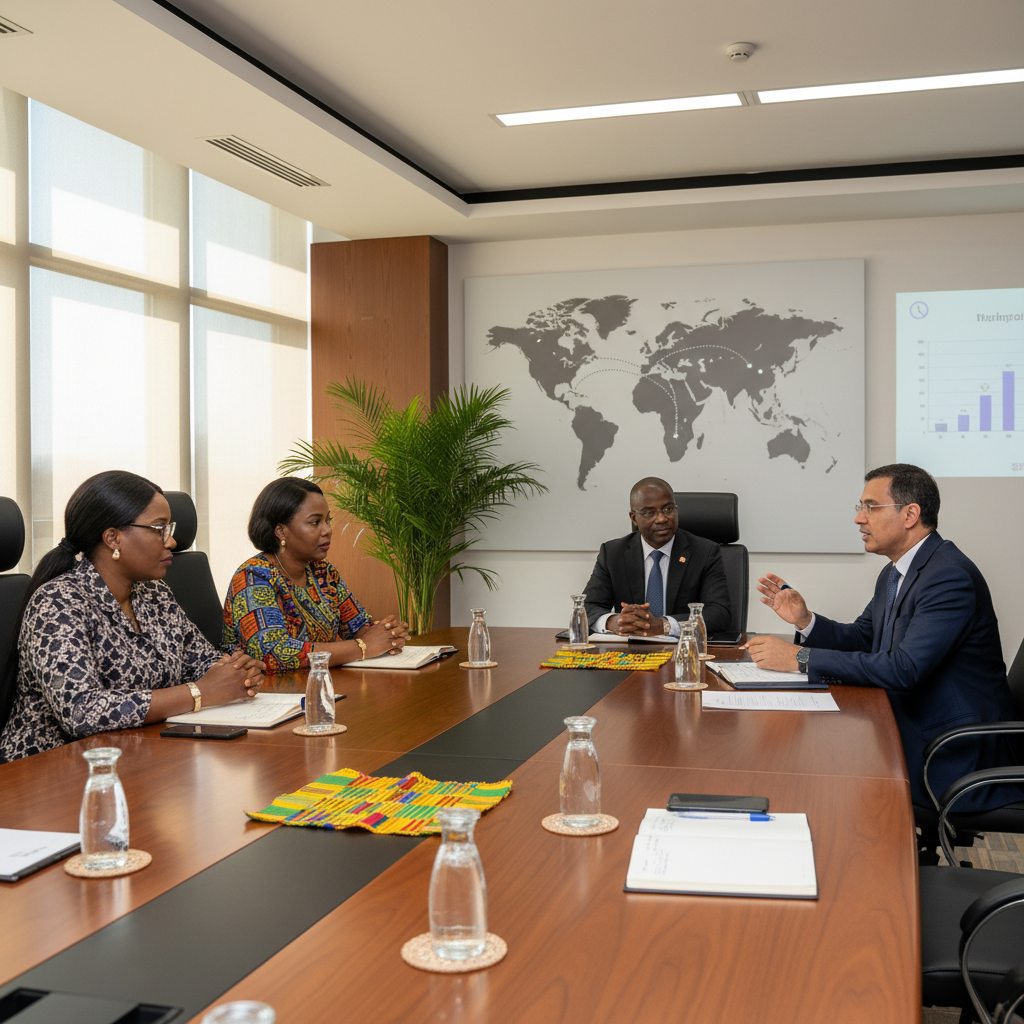
A delegation of Ghana's Minority Members of Parliament (MPs) has engaged with Ghana's High Commissioner to Canada, Dora Francisca Edu-Buandoh. The discussions focused on national development priorities, the welfare of Ghanaians living abroad (diaspora), and enhancing relations between Ghana and Canada. The MPs paid a courtesy call on the High Commissioner at her official residence in Ottawa on June 10, 2026.
The meeting provided a crucial platform to address issues affecting Ghanaians in the diaspora. It also explored new avenues for increased cooperation between the two countries. The engagement happened while the MPs were in Canada for a capacity-building program. This program aims to improve their legislative and oversight responsibilities.
This initiative fits into Ghana's broader efforts to leverage its diaspora for economic growth. Contributions from Ghanaians abroad, including remittances, play a significant role in the nation's economy. The Bank of Ghana reported that personal inward remittances totaled over $4.9 billion in 2022. This makes remittances a vital source of foreign exchange and investment for Ghana. Engaging the diaspora helps channel these resources more effectively into national development projects.
Jerry Ahmed Shaib, an MP present at the meeting, stated the visit offered a valuable opportunity. He said it helped legislators gain direct insights into the experiences and concerns of Ghanaians residing overseas. Shaib highlighted that the discussions also explored how Parliament could address challenges faced by Ghanaian communities abroad. This would simultaneously advance Ghana's broader development agenda.
The implications of such diplomatic engagements are substantial for Ghana's economy and governance. Strengthening ties with countries like Canada can unlock new trade opportunities and foreign direct investment. Furthermore, understanding and addressing diaspora concerns can encourage greater participation in Ghana's economic development. This includes investments in key sectors and skills transfer. Policymakers will likely use insights from this meeting to shape future legislation and policies concerning Ghanaians abroad. The ongoing parliamentary training program, sponsored by Alexander Afenyo-Markin, also aims to equip MPs with international best practices. This will benefit Ghana in the long run.
The discussions explored ways to strengthen the longstanding relationship between Ghana and Canada. Specific attention was given to areas that could support Ghana’s economic and social development. Such bilateral cooperation can lead to increased aid, technical assistance, and educational exchanges. This directly impacts Ghana's development indicators. Professor Edu-Buandoh received appreciation for the warm reception and fruitful engagement from the Ghanaian delegation. The interaction was described as important for connecting policymakers with the realities facing Ghanaians living overseas.
These direct engagements can improve public trust and accountability in political leadership. They also ensure that the needs of all citizens, including those abroad, are considered in national policy-making. The sustained focus on diaspora welfare could lead to new policies on citizenship, investment incentives, and social services for Ghanaians abroad. These policies aim to foster stronger links between the diaspora and their homeland. This ultimately contributes to Ghana's overall economic resilience and growth.