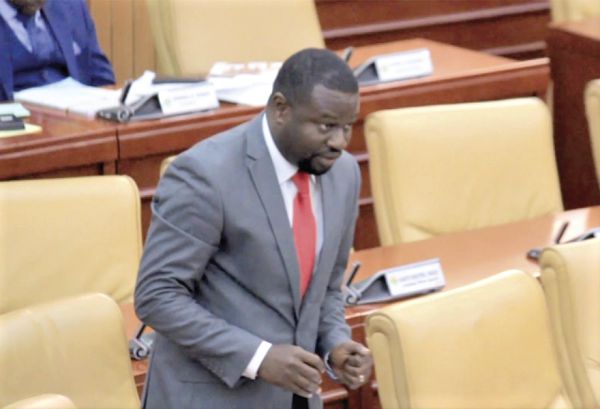
Ghana's Minority Chief Whip, Frank Annoh-Dompreh, has urged the government to strengthen the governance framework for the country's emerging carbon credit market. He stated this market is a major opportunity for sustainable development. The Nsawam-Adoagyiri MP delivered his statement to Parliament on July 2, 2026.
Mr. Annoh-Dompreh highlighted Ghana's established institutional structures for carbon market activities under the Paris Agreement. These include the Ghana Carbon Market Office under the Environmental Protection Authority (EPA). He noted that dozens of mitigation activities are already recorded across sectors like energy, agriculture, forestry, and transportation. The lawmaker stressed that Ghana has a solid foundation, but strong oversight is critical.
This call comes as Ghana seeks to leverage its natural resources and climate commitments for economic gain. The global carbon market allows countries and companies to buy and sell credits representing greenhouse gas emission reductions. Ghana's engagement in this market can attract foreign investment and support green initiatives. It also aligns with the country's broader goal of sustainable development and meeting its Nationally Determined Contributions (NDCs) under the Paris Agreement.
“This is a significant national opportunity,” Mr. Annoh-Dompreh stated in Parliament. “The benefits of a properly managed carbon market are not lost on us.” He cautioned against only viewing carbon credits as a commercial venture. He argued it must be treated as a national development instrument. This perspective emphasizes real national value, emissions reductions, community benefits, and private-sector investment.
Decision-makers must now refine policies and regulations to implement these suggestions. The government needs to simplify approval processes and ensure transparent timelines and fees. Clear distinctions between Article 6 transactions, voluntary carbon market projects, and domestic carbon market activities are also crucial. Investors and market participants will closely watch how Ghana balances commercial interests with national development goals. This will determine its competitiveness and credibility in the global carbon market.
Mr. Annoh-Dompreh also called for stronger safeguards to protect Ghana's national interests. He stressed that carbon credits are linked to climate commitments, biodiversity, and land rights. Authorising internationally transferred mitigation outcomes must not weaken Ghana's ability to meet its own climate targets. He warned against selling credits cheaply today that may be needed for future targets. This emphasizes Ghana's strategic economic planning.
Ensuring strict quality standards for Ghana’s carbon market is another key recommendation. The global market has faced issues like weak projects and inflated claims. Ghana must avoid becoming a destination for low-quality carbon projects. This requires robust monitoring, reporting, and verification mechanisms. Credibility is essential for attracting high-value investments and partners.
Furthermore, local communities should remain central to carbon market initiatives. This includes meaningful stakeholder engagement and transparent benefit-sharing arrangements. Effective grievance mechanisms are also vital. This ensures that the economic benefits from carbon projects are distributed equitably. It also helps in securing social license for projects.
Finally, Mr. Annoh-Dompreh urged investments in renewable energy and forest restoration. He also pushed for a National Carbon Finance Academy to train Ghanaian experts. This will reduce reliance on foreign consultants. Strengthening the Ghana Carbon Registry and improving inter-agency coordination are also critical steps. These measures aim to position Ghana as a trusted regional hub for high-integrity carbon market investments. This approach balances economic opportunity with environmental and community protection.