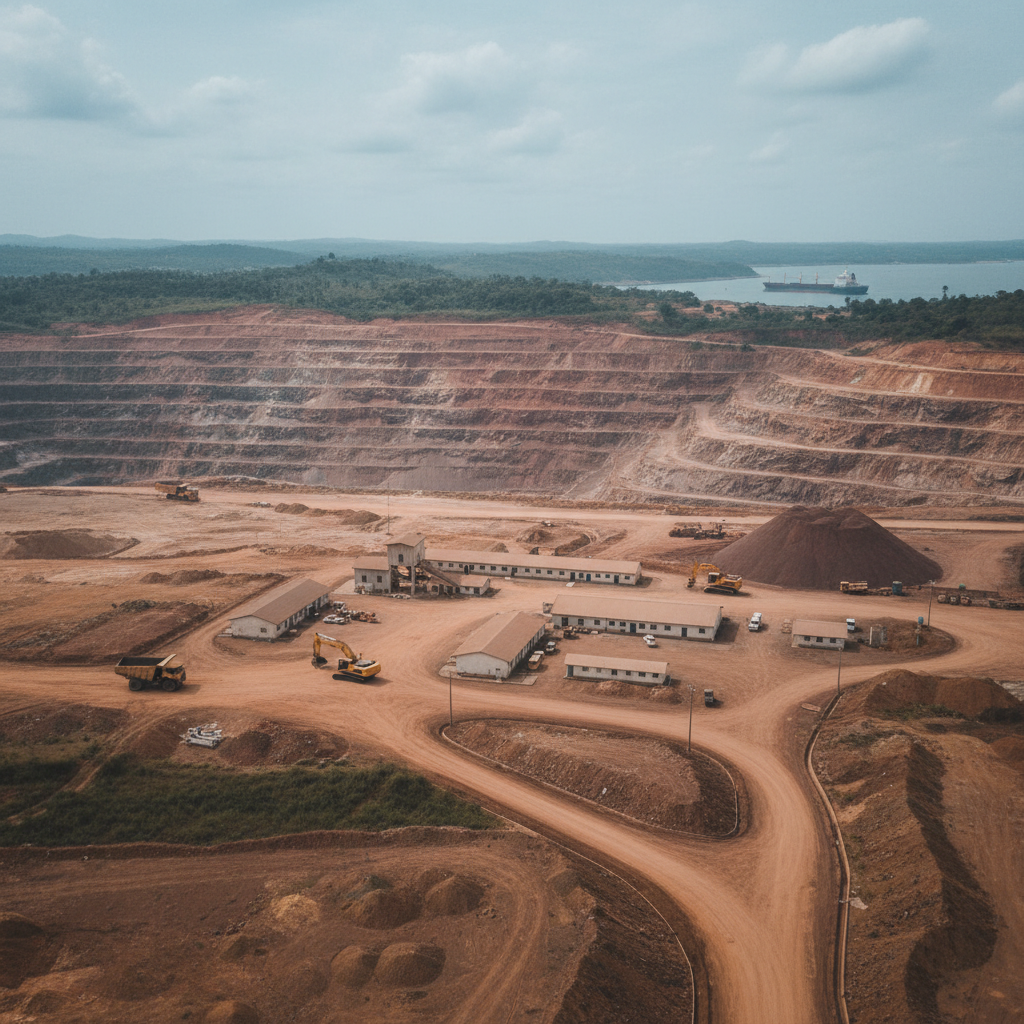
Uncertainty over mining lease renewals poses the biggest threat to Ghana remaining Africa's leading mining investment destination. The Ghana Chamber of Mines stated this threat surpasses concerns about high tax rates. This stance highlights the critical need for security of tenure to attract long-term capital.
Dr. Ken Ashigbey, Chief Executive Officer of the Ghana Chamber of Mines, highlighted these concerns at the 2026 Mining for Development Forum in Accra. He emphasized that the capital-intensive nature of mining means investors prioritize certainty over lease renewals more than tax levels. Changes in the investment environment are eroding Ghana's historical advantage, despite the Minerals and Mining Act, 2006 (Act 703), which provided significant investor certainty.
This issue directly impacts Ghana's economic stability and growth, reliant on the mining sector's substantial contributions. The mining sector significantly drives GDP, employment, and foreign exchange earnings. Recent government assurances about adhering to existing laws for renewals are positive steps. However, systematic clarity is still needed to reassure investors fully. Data from the first quarter of 2026 showed mining, alongside ICT, contributing to a 6.4% economic growth.
Dr. Ashigbey stated that investors are 'not worried too much about high taxes as much as he is worried about the uncertainty and the changes in the investment environment'. He added that uncertainty over lease renewals increases Ghana's country risk. This discourages both international and Ghanaian mining companies from investing in new projects. Banks are also becoming more reluctant to provide credit without clear lease renewal assurances.
Addressing this uncertainty is crucial for Ghana to maintain its competitive edge and foster further investment. Decision-makers must ensure the swift and predictable renewal of mining leases in line with Act 703. This will reinforce investor confidence and encourage continued capital injection into the sector. A clear national mining strategy could guide efforts to transform mineral wealth into industrial development.
Emmanuel Kwamena Anyimah, Deputy Chief Executive Officer of the Minerals Commission, also stressed the importance of local value retention. He advocated for increased domestic participation across the mining value chain. Ghana relies heavily on imports for specialized mining equipment, chemicals, and advanced technology. Much of the processing and technology development occurs outside the country.
Mr. Anyimah called for stronger Ghanaian businesses and expanded local supply chains. He also urged increased mineral processing and refining within the country. The Commission aims for a mining sector where more inputs are locally manufactured. Ghanaian engineers develop solutions, universities support research, and indigenous firms participate widely. This integrated approach aims to ensure mining creates, retains, and reinvests value within the national economy.
The Minerals Commission is committed to the efficient development of Ghana's mineral resources. Its role extends beyond just administering mineral rights. Achieving a robust and sustainable mining sector requires addressing lease certainty and promoting local content. This will ensure long-term industrial development and broad economic benefits for Ghana.