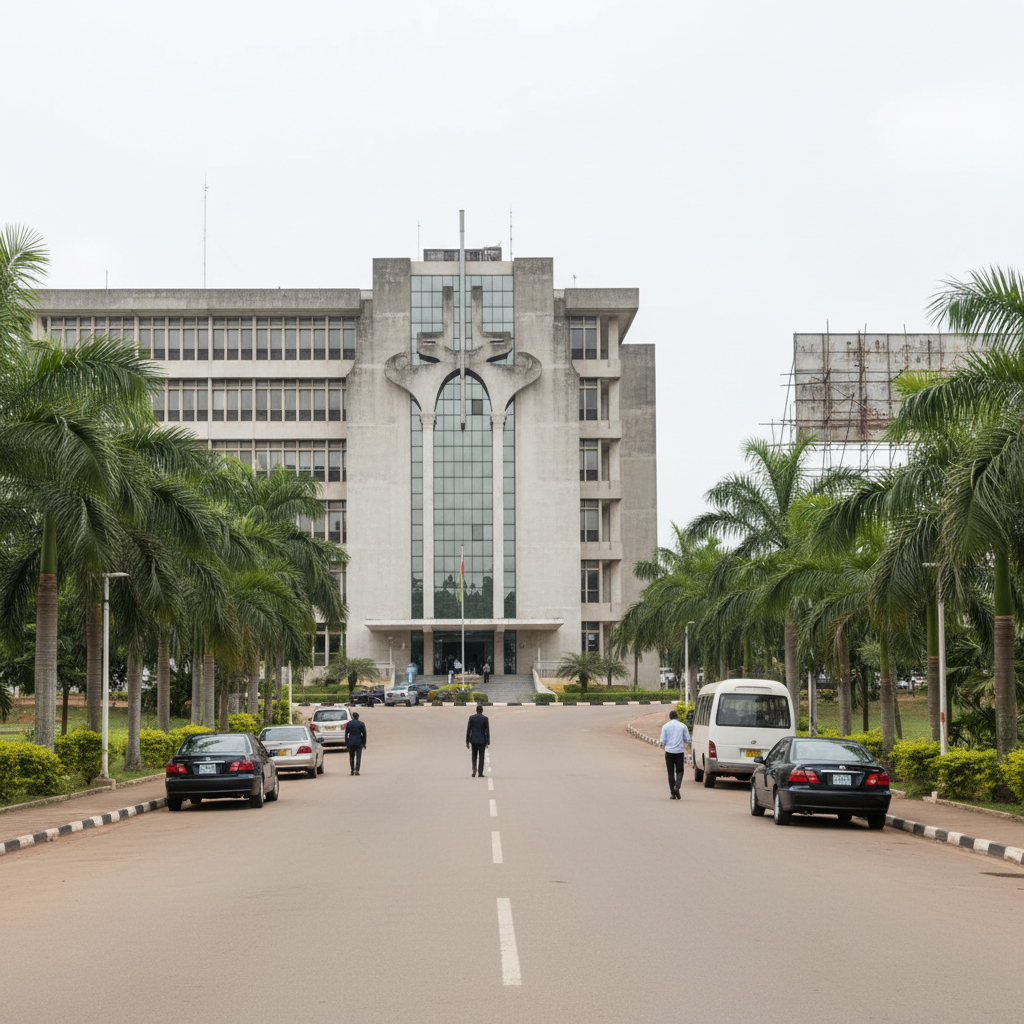
The Minerals Commission has committed to a stronger partnership with the Institute for Mineral Resources Investment and Governance (IMRIG) at the University of Mines and Technology (UMaT).
This collaboration will strengthen mineral resource governance through evidence-based policymaking, transparency, and strategic alliances. Isaac Andrews Tandoh, CEO of the Minerals Commission, announced this commitment during IMRIG's inauguration. He emphasized the institute's timely establishment as Ghana's mining sector adapts to global energy transition demands.
Ghana is a leading mining investment destination in Africa. Its future success relies on robust governance systems and effective policy frameworks. The government is reforming the sector to ensure maximum benefit from its mineral resources. These reforms include reviewing the 2006 Minerals and Mining Act (Act 703) and revising the 2014 Minerals and Mining Policy. The government also introduced a progressive Minerals (Royalties) Pricing Schedule Regulation. These measures aim to strengthen fiscal and regulatory frameworks. They also enhance transparency, promote value addition, and boost local content.
Mr. Tandoh assured IMRIG of the Minerals Commission's full collaboration. He offered access to relevant data, support for research initiatives, and participation in policy discussions. This support will shape the future of mineral governance in Ghana and across Africa. He challenged IMRIG to become an independent center of excellence. This center should produce quality research and practical policy recommendations. It must also deliver objective analysis on emerging issues. These issues include environmental, social, and governance (ESG) standards and climate change. Licensing transparency and responsible resource management are also key areas.
Ghana’s mineral future depends on the quality of governance supporting resource management. The Minerals Commission expects IMRIG to become a continental hub for research and policy innovation. This will ensure Ghana effectively manages its strategically critical minerals.
The mining sector contributes significantly to Ghana's Gross Domestic Product (GDP). In 2023, the sector contributed an estimated 7.6% to the national GDP. Gold alone accounts for over 90% of Ghana's mineral exports. This generates substantial foreign exchange earnings for the country. Strong governance is vital to ensure these revenues translate into broad-based development.
The Minerals Commission's focus on transparency and value addition aligns with the government's broader economic agenda. This agenda seeks to diversify the economy and create more sustainable jobs. Improving local content provisions in the mining sector aims to increase domestic participation. This will benefit Ghanaian businesses and workers. The review of the Minerals and Mining Act will clarify regulations for both local and international investors. This will foster a more predictable operating environment.
This partnership signals a strategic move towards data-driven policy-making in a critical economic sector. Investors and policymakers will closely watch IMRIG's research and policy recommendations. These insights could influence future legislation and investment decisions. The success of these reforms could enhance Ghana's appeal to foreign direct investment. This is particularly true in the context of increasing demand for critical minerals globally. The global energy transition relies heavily on minerals like lithium and cobalt. These minerals are crucial for electric vehicles and renewable energy technologies. Ghana's ability to responsibly manage its resources will therefore impact its position in this evolving market.