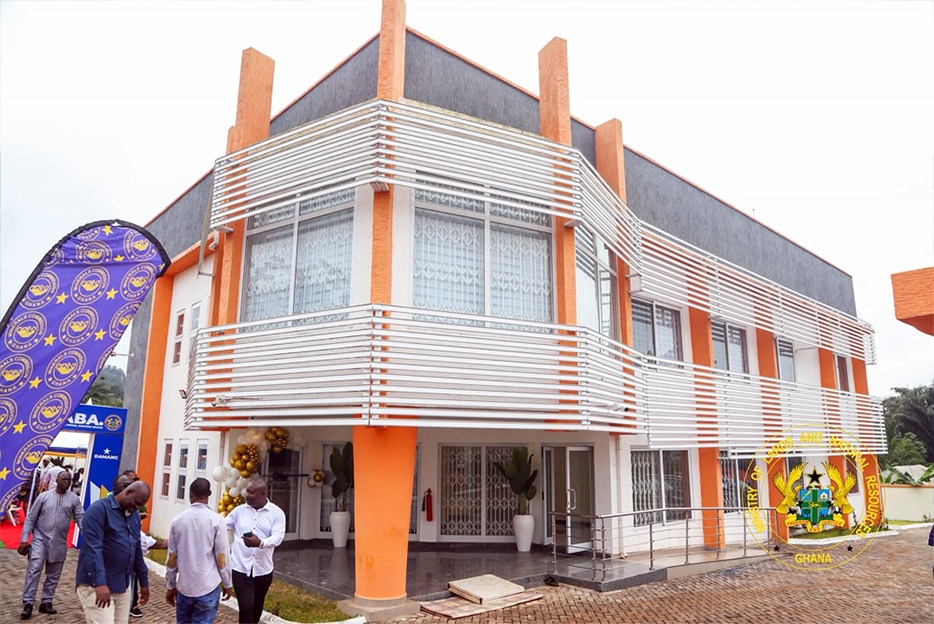
Ghana's Minerals Commission has opened a modern GHS 12.3 million district office in Damang. This new facility is located in the Prestea-Huni Valley Municipality of the Western Region. It aims to decentralise the administration of Ghana’s mineral resources.
The office will bring essential regulatory services closer to mining communities. It will serve as a key operational hub for the Commission in the Western Region. Services include mining licensing, inspections, technical support, and monitoring of environmental and safety standards. This initiative addresses the long-standing perception of the Commission as a distant regulatory body operating mainly from Accra.
This decentralisation effort fits into Ghana's broader economic strategy to empower local economies. It promotes local content and ensures better oversight of a critical sector. The mining industry contributes significantly to Ghana's Gross Domestic Product (GDP) and export earnings. Improved local regulation can enhance revenue collection and ensure sustainable practices. This move also aligns with government efforts to formalise and better manage small-scale mining operations across the country.
Isaac Andrew Tandoh, CEO of the Minerals Commission, stated the Damang office marks a significant milestone. He said it transforms the governance of Ghana’s mineral resources. "For far too long, the perception has been that the Minerals Commission operates as a distant regulatory authority in Accra. We want that narrative to change today," Mr. Tandoh explained. He emphasised the need for a strong presence in mining hubs.
The new office will make services more accessible to mining companies, communities, and other stakeholders. Residents will no longer need to travel to Accra for licensing or technical support. This accessibility incentivises compliance with mining laws and regulations. The Commission also aims to enforce local content requirements. This will create employment and promote Ghanaian ownership in the mining sector. The CEO charged staff to uphold professionalism and integrity in their duties.
Emmanuel Animah, Deputy CEO of the Minerals Commission, provided details on the project. He confirmed the total cost of the completed project was GHS 12.3 million. The construction was financed through the Commission’s Internally Generated Funds (IGF). This demonstrates a commitment to prudent use of internal resources. The Damang Traditional Council donated the land for the facility. This highlights strong partnership between traditional authorities and the Commission. MSC Aquila International served as the contractor, with MSC Fasota Limited as the consultant. This investment strengthens the Commission's institutional capacity. It also improves service delivery to vital mining communities. The office represents a strategic step towards a more efficient and equitable mining industry in Ghana.