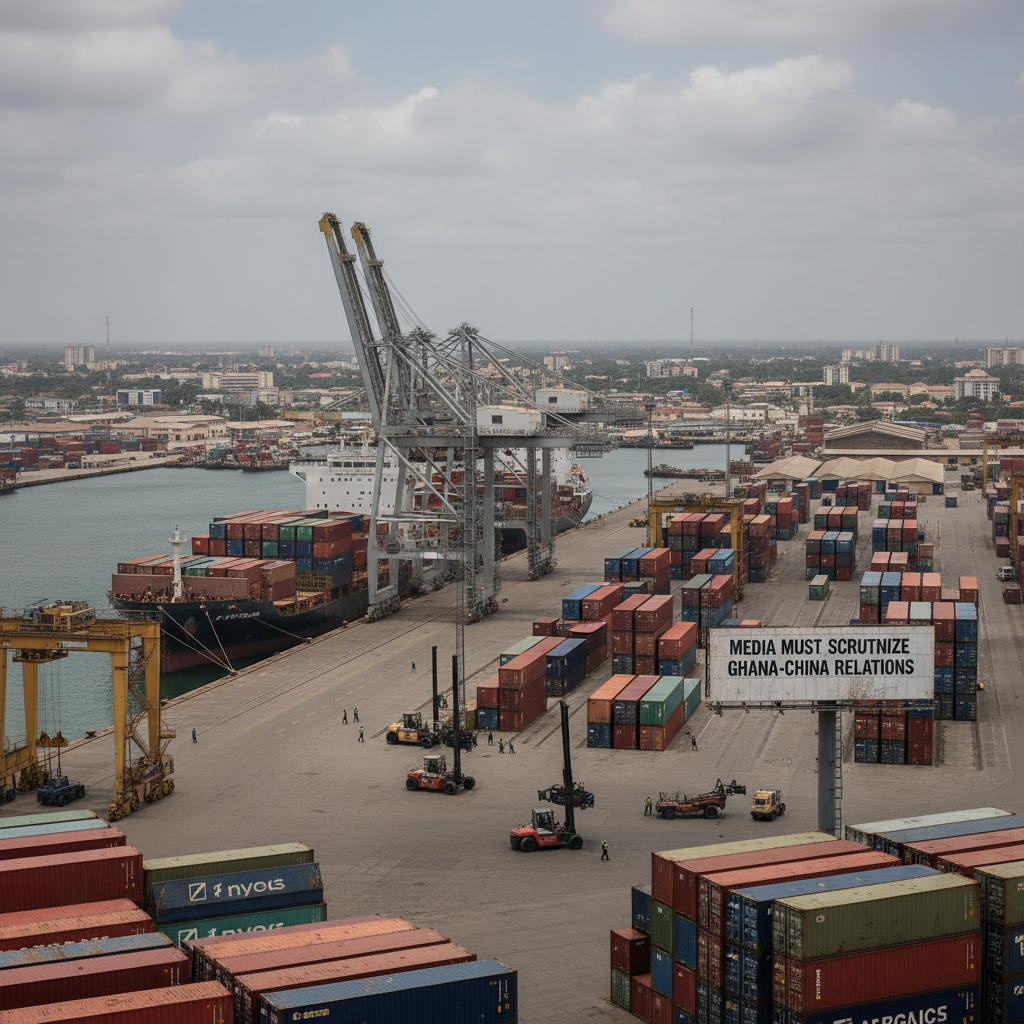
Paul Frimpong, Executive Director of the Africa–China Centre for Policy & Advisory (ACCPA), has urged Ghanaian media to move beyond mere reporting. Journalists must actively question and hold power accountable regarding Ghana–China relations. This call highlights the media's essential role in ensuring transparency for Ghana's international partnerships.
Mr. Frimpong emphasized the media's critical function in shaping public understanding. He noted that journalists must scrutinize Ghana's engagement with China. This includes examining trade, investment, infrastructure, education, and development cooperation. Public perceptions of these alliances depend heavily on accurate information, making media accountability vital.
This initiative follows Ghana's increasing economic ties with China. These relations involve significant financial flows and strategic collaborations. Ghana has received substantial Chinese loans and investments over the past decade. For instance, the Sinohydro Master Project Support Agreement is valued at GHS 12.3 billion (USD 2 billion). These large-scale projects necessitate thorough public oversight. Such oversight ensures agreements serve Ghana's national interest effectively.
Speaking at the Ghana–China Media Fellowship (GCMF) 2026, Mr. Frimpong stressed the need for critical reporting. He stated, "The responsibility of the media does not end with reporting events. Journalists must be prepared to ask difficult questions, interrogate policy choices, scrutinise agreements and hold public officials accountable for decisions made in the national interest.” This fellowship aims to strengthen media professionals' capacity. It focuses on balanced and informed reporting on global and Ghana–China affairs.
The push for media accountability will likely lead to increased scrutiny of government dealings. Decision-makers may face more robust questioning on various international agreements. This enhanced oversight aims to foster more informed public discourse. It ensures that major economic and political partnerships benefit all Ghanaians, not just a select few. Markets and investors will likely monitor these developments closely, expecting clear and transparent communication from government entities regarding large-scale projects and financial arrangements.
The 2026 fellowship provides a 12-week learning program for journalists and content creators. Participants will engage in expert-led sessions and practical activities. They will deepen their understanding of issues shaping Ghana's engagement with China. This includes global affairs, development cooperation, trade, and governance. The initiative seeks to combat misinformation and sensationalism. It promotes reporting based on facts, evidence, and professional ethics. This training is crucial for journalists to navigate the complexities of international relations.
The media's role as a democratic accountability mechanism is paramount. Critical reporting helps citizens understand the opportunities and challenges of international engagements. It reinforces a well-informed citizenry. This ensures that the public can evaluate the long-term impact of agreements. The ACCPA's intervention underscores the need for continuous professional development in journalism. It aligns with broader efforts to strengthen institutional checks and balances within Ghana's governance framework.