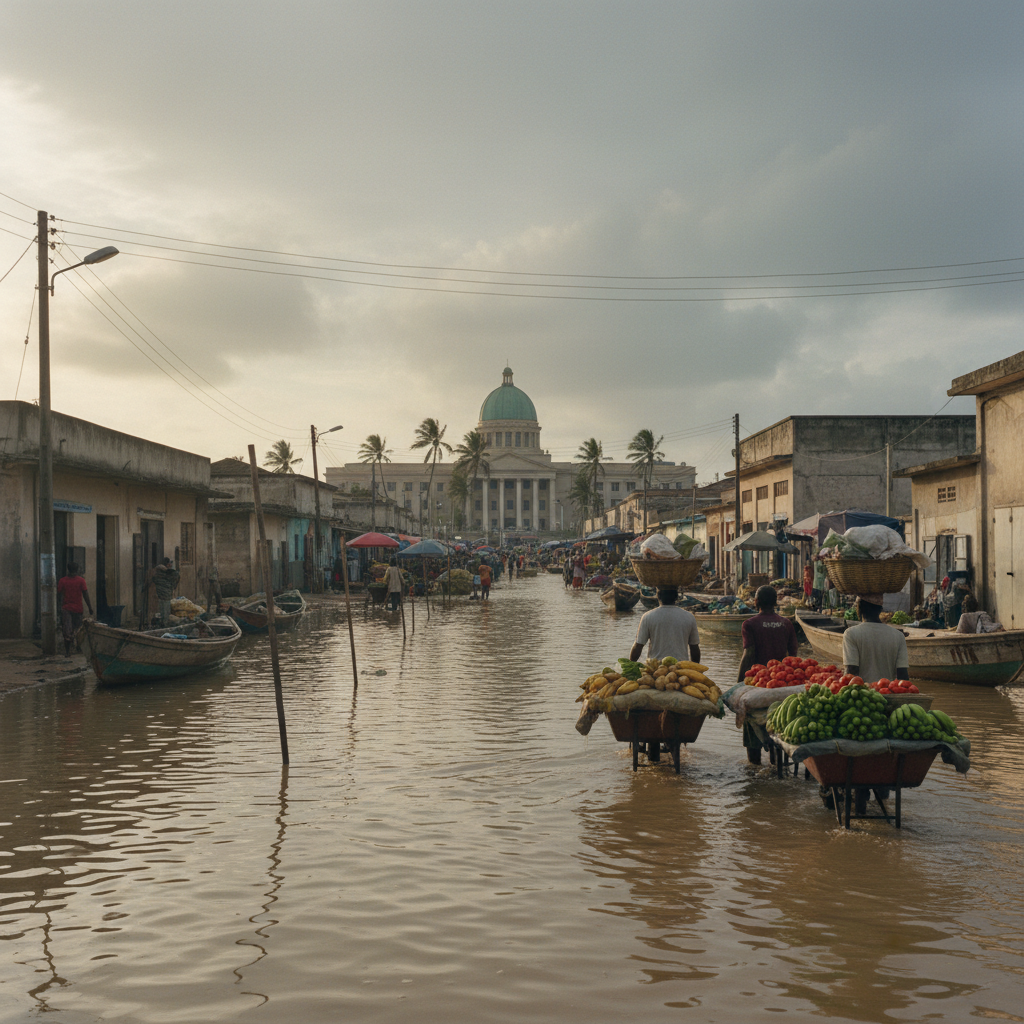
President John Dramani Mahama has called for an urgent and practical national response to climate change. He stated that flooding, coastal erosion, and changing rainfall patterns are already threatening communities and public infrastructure across Ghana. This directive came after President Mahama swore in Dr. Zanetor Agyeman-Rawlings as the new Minister for Environment, Science and Technology.
The President emphasized that these environmental challenges are directly impacting livelihoods nationwide. He noted that rising temperatures further compound the existing threats. President Mahama charged Dr. Agyeman-Rawlings to prioritize strengthening Ghana’s climate resilience. Her ministry must ensure environmental protection remains central to the country's broader development agenda.
This call for urgent action fits into Ghana's ongoing struggle with environmental degradation and its economic consequences. The nation faces significant costs from climate-related disasters, impacting agriculture, infrastructure, and public health. For instance, coastal erosion threatens vital fishing communities and tourism assets. Changing rainfall patterns affect crop yields, which are crucial for Ghana's agricultural sector and food security. The President’s remarks underscore a growing recognition of climate change as an immediate economic and social threat, not just an environmental one.
President Mahama specifically stated, “Our response to climate change must also become more practical and urgent.” He highlighted the need for development that creates jobs and expands economic opportunities without harming the environment. He further stressed that climate action requires strong cooperation between the Ministry of Environment, Science and Technology and the Ministry of Local Government, Chieftaincy and Religious Affairs. This inter-ministerial collaboration is vital for effective land-use planning, waste management, and natural resource protection.
The implications of this directive are far-reaching for Ghana’s economic planning and resource allocation. Government agencies will likely increase investments in climate adaptation and mitigation projects. This could include funding for sea defense projects, improved drainage systems, and sustainable agricultural practices. Businesses and investors will need to consider climate risks more seriously in their operations and investment decisions. The President's emphasis on collaboration suggests a more integrated approach to environmental governance. This approach will involve traditional leaders, religious organizations, district assemblies, scientists, and civil society groups. Their collective efforts are essential for implementing effective environmental policies at the local level. This integrated strategy aims to build a more resilient Ghana, protecting its economic future and the well-being of its citizens from escalating climate impacts.