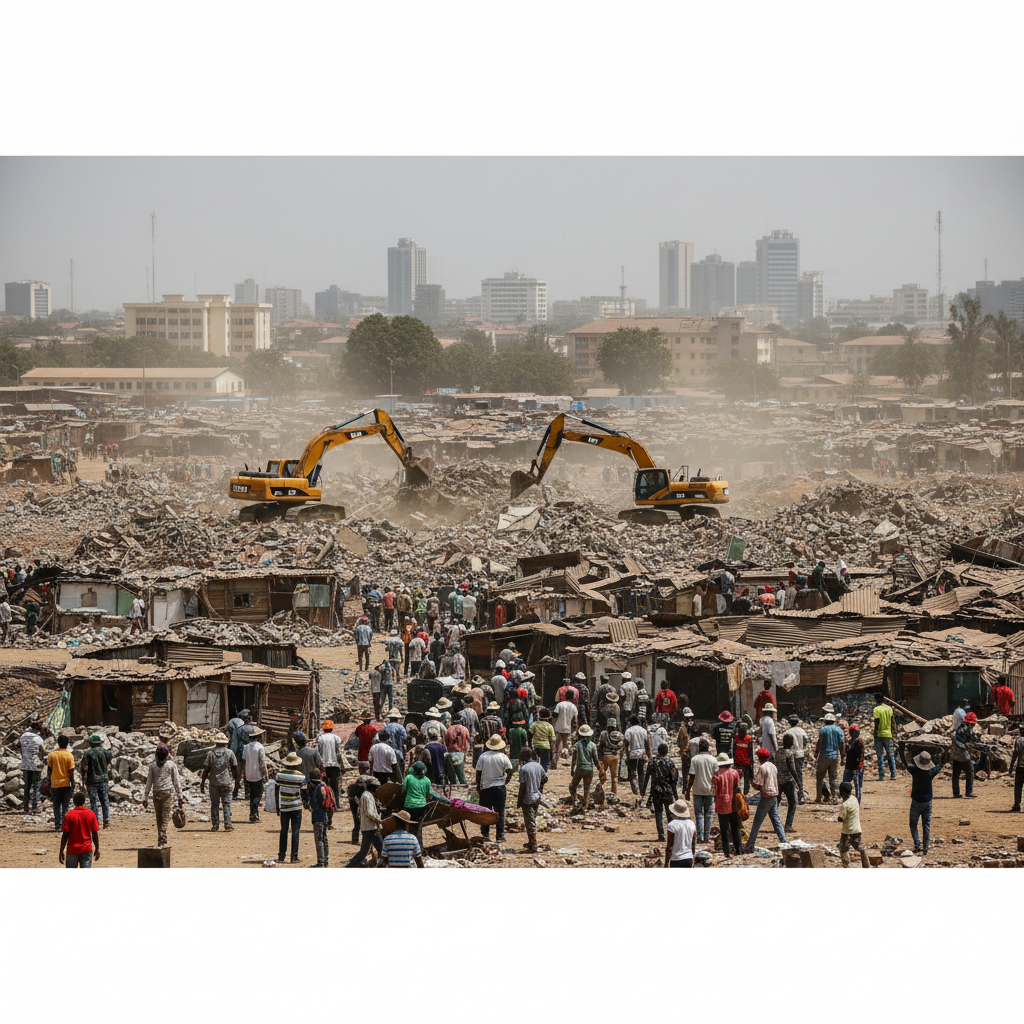
President John Dramani Mahama has ordered an aggressive nationwide exercise to remove illegal structures obstructing waterways and drainage channels. This action follows devastating floods in Accra and other parts of the country, which he attributes partly to human behaviour.
The President stated that the recurring disaster can no longer be solely blamed on inadequate drainage infrastructure. Encroachment on wetlands and indiscriminate waste disposal have become significant obstacles to effective flood management. The latest torrential rains caused widespread inundation, affecting communities like Alajo, Adabraka, and Kaneshie.
This directive fits into a broader national struggle with urban planning and environmental protection. Ghana has experienced perennial flooding, especially in Accra, due to rapid urbanisation and poor waste management practices. Previous administrations have discussed solutions, but lasting action has been scarce.
President Mahama criticised the continuous dumping of refuse into drains, undermining significant government investments in drainage infrastructure. He revealed that an aerial survey uncovered illegal dumping sites on wetlands, which are later sold for construction. Experts routinely link wetland destruction and poor drainage to Accra's consistent flood problems.
The government's response will combine engineering solutions with strict law enforcement to address the problem permanently. "We need to, one, look at it from an engineering perspective... but at the same time look at how we can identify all the buildings that are obstructing the waterways," President Mahama explained. He acknowledged public resistance to demolitions but stressed the widespread impact of inaction.
The President has directed that the issue be brought before the National Security Council for coordination. Metropolitan, Municipal, and District Assemblies will work with the Ministry of Works, Housing and Water Resources. Their task is to identify blockages in channels for removal.
This exercise will not only involve demolishing illegal structures but also clearing debris from waterways. "We'll not only break the houses; we have to move the rubble out of the way," President Mahama emphasised. Leaving rubble in waterways offers no improvement.
The recent floods prompted emergency response teams from the Ghana National Fire Service and the National Disaster Management Organisation (NADMO). These teams carried out rescue operations, evacuating stranded residents. Authorities have confirmed multiple fatalities and widespread displacement of families.
Extensive damage occurred to property and critical infrastructure. The planned removal of illegal structures forms part of a larger strategy. This strategy aims to reduce the growing threat of urban flooding and protect lives and property in the future years. This is a critical step towards more resilient urban environments in Ghana.