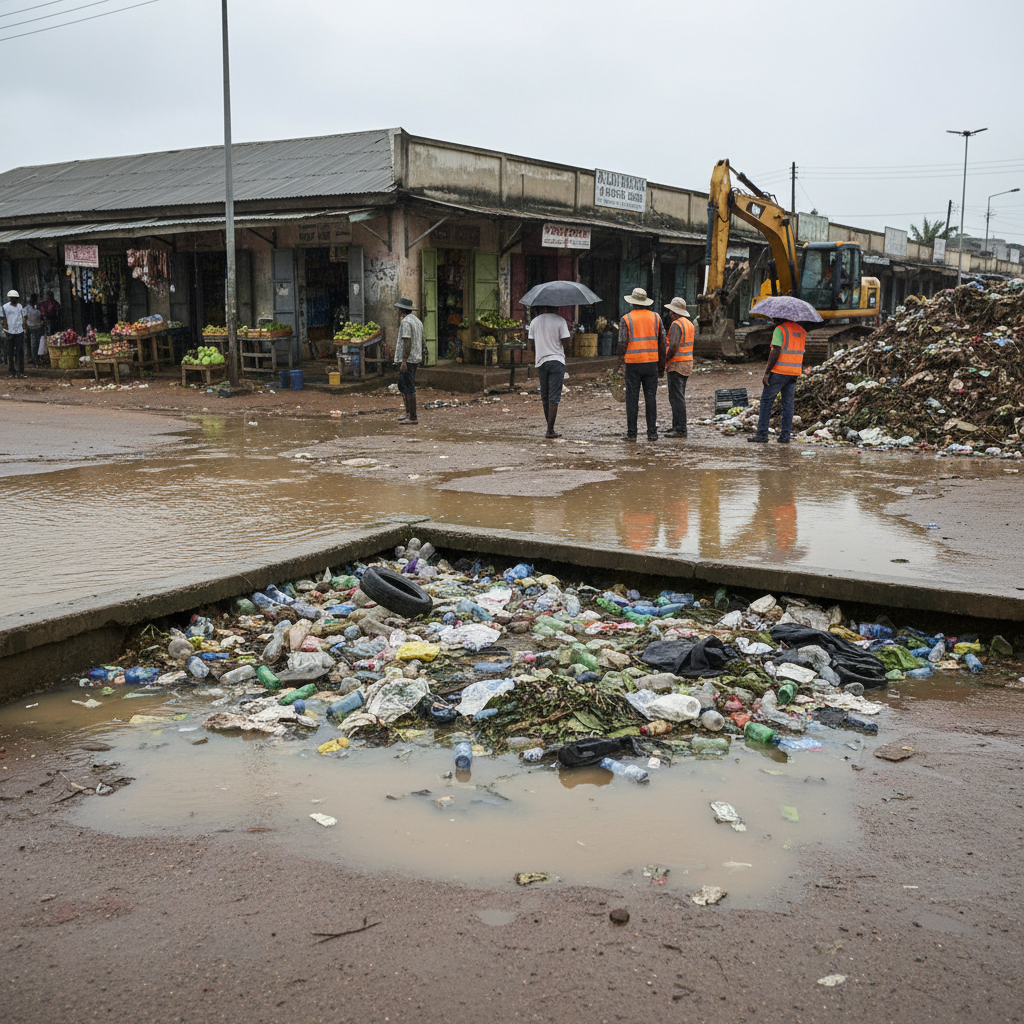
Dr. Kwame Adjei-Mantey, an Economist and Research Fellow at the Institute of Statistical, Social and Economic Research (ISSER), has called for major reforms in Ghana's waste management system. These changes are necessary to solve Accra's persistent flooding problem.
Ghana's current waste management system has significant structural and governance shortcomings. These problems worsen flooding, especially during heavy rainfall. Dr. Adjei-Mantey believes poor waste management is a main cause of the yearly floods in Accra.
This issue fits into Ghana’s broader challenge of urban resilience and infrastructure development. Accra, the capital city, frequently experiences flooding that disrupts economic activity and displaces residents. Previous efforts have focused on drainage, but the ISSER analysis adds a critical dimension by highlighting human-made waste accumulation as a direct factor. Data from various sources consistently point to inadequate sanitation infrastructure as a key developmental hurdle.
Dr. Adjei-Mantey stressed the urgent need for improvements during an interview on Tuesday, June 30. He explained that Ghana's waste management system requires major reforms to eliminate inefficiencies. Reforming the system would also improve coordination among the agencies responsible for sanitation and waste collection.
The lack of a dedicated regulator creates accountability gaps within the waste management sector. This makes it difficult for different institutions to collaborate effectively. Consequently, waste collection services are inconsistent across the nation. Some areas receive regular service, while others lack proper collection. This disparity leads residents to dump rubbish into drains and waterways, amplifying flood risks. The absence of a clear regulatory body fosters overlapping responsibilities, further hindering efficient waste disposal.
Addressing these systemic flaws will require a concerted effort from government and policymakers. They must focus not only on drainage systems but also on how waste management is organized and executed. Moving forward, the government will need to consider establishing a clear regulatory framework. This framework would ensure equitable and consistent waste collection across all communities in Accra. Decision-makers must also prioritize investment in waste management infrastructure to prevent costly flood damage and protect public health. Markets will be watching for policy shifts that signal a serious commitment to urban sanitation and flood mitigation.