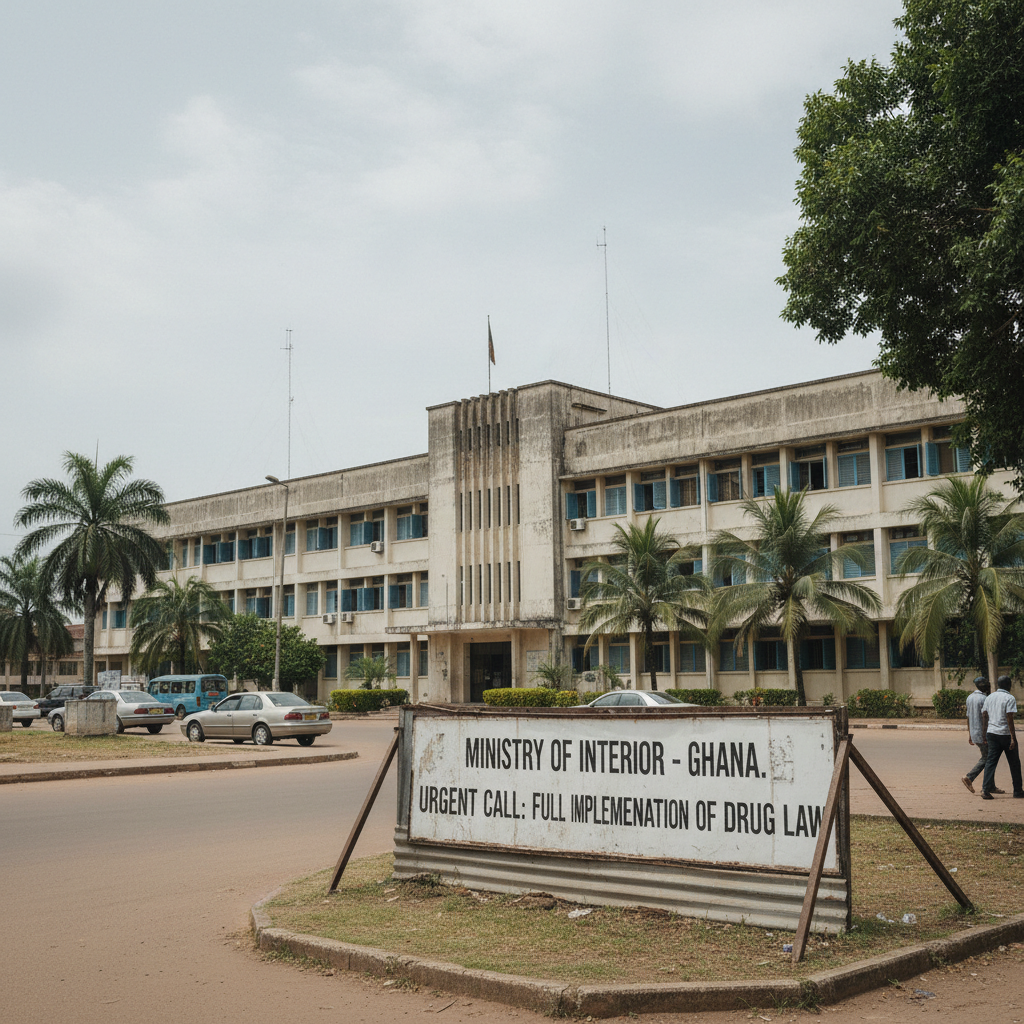
Ebenezer Okletey Terlabi, Ghana's Deputy Minister for the Interior, has urged the immediate passage of the Legislative Instrument (LI) to fully activate the Narcotics Control Commission Act, 2020 (Act 1019).
This critical step would enable Ghana to move beyond policy commitments. It would fully implement reforms that treat drug use as a public health and human rights issue. The Deputy Minister raised this point at the Second National Dialogue on Drug Policy, Human Rights and Public Health in Accra.
Ghana's economy faces costs from unresolved public health issues. Inconsistent implementation of Act 1019 means many enter the criminal justice system for minor drug offenses. This happens even when alternative interventions exist. Thousands of Ghanaians live with substance use disorders. They lack access to necessary health and social services. Low HIV testing, spreading preventable infections, and increasing overdose concerns are direct consequences.
Mr. Terlabi stated that fear of arrest, stigma, and discrimination deter people from seeking healthcare. When individuals feel safer avoiding health services, the system is failing. Tackling stigma must become a national priority. This requires implementing existing strategies, institutional reforms, and training across sectors. Greater accountability is also essential.
He noted that a health-centered approach strengthens law enforcement. It allows authorities to concentrate on organised criminal networks. It also directs individuals with substance use disorders to appropriate care. The absence of the LI prevents effective service delivery. The new regulations will provide legal clarity, coordination, and accountability. This is vital for drug demand reduction and harm reduction interventions.
The proposed Narcotics Control Commission (Drug Demand and Harm Reduction) Regulations, 2026, is currently with the Office of the Attorney General. Mr. Terlabi acknowledged civil society organisations and researchers for their contributions. He urged continued collaboration to ensure policies reflect affected communities' realities. Ghana must move beyond dialogues to concrete actions. This will translate policy into practice under Act 1019.
Major General Maxwell Obuba Mantey, Director-General of NACOC, also called for stronger collaboration. He stressed the importance of government, civil society, and healthcare professionals working together. This collaboration will fully implement Ghana's drug policy reforms. It will also address emerging drug threats.
Act 1019 established a modern legal framework. It balances law enforcement with prevention, treatment, rehabilitation, and social reintegration. Its effective implementation is Ghana's immediate priority. The first national dialogue marked a turning point. It brought together stakeholders to rethink the country's response to substance use and drug trafficking. Act 1019 officially recognises substance use disorders as a public health issue. It still maintains a firm stance against drug trafficking and organised crime.
The evolving global drug problem, including synthetic drugs, demands innovative responses. Lasting reforms require sustained partnerships beyond government efforts. This includes development partners, civil society, and healthcare professionals. Through collective action, Ghana aims to implement a balanced drug policy. This policy will protect public safety, promote public health, and uphold human rights.